IoT Applications in Healthcare: Benefits, Use Cases & Future Trends
Published: 28 Jun 2026
Healthcare is becoming smarter with the help of connected technology. One of the most significant innovations driving this change is the Internet of Things (IoT). From wearable fitness trackers to hospital equipment that sends real-time updates, IoT applications in healthcare are making medical services more efficient, accessible, and patient-focused.
The applications of IoT in healthcare allow doctors, hospitals, and caregivers to collect and share health data through internet-connected devices. This helps medical professionals monitor patients remotely, respond to emergencies faster, and make better treatment decisions based on accurate information. Patients also benefit from greater convenience because many health conditions can now be tracked without frequent hospital visits.
As healthcare systems continue to adopt digital technologies, understanding the application of IoT in healthcare has become important for students, professionals, business owners, and anyone interested in the future of medical care.
This guide explains what IoT is, how it works in healthcare, the most common use cases, its key benefits, the challenges organizations face, and the future trends shaping connected healthcare.
IoT applications in healthcare refer to the use of internet-connected devices that collect, share, and analyze health data to improve patient care and healthcare operations. Common IoT in healthcare applications include remote patient monitoring, wearable health devices, smart hospitals, telemedicine, medication management, and connected medical equipment. These technologies enable healthcare providers to deliver faster diagnoses, reduce costs, enhance patient outcomes, and support more personalized care.
Table of Contents
What Is IoT in Healthcare?
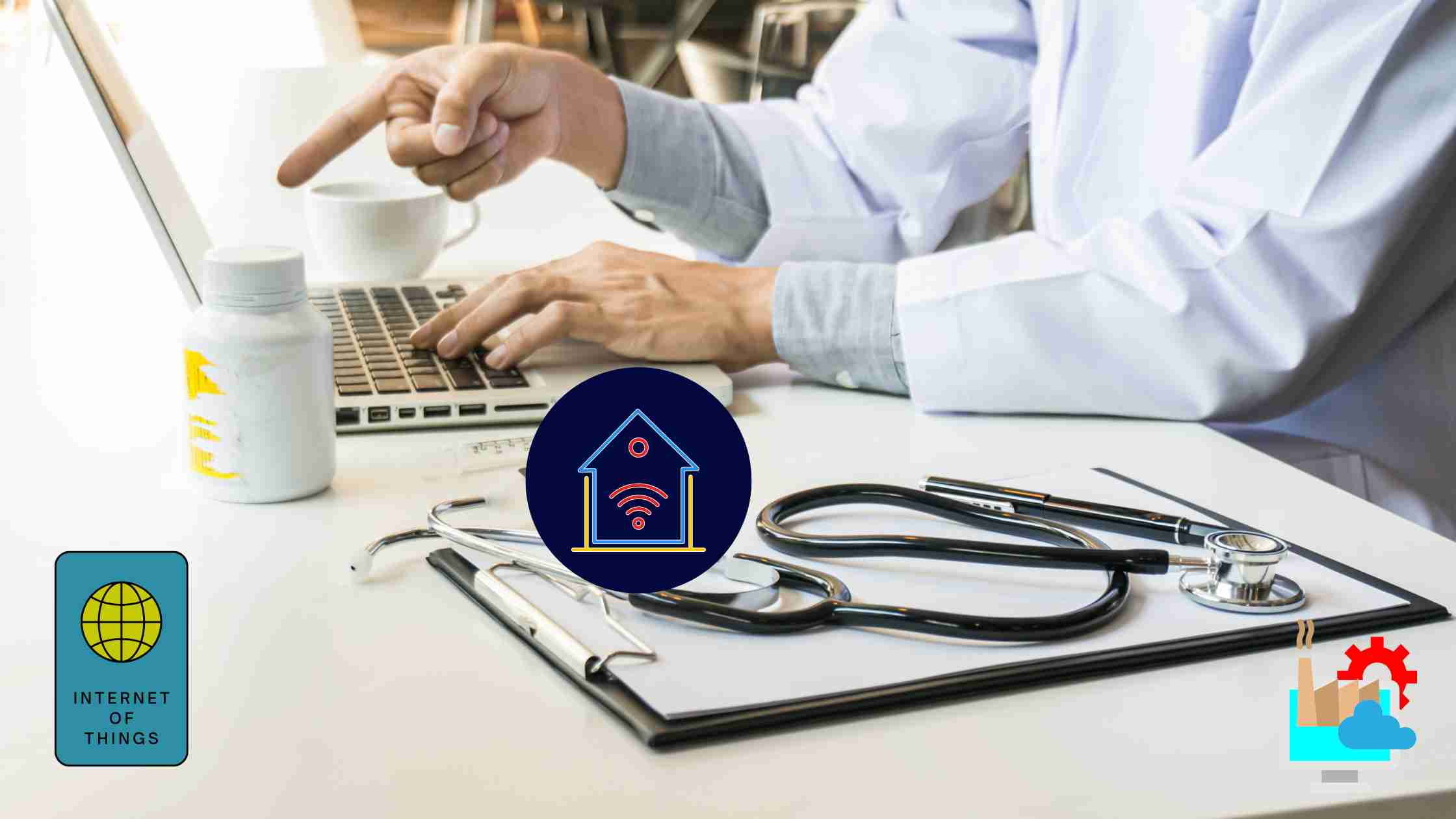
IoT in healthcare refers to a network of internet-connected medical devices, sensors, and software that collect, exchange, and analyze health-related data. These connected systems allow healthcare providers to monitor patients, manage medical equipment, and improve clinical decision-making without relying only on in-person visits.
A typical IoT healthcare system includes three main components. First, smart devices such as wearable fitness trackers, heart rate monitors, glucose monitors, or hospital equipment collect health data. Second, the data is securely transmitted through the internet to cloud-based platforms or healthcare systems. Finally, doctors and healthcare professionals can view the information in real time, identify potential health issues, and recommend appropriate treatment.
The application of IoT in healthcare goes far beyond wearable devices. Hospitals use connected sensors to track medical equipment, monitor patient rooms, and improve daily operations. Patients with chronic conditions can use connected devices at home, allowing healthcare providers to detect changes in their health before they become serious.
For example, a patient with high blood pressure can wear a smart monitor that automatically records blood pressure readings throughout the day. If the readings become unusually high, the device can alert both the patient and their healthcare provider, making early intervention possible.
As internet-connected technologies continue to evolve, IoT applications in smart healthcare are helping create a more efficient, data-driven, and patient-centered healthcare system.
What Are the Applications of IoT in Healthcare?
The applications of IoT in healthcare are transforming how medical services are delivered. Connected devices help healthcare providers monitor patients, automate routine tasks, improve hospital operations, and make faster clinical decisions. Below are some of the most common IoT applications in healthcare used today.
Remote Patient Monitoring
Remote patient monitoring allows doctors to track a patient’s health without requiring frequent hospital visits. Devices such as blood pressure monitors, heart rate sensors, pulse oximeters, and glucose monitors send health data directly to healthcare providers. This is especially helpful for people with chronic conditions such as diabetes, hypertension, and heart disease.
Wearable Health Devices
Wearable devices like smartwatches and fitness bands can monitor heart rate, physical activity, sleep patterns, blood oxygen levels, and other health metrics. These devices encourage people to stay aware of their health while giving doctors access to valuable information that supports preventive care.
Smart Hospitals
Hospitals use connected sensors and devices to improve efficiency and patient safety. Smart hospital systems can track medical equipment, monitor room conditions, manage patient flow, and reduce the time staff spend searching for critical resources.
Telemedicine
IoT supports telemedicine by providing doctors with real-time patient data during virtual consultations. Instead of relying only on what a patient describes, healthcare professionals can review data collected from connected devices, making remote diagnosis more accurate.
Medication Management
Smart pill dispensers and connected medication reminders help patients take their medicines on time. Some systems also notify caregivers if a scheduled dose is missed, reducing the risk of medication errors and improving treatment adherence.
Connected Medical Equipment
Many hospitals now use internet-connected medical devices such as infusion pumps, ventilators, imaging systems, and patient monitors. These devices automatically share information with healthcare systems, reducing manual data entry and helping medical staff respond more quickly to changing patient conditions.
Elderly Care and Assisted Living
IoT technology helps older adults live more independently. Wearable emergency buttons, fall detection sensors, and smart home monitoring systems can quickly alert family members or healthcare providers if assistance is needed. This improves safety while giving families greater peace of mind.
Emergency Response Systems
Connected ambulances and emergency medical devices can transmit patient information to hospitals before arrival. This allows emergency teams to prepare the necessary equipment and treatment plans, helping reduce response times during critical situations.
Benefits of IoT Applications in Healthcare
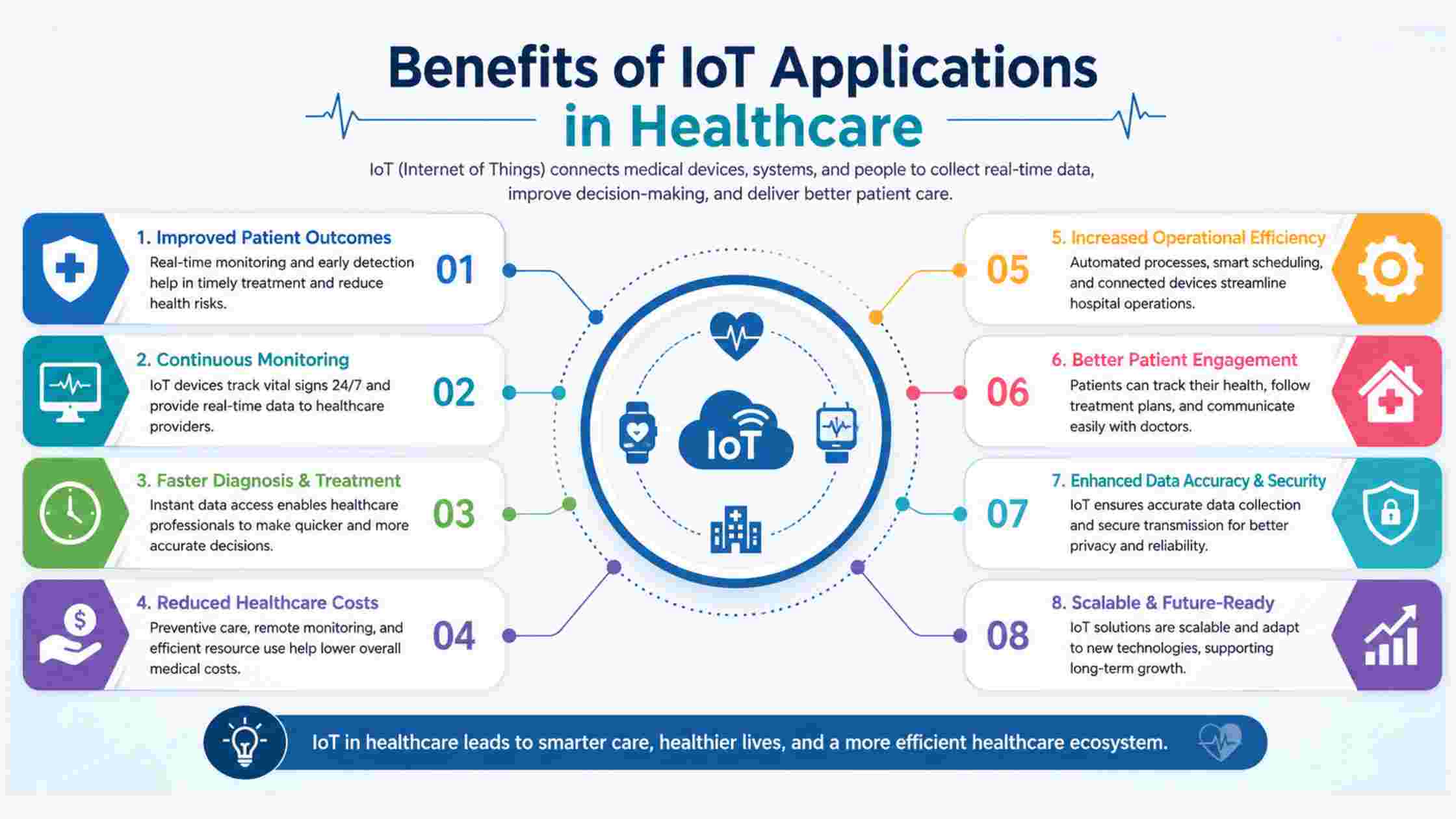
The growing adoption of IoT applications in healthcare is improving patient care while making healthcare services more efficient. Connected devices provide real-time information that helps medical professionals make informed decisions and deliver better treatment. Patients also benefit from greater convenience and improved health management.
Better Patient Care
IoT devices continuously collect health data, allowing doctors to monitor patients more closely. This helps identify health issues earlier and enables timely medical intervention before conditions become more serious.
Real Time Health Monitoring
Connected medical devices can track vital signs such as heart rate, blood pressure, blood oxygen levels, and glucose levels around the clock. Real-time monitoring is especially valuable for patients with chronic illnesses who require regular observation.
Reduced Healthcare Costs
Remote monitoring reduces unnecessary hospital visits and hospital readmissions. Patients can receive care from home while healthcare providers can focus resources on those who need immediate attention, lowering overall healthcare costs.
Faster Diagnosis and Treatment
Healthcare professionals receive accurate and up-to-date patient information through connected devices. Access to real-time data supports quicker diagnosis and allows doctors to begin treatment sooner, improving patient outcomes.
Improved Hospital Efficiency
Hospitals use IoT technology to manage medical equipment, monitor inventory, and automate routine tasks. These improvements reduce manual work, save time for healthcare staff, and help hospitals operate more efficiently.
Better Patient Engagement
Patients become more involved in managing their own health by using wearable devices and mobile health applications. They can monitor their progress, follow treatment plans, and share health information with their doctors, encouraging healthier daily habits.
Improved Emergency Response
IoT devices can automatically send alerts when abnormal health readings are detected. Faster notifications allow healthcare providers and caregivers to respond quickly, which can be critical during medical emergencies such as heart attacks or severe drops in blood oxygen levels.
Challenges of Using IoT in Healthcare
While IoT applications in healthcare offer many advantages, they also come with challenges that healthcare organizations must address. Understanding these issues helps hospitals, healthcare providers, and patients use connected technologies more safely and effectively.
Data Privacy and Security
IoT devices collect sensitive patient information, making data security a top priority. Weak security measures can expose medical records to cyberattacks or unauthorized access. Healthcare organizations should use encryption, secure networks, and regular software updates to protect patient data.
Device Compatibility
Healthcare facilities often use devices from different manufacturers. If these devices cannot communicate with each other, sharing information becomes difficult. Choosing systems that follow common healthcare standards improves compatibility and data exchange.
High Implementation Costs
Setting up an IoT healthcare system requires investment in connected devices, network infrastructure, software, and staff training. While these costs can be high, many organizations recover their investment over time through improved efficiency and reduced operational expenses.
Internet Connectivity Issues
Most IoT devices rely on a stable internet connection to transmit real-time data. Poor connectivity can delay information, interrupt monitoring, or reduce the effectiveness of remote healthcare services, especially in rural or underserved areas.
Regulatory Compliance
Healthcare providers must comply with laws and regulations that protect patient information and ensure medical device safety. Organizations need clear policies for collecting, storing, and sharing health data while meeting local and international compliance requirements.
Device Maintenance and Updates
Connected medical devices require regular maintenance, software updates, and security patches to continue operating safely. Ignoring updates can lead to performance issues or create security vulnerabilities that put patient data at risk.
IoT in Healthcare Examples
Understanding real-world examples makes it easier to see how IoT applications in healthcare improve patient care and healthcare operations. Here are some of the most common examples used today.
Smartwatches for Health Monitoring
Smartwatches can measure heart rate, track physical activity, monitor sleep quality, and detect irregular heart rhythms. Many people use these devices to monitor their daily health, while doctors may use the collected data to support medical assessments.
Connected Glucose Monitors
People with diabetes can use smart glucose monitors that automatically measure blood sugar levels throughout the day. The readings are sent to a mobile app, allowing patients and healthcare providers to monitor trends and make timely adjustments to treatment plans.
Smart Inhalers
Smart inhalers record when and how often a patient uses their medication. The information helps patients follow their treatment plans more effectively and allows doctors to identify patterns that may indicate worsening asthma or other respiratory conditions.
Smart Hospital Beds
Modern hospital beds are equipped with sensors that monitor patient movement, weight, and bed occupancy. These systems can alert healthcare staff if a patient is at risk of falling or requires immediate assistance, improving patient safety.
Asset Tracking Systems
Hospitals use IoT-enabled tracking devices to locate medical equipment such as wheelchairs, infusion pumps, and portable monitors. This reduces the time staff spend searching for equipment and improves overall hospital efficiency.
Connected Cardiac Monitors
Wearable cardiac monitors continuously track heart activity and send real-time data to healthcare providers. If an abnormal heart rhythm is detected, medical professionals can review the information quickly and decide whether immediate treatment is necessary.
These examples show that the application of IoT in healthcare extends far beyond wearable devices. Connected technologies are helping hospitals improve operations while giving patients access to more convenient and personalized healthcare services.
Traditional Healthcare vs IoT Enabled Healthcare
| Feature | Traditional Healthcare | IoT Enabled Healthcare |
| Patient Monitoring | Conducted mainly during hospital or clinic visits | Continuous real time monitoring through connected devices |
| Access to Health Data | Limited to scheduled appointments | Available anytime through connected healthcare systems |
| Diagnosis | Based on periodic examinations | Supported by continuous health data and early alerts |
| Hospital Visits | Frequent visits often required | Many follow ups can be managed remotely |
| Emergency Response | Relies on patients reporting symptoms | Automatic alerts can notify healthcare providers of abnormal readings |
| Medication Management | Manual reminders and patient responsibility | Smart devices provide reminders and track medication adherence |
| Equipment Management | Manual tracking of medical equipment | IoT sensors automatically locate and monitor equipment |
| Patient Engagement | Limited involvement between appointments | Patients actively monitor and manage their health using connected devices |
| Operational Efficiency | More manual processes | Greater automation and improved workflow efficiency |
| Healthcare Costs | Higher costs due to repeated hospital visits and manual operations | Lower long term costs through remote care and process automation |
Future Trends of IoT in Healthcare
The future of iot applications in healthcare will be shaped by advances in artificial intelligence, faster internet connectivity, and smarter medical devices. As these technologies continue to develop, healthcare services are expected to become more personalized, efficient, and accessible.
Artificial Intelligence-Powered Healthcare
Artificial intelligence and IoT are increasingly working together. Connected devices collect large amounts of health data, while AI analyzes the information to detect patterns, predict potential health risks, and support faster clinical decision-making.
Predictive Healthcare Analytics
Healthcare providers are beginning to use predictive analytics to identify patients who may develop serious medical conditions before symptoms become severe. This allows doctors to recommend preventive care and reduce unnecessary hospital admissions.
5G Enabled Remote Monitoring
The expansion of 5G networks will improve the speed and reliability of connected healthcare devices. Faster data transmission will support real-time patient monitoring, remote consultations, and quicker emergency responses, especially in areas with advanced network infrastructure.
Digital Twins in Healthcare
Digital twin technology creates a virtual model of a patient, medical device, or healthcare system using real-time data. Researchers and healthcare professionals can use these virtual models to simulate treatments, predict outcomes, and improve patient care without affecting the actual patient.
Smart Home Healthcare
More healthcare services are moving into the home. Smart home devices can monitor daily activities, detect falls, remind patients to take medication, and alert caregivers if unusual behavior is detected. This trend will help older adults and people with chronic conditions live more independently.
Stronger Security for Connected Devices
As the number of connected medical devices grows, healthcare organizations are expected to invest more in cybersecurity. Better encryption, secure authentication methods, and continuous software updates will help protect sensitive patient information and reduce security risks.
These developments show that IoT applications in smart healthcare will continue to improve the quality of care while making healthcare systems more connected, efficient, and patient-focused.
Common Mistakes When Implementing IoT in Healthcare
Although IoT applications in healthcare offer many benefits, organizations often face challenges because of poor planning or incorrect implementation. Avoiding these common mistakes can improve system performance, protect patient data, and increase the value of connected healthcare technologies.
Ignoring Cybersecurity
Many healthcare organizations focus on adding new devices but overlook security. Weak passwords, outdated software, and unsecured networks can expose sensitive patient information to cyber threats. Every connected device should receive regular security updates and use strong authentication methods.
Choosing Incompatible Devices
Not all IoT devices work well together. Using products that cannot share data efficiently can create communication problems and reduce the effectiveness of the healthcare system. Selecting devices that follow recognized healthcare standards improves compatibility.
Skipping Staff Training
Healthcare professionals need proper training to use connected devices effectively. Without adequate training, staff may misuse equipment, misunderstand health data, or fail to respond correctly to system alerts.
Collecting Too Much Unnecessary Data
Gathering excessive amounts of health data without a clear purpose can make analysis more difficult and increase storage costs. Healthcare providers should focus on collecting relevant information that directly supports patient care and clinical decisions.
Neglecting Regular Device Maintenance
Connected medical devices require routine inspections, software updates, and performance checks. Ignoring maintenance can lead to inaccurate readings, equipment failures, and security vulnerabilities that affect patient safety.
Failing to Plan for Growth
Many organizations implement IoT solutions without considering future expansion. As the number of connected devices increases, healthcare systems should be able to handle additional data, users, and services without affecting performance.
Expert Tips
Following a few best practices can help healthcare organizations and individuals get the most value from iot applications in healthcare while reducing common risks.
Prioritize Data Security
Protecting patient information should always come first. Use secure networks, strong passwords, multi factor authentication, and regular software updates to reduce the risk of cyberattacks and unauthorized access.
Start with Small Projects
Instead of connecting every device at once, begin with a small pilot project such as remote patient monitoring or smart asset tracking. This approach helps identify challenges early and makes it easier to scale successful solutions.
Choose Scalable IoT Solutions
Select devices and software that can support future growth. A scalable system makes it easier to add new devices, users, and healthcare services without replacing the existing infrastructure.
Train Healthcare Staff Regularly
Doctors, nurses, and hospital staff should understand how connected devices work and how to interpret the data they provide. Regular training improves efficiency, reduces errors, and helps staff respond confidently to system alerts.
Perform Regular Device Maintenance
Connected medical devices should be inspected, updated, and tested on a regular schedule. Routine maintenance improves accuracy, extends device life, and helps prevent unexpected failures.
Focus on Patient Education
Patients should know how to use wearable devices, monitoring equipment, and healthcare apps correctly. Clear instructions and ongoing support encourage better participation, improve treatment adherence, and increase the overall success of applications of IoT in healthcare.
Key Takeaways
- IoT applications in healthcare use internet-connected devices to collect and share real-time health data, helping healthcare providers deliver faster and more accurate care.
- Common applications of IoT in healthcare include remote patient monitoring, wearable health devices, telemedicine, smart hospitals, medication management, and connected medical equipment.
- IoT improves patient outcomes by enabling continuous monitoring, reducing unnecessary hospital visits, lowering healthcare costs, and supporting early diagnosis.
- Despite its advantages, healthcare organizations must address challenges such as data security, device compatibility, internet connectivity, and regulatory compliance.
- The future of IoT applications in smart healthcare includes artificial intelligence, predictive analytics, 5G connectivity, digital twins, and smart home healthcare, making healthcare more efficient and personalized.
Conclusion
IoT applications in healthcare are transforming the healthcare industry by making medical services more connected, efficient, and patient-centered. From remote patient monitoring and wearable health devices to smart hospitals and telemedicine, IoT enables healthcare providers to deliver better care while giving patients greater control over their health. These technologies also improve operational efficiency, support faster diagnoses, and help reduce unnecessary healthcare costs.
Although challenges such as data security, device compatibility, and implementation costs still exist, ongoing advancements in artificial intelligence, 5G, and connected medical devices are making IoT solutions more reliable and accessible. As healthcare continues to embrace digital innovation, understanding the application of IoT in healthcare will become increasingly valuable for students, healthcare professionals, businesses, and anyone interested in the future of modern medicine.
Sources
- World Health Organization (WHO). Digital Health.
- U.S. Food and Drug Administration (FDA). Digital Health Center of Excellence.
- National Institutes of Health (NIH). PubMed.




- Be Respectful
- Stay Relevant
- Stay Positive
- True Feedback
- Encourage Discussion
- Avoid Spamming
- No Fake News
- Don't Copy-Paste
- No Personal Attacks
- Be Respectful
- Stay Relevant
- Stay Positive
- True Feedback
- Encourage Discussion
- Avoid Spamming
- No Fake News
- Don't Copy-Paste
- No Personal Attacks
