IoT Applications in Agriculture: Benefits, Use Cases & Future Trends
Published: 27 Jun 2026
Modern agriculture faces growing challenges. Farmers must produce more food while dealing with unpredictable weather, rising production costs, labor shortages, and limited natural resources. Traditional farming methods alone are often not enough to meet these demands. This is where IoT applications in agriculture are making a measurable difference.
The Internet of Things, commonly known as IoT, connects physical devices such as soil sensors, weather stations, irrigation systems, drones, livestock trackers, and farm machinery through the internet. These connected devices continuously collect and exchange data, giving farmers real-time insights that support better decisions. Instead of relying only on observation or fixed schedules, farmers can monitor field conditions, automate daily tasks, and respond quickly to changing conditions.
The applications of IoT in agriculture extend far beyond simple monitoring. IoT technology helps optimize irrigation, detect crop diseases earlier, improve fertilizer usage, monitor livestock health, automate greenhouse operations, and support precision farming practices. As farms become increasingly data-driven, these technologies are helping improve productivity while reducing waste and environmental impact.
According to the Food and Agriculture Organization, increasing agricultural productivity sustainably is essential to feed a growing global population while conserving land and water resources. Smart farming technologies, including IoT, are becoming an important part of achieving this goal.
Whether you are a farmer looking to improve yields, an agribusiness owner exploring digital transformation, or an agricultural engineer researching emerging technologies, understanding IoT applications in agriculture is becoming increasingly valuable. This guide explains how IoT works in farming, explores its most practical use cases, discusses the benefits and challenges, and examines the future of smart agriculture in 2026 and beyond.
Quick Answer
IoT applications in agriculture involve using internet-connected sensors, devices, and automated systems to monitor crops, soil, livestock, weather, and farm equipment in real time. These technologies help farmers improve productivity, reduce water and fertilizer waste, lower operational costs, automate routine tasks, and make data-driven decisions that support sustainable and efficient farming.
Table of Contents
What Are IoT Applications in Agriculture?
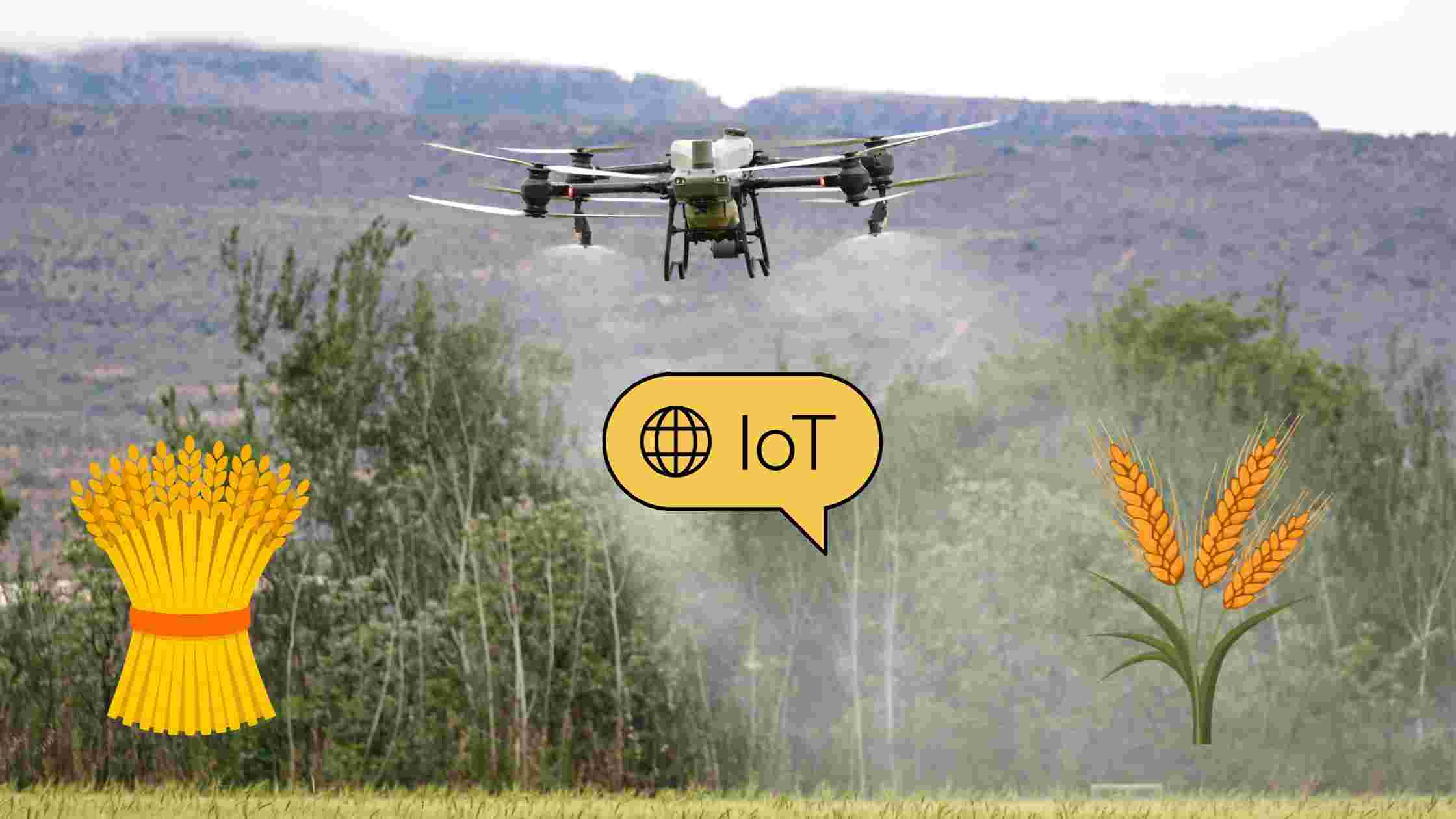
IoT applications in agriculture refer to the use of internet-connected devices, sensors, software, and automated machines to collect, analyze, and act on farm data. These systems continuously monitor environmental conditions, helping farmers make informed decisions instead of relying on assumptions or fixed schedules.
Unlike traditional farming, where decisions are often based on manual field inspections, IoT enables continuous monitoring across the entire farm. Sensors can measure soil moisture, weather conditions, crop health, equipment performance, and livestock activity every few minutes. The collected information is transmitted to cloud platforms or local control systems, where it can be viewed through computers or mobile applications.
The primary goal of the application of IoT in agriculture is to increase productivity while using fewer resources. Farmers can identify problems earlier, automate repetitive tasks, and reduce unnecessary water, fertilizer, and pesticide use.
Some common technologies used in IoT agriculture applications include:
- Soil moisture sensors
- Weather monitoring stations
- GPS-enabled tractors
- Smart irrigation systems
- Agricultural drones
- Livestock tracking collars
- RFID tags
- Satellite imaging
- Cloud-based farm management software
- Artificial Intelligence for predictive analysis
Together, these technologies form the foundation of modern smart farming.
How Does IoT Work in Agriculture?
Understanding how IoT works helps explain why it has become an essential part of precision farming.
A typical IoT farming system follows four major steps.
1. Data Collection
Sensors installed throughout the farm gather real-time information such as:
- Soil moisture
- Soil temperature
- Humidity
- Rainfall
- Wind speed
- Crop growth
- Livestock movement
- Equipment status
The accuracy of this data allows farmers to monitor conditions continuously instead of making occasional manual observations.
2. Data Transmission
The collected information is sent through communication technologies such as:
- Wi Fi
- Cellular networks
- LoRaWAN
- NB IoT
- Satellite communication
The choice depends on farm size, available infrastructure, and internet coverage.
3. Data Analysis
Cloud platforms analyze incoming information using algorithms and Artificial Intelligence models.
The software identifies patterns, predicts potential issues, and generates recommendations such as:
- Irrigation schedules
- Fertilizer application timing
- Disease risk alerts
- Equipment maintenance reminders
- Harvest readiness estimates
Instead of overwhelming farmers with raw numbers, the system converts data into practical insights.
4. Automated Action
Many IoT applications for agriculture can automatically respond without requiring human intervention.
Examples include:
- Turning irrigation systems on when soil moisture falls below a predefined level.
- Opening greenhouse ventilation when temperatures become too high.
- Sending alerts if livestock stop moving or leave designated grazing areas.
- Adjusting fertilizer application rates based on soil nutrient data.
Automation reduces labor requirements while improving operational consistency.
The combination of sensing, communication, analytics, and automation makes IoT one of the most significant technologies driving precision agriculture today.
Top 15 IoT Applications in Agriculture
The real value of IoT applications in agriculture comes from solving everyday farming challenges. Instead of relying on estimates, farmers can make decisions based on accurate, real-time data. Below are the most impactful applications used across modern farms.
1. Smart Irrigation Systems
Water scarcity is one of agriculture’s biggest concerns. Smart irrigation systems use soil moisture sensors and weather forecasts to determine exactly when crops need water.
Instead of irrigating on a fixed schedule, water is applied only when necessary.
Benefits include:
- Reduced water consumption
- Lower electricity costs
- Healthier crop growth
- Less nutrient runoff
For farms located in drought-prone regions, smart irrigation can significantly improve water use efficiency.
2. Soil Monitoring
Healthy soil is the foundation of successful farming.
Soil sensors continuously monitor:
- Moisture levels
- Temperature
- pH
- Electrical conductivity
- Nutrient availability
These insights help farmers decide when to irrigate, fertilize, or prepare fields for planting.
Many applications of IoT in agriculture begin with accurate soil monitoring because nearly every farming decision depends on soil conditions.
3. Precision Fertilizer Management
Applying too much fertilizer increases costs and pollutes nearby water sources. Applying too little reduces crop yields.
Precision agriculture IoT applications use sensor data and GPS mapping to apply fertilizer only where it is needed.
Advantages include:
- Lower fertilizer costs
- Better nutrient efficiency
- Improved crop quality
- Reduced environmental impact
Variable-rate technology allows different parts of the same field to receive varying amounts of fertilizer based on actual soil conditions.
4. Crop Health Monitoring
Early detection of crop stress can prevent major losses.
IoT systems combine data from:
- Field sensors
- Weather stations
- Satellite imagery
- Drones
- Artificial Intelligence
Farmers receive alerts when crops show signs of:
- Water stress
- Nutrient deficiencies
- Disease
- Pest infestations
Addressing these issues early often reduces pesticide use and protects yields.
5. Smart Weather Monitoring
The weather directly affects planting, irrigation, spraying, and harvesting.
IoT weather stations installed on farms measure:
- Rainfall
- Wind speed
- Solar radiation
- Humidity
- Temperature
- Atmospheric pressure
Unlike public weather forecasts, on-farm weather stations provide localized data that improves operational planning.
6. Livestock Monitoring
Modern livestock farms increasingly rely on wearable IoT devices.
Smart collars and ear tags monitor:
- Animal location
- Body temperature
- Activity levels
- Heart rate
- Feeding patterns
If an animal becomes sick or behaves unusually, farmers receive immediate alerts.
This is one of the fastest-growing IoT applications in agriculture because it improves both productivity and animal welfare.
7. Greenhouse Automation
Greenhouses require constant environmental control.
IoT systems automatically regulate:
- Temperature
- Humidity
- Ventilation
- Irrigation
- Lighting
- Carbon dioxide levels
Automation creates stable growing conditions while reducing manual labor.
Greenhouse operators often report higher crop consistency and improved resource efficiency after implementing connected systems.
8. Drone-Based Field Monitoring
Agricultural drones collect aerial images that reveal problems invisible from ground level.
They help identify:
- Pest outbreaks
- Nutrient deficiencies
- Weed growth
- Water stress
- Crop maturity
Large farms can inspect hundreds of acres within hours instead of spending days walking through fields.
9. Smart Pest Detection
Rather than spraying pesticides across entire fields, IoT sensors detect environmental conditions that increase pest activity.
Combined with AI analysis, these systems help farmers:
- Predict infestations
- Reduce unnecessary pesticide applications
- Lower operating costs
- Protect beneficial insects
This supports more sustainable farming practices.
10. Farm Equipment Monitoring
Modern tractors and agricultural machinery include IoT sensors that monitor:
- Engine performance
- Fuel consumption
- Operating hours
- Maintenance schedules
- Equipment location
Predictive maintenance helps prevent costly breakdowns during planting and harvesting seasons, when equipment downtime can be especially expensive.
11. Smart Harvest Management
Harvesting at the right time is essential for maximizing both yield and crop quality. IoT systems combine sensor data, weather forecasts, and crop maturity analysis to identify the optimal harvest window.
Connected harvesting equipment can also monitor grain moisture, storage conditions, and machine performance during operations. This reduces post-harvest losses while improving overall efficiency.
Benefits include:
- Better crop quality
- Reduced harvesting losses
- Lower labor costs
- Improved harvest planning
12. Supply Chain and Traceability
Consumers and food companies are increasingly interested in knowing the origin of their food. IoT enables complete traceability by tracking agricultural products from the farm to processing facilities, warehouses, distributors, and retailers.
Technologies such as RFID tags, GPS tracking, and environmental sensors record valuable information throughout the supply chain, including:
- Storage temperature
- Transportation conditions
- Product location
- Delivery timelines
This improves food safety, reduces spoilage, and helps businesses comply with regulatory requirements.
13. Smart Storage Monitoring
A successful harvest can still suffer significant losses if crops are stored under poor conditions.
IoT sensors continuously monitor storage facilities for:
- Temperature
- Humidity
- Air quality
- Moisture buildup
If conditions move outside safe ranges, farmers receive instant notifications. Early intervention prevents mold growth, insect infestations, and quality deterioration.
This is one of the most practical IoT applications in agriculture because it protects crops after they leave the field.
14. Water Quality Monitoring
Water quality directly affects irrigation efficiency, livestock health, and aquaculture operations.
IoT sensors can measure:
- pH levels
- Dissolved oxygen
- Salinity
- Water temperature
- Chemical contamination
Continuous monitoring helps farmers detect problems before they affect crops or animals, allowing corrective actions to be taken quickly.
15. Autonomous Farm Machinery
Autonomous tractors, robotic harvesters, and self-navigating sprayers represent one of the fastest evolving iot applications in smart agriculture.
These machines combine IoT connectivity with GPS, Artificial Intelligence, machine vision, and onboard sensors to perform field operations with minimal human involvement.
Current applications include:
- Autonomous planting
- Precision spraying
- Automated harvesting
- Field mapping
- Weed identification
Although adoption remains higher among large commercial farms due to investment costs, technological advances are making autonomous equipment increasingly accessible to medium-sized farms.
Comparison of Traditional Farming and IoT-Enabled Farming
| Feature | Traditional Farming | IoT-Enabled Farming |
|---|---|---|
| Irrigation | Fixed schedules | Real-time soil-based irrigation |
| Crop Monitoring | Manual inspections | Continuous sensor monitoring |
| Disease Detection | After visible symptoms appear | Early detection using sensors and AI |
| Fertilizer Application | Uniform application | Variable rate application based on soil conditions |
| Weather Information | Regional forecasts | Farm-specific weather stations |
| Equipment Maintenance | Reactive repairs | Predictive maintenance |
| Labor Requirements | High | Reduced through automation |
| Decision Making | Experience based | Data driven |
The comparison highlights why agriculture IoT applications are gaining attention worldwide. Rather than replacing farmers, IoT enhances decision-making with accurate, real-time information that improves efficiency across nearly every stage of agricultural production.
Benefits of Applications of IoT in Agriculture
The growing adoption of applications of IoT in agriculture is driven by measurable improvements in productivity, resource management, and operational efficiency. By transforming raw farm data into actionable insights, IoT helps farmers make better decisions throughout the crop cycle.
Higher Crop Yields
IoT systems provide continuous information about soil conditions, crop growth, and weather patterns. Farmers can respond quickly to changing field conditions, preventing issues such as water stress, nutrient deficiencies, and disease outbreaks before they significantly affect production.
Healthier crops and timely interventions often translate into higher yields and better quality produce.
Improved Water Efficiency
Agriculture accounts for nearly 70 percent of global freshwater withdrawals, according to the Food and Agriculture Organization. Efficient irrigation is therefore essential for sustainable farming.
Smart irrigation systems use soil moisture data and weather forecasts to supply water only when crops require it.
This approach helps farmers:
- Reduce water waste
- Lower pumping costs
- Prevent overwatering
- Improve root development
Lower Input Costs
Seeds, fertilizers, pesticides, fuel, and labor represent a significant portion of farming expenses.
IoT helps reduce unnecessary spending by enabling:
- Precision fertilizer application
- Targeted pesticide spraying
- Automated irrigation
- Predictive equipment maintenance
- Better labor planning
Although the initial investment can be substantial, many farms recover costs through improved operational efficiency over time.
Better Decision Making
Traditional farming often depends on observation and experience. While experience remains valuable, IoT complements it with accurate, real-time information.
Farmers can answer important questions such as:
- Does this field actually need irrigation?
- Which area requires additional fertilizer?
- Is a disease likely to develop after recent weather conditions?
- Which machine requires maintenance before harvest?
Instead of reacting after problems occur, farmers can make proactive decisions based on reliable data.
Reduced Environmental Impact
One of the biggest advantages of IoT applications for agriculture is improved sustainability.
Precision farming practices help reduce:
- Excess fertilizer runoff
- Chemical pesticide use
- Water consumption
- Fuel usage
- Greenhouse gas emissions
Applying resources only where and when they are needed protects surrounding ecosystems while maintaining farm productivity.
Improved Livestock Health
Wearable sensors continuously monitor animal activity and health indicators.
Early detection of illness allows farmers to isolate affected animals and provide treatment before diseases spread throughout the herd.
This improves:
- Animal welfare
- Productivity
- Breeding success
- Veterinary management
Greater Operational Efficiency
Many repetitive farming tasks can be automated through connected systems.
Examples include:
- Scheduling irrigation
- Controlling greenhouse environments
- Monitoring storage facilities
- Tracking machinery
- Receiving maintenance alerts
Automation allows farmers to spend more time on strategic planning instead of routine manual tasks.
Challenges of Implementing IoT in Agriculture
Despite its advantages, IoT agriculture applications also present practical challenges that farmers should understand before investing.
High Initial Investment
Installing sensors, communication networks, weather stations, automation equipment, and farm management software requires significant capital.
Large commercial farms often recover these costs more quickly because they operate on a larger scale. Small farms may need to adopt IoT gradually to balance investment with expected returns.
Internet Connectivity Limitations
Many agricultural regions still have limited broadband or mobile network coverage.
Without reliable connectivity, IoT devices cannot consistently transmit data or support real time decision making. Technologies such as LoRaWAN and satellite communication help address this challenge, but infrastructure remains a limiting factor in some areas.
Data Management Complexity
A modern farm can generate thousands of data points every day.
Without proper software and analysis tools, farmers may struggle to interpret this information effectively. Choosing user-friendly platforms and providing staff training are important steps toward successful implementation.
Cybersecurity Risks
Connected devices increase the number of potential entry points for cyberattacks.
Poor security practices may expose sensitive farm data or allow unauthorized access to connected equipment.
Using strong passwords, encrypted communication, regular software updates, and secure cloud platforms helps reduce these risks.
Maintenance and Technical Skills
IoT systems require regular maintenance to ensure accurate data collection.
Sensors may require calibration, batteries need replacement, and software must be updated periodically. Farmers and technicians also need training to understand system reports and troubleshoot issues effectively.
Recognizing these challenges helps farms develop realistic implementation plans while maximizing the long term value of precision agriculture iot applications.
IoT vs Traditional Farming
Understanding the difference between conventional farming and IoT-enabled farming helps explain why connected technologies are becoming increasingly important for modern agriculture.
| Aspect | Traditional Farming | IoT-Enabled Farming |
| Decision Making | Based mainly on experience and manual observation | Based on real-time data and analytics |
| Irrigation | Fixed schedules | Automated according to soil moisture and weather conditions |
| Crop Monitoring | Periodic field inspections | Continuous monitoring using sensors and drones |
| Disease Detection | Often, after visible symptoms appear | Early warnings through sensors and predictive models |
| Fertilizer Application | Uniform application | Site-specific variable rate application |
| Livestock Management | Manual observation | Wearable sensors provide continuous health tracking |
| Equipment Maintenance | Repairs after breakdowns | Predictive maintenance based on machine data |
| Labor Requirements | High | Reduced through automation |
| Resource Efficiency | Moderate | Optimized use of water, fertilizer, and energy |
While traditional farming continues to rely heavily on experience, IoT enhances that experience with accurate information, allowing farmers to respond faster and allocate resources more efficiently.
Future of IoT Applications in Smart Agriculture
The future of IoT applications in smart agriculture is being shaped by advances in Artificial Intelligence, robotics, satellite technology, and faster communication networks. As these technologies become more affordable, IoT adoption is expected to increase among farms of all sizes.
Several trends are expected to influence agriculture in 2026 and beyond.
Artificial Intelligence-Powered Decision Support
Artificial Intelligence is making IoT systems more valuable by analyzing massive amounts of farm data and providing practical recommendations.
Instead of simply displaying sensor readings, AI can predict:
- Crop diseases
- Pest outbreaks
- Irrigation requirements
- Harvest timing
- Yield estimates
This allows farmers to prevent problems rather than react after damage has occurred.
Autonomous Agricultural Robots
Robotic systems are becoming more capable of performing repetitive field operations.
Future agricultural robots may handle:
- Precision planting
- Mechanical weed removal
- Fruit harvesting
- Crop monitoring
- Targeted spraying
These technologies can help address labor shortages while improving operational efficiency.
Digital Twins for Farms
A digital twin is a virtual model of a farm that continuously updates using real time IoT data.
Farm managers can simulate different farming strategies before applying them in the field, helping reduce risk and improve planning.
Integration with Satellite Imaging
Combining satellite imagery with IoT sensor data provides a broader understanding of field conditions.
Satellite data can identify:
- Vegetation health
- Moisture variation
- Crop stress
- Field variability
When combined with ground based sensors, farmers receive a more accurate picture of crop performance.
Expansion of 5G and Low Power Networks
Improved communication infrastructure will support faster and more reliable data transmission.
Technologies such as 5G and Low Power Wide Area Networks will allow thousands of connected devices to operate efficiently across large farms while consuming minimal energy.
Greater Focus on Sustainability
Future agriculture iot applications will continue supporting sustainable farming by helping reduce:
- Water consumption
- Fertilizer losses
- Pesticide overuse
- Carbon emissions
- Food waste
Governments and agricultural organizations are increasingly encouraging technologies that improve both productivity and environmental stewardship.
Common Mistakes When Implementing IoT in Agriculture
Even well-designed IoT projects can fail if common mistakes are overlooked.
Choosing Technology Before Identifying the Problem
Many farms purchase sensors and software without defining the challenge they want to solve.
Correct approach: Start with a specific objective such as reducing irrigation costs or improving livestock monitoring.
Ignoring Data Quality
Poorly calibrated sensors produce unreliable information.
Correct approach: Regularly inspect, calibrate, and maintain sensors to ensure accurate measurements.
Underestimating Connectivity Requirements
Remote farms may experience weak network coverage, causing delays in data transmission.
Correct approach: Evaluate available communication technologies before deployment and consider satellite or LoRaWAN solutions where appropriate.
Overlooking Staff Training
Advanced systems provide little value if users cannot interpret the information.
Correct approach: Train farm managers and workers to understand dashboards, alerts, and maintenance procedures.
Expecting Immediate Returns
IoT is a long term investment rather than a quick solution.
Correct approach: Measure success using improvements in productivity, resource efficiency, and operational costs over multiple growing seasons.
Expert Tips
- Begin with a small pilot project before expanding across the entire farm.
- Prioritize high-quality sensors because inaccurate data leads to poor decisions.
- Integrate weather forecasts with field sensor data for more accurate planning.
- Schedule routine maintenance for all connected devices to maintain long term reliability.
- Review collected data regularly and adjust farming practices based on measurable results rather than assumptions.
- Choose platforms that can integrate future technologies such as Artificial Intelligence and satellite imagery to avoid costly system replacements.
Frequently Asked Questions
What are IoT applications in agriculture?
IoT applications in agriculture involve using internet-connected sensors, devices, and software to monitor crops, livestock, soil, weather, and farm equipment in real time. These systems help farmers automate operations, improve productivity, reduce resource waste, and make data-driven decisions.
How does IoT improve crop production?
IoT improves crop production by continuously monitoring field conditions such as soil moisture, temperature, humidity, and nutrient levels. Farmers receive timely insights that allow them to irrigate, fertilize, and protect crops more efficiently, resulting in healthier plants and higher yields.
What are the main benefits of applications of IoT in agriculture?
The major benefits include improved crop yields, efficient water management, lower fertilizer and pesticide use, reduced labor costs, predictive equipment maintenance, better livestock management, and more sustainable farming practices.
Is IoT suitable for small farms?
Yes. Small farms can adopt IoT gradually by starting with affordable technologies such as soil moisture sensors, smart irrigation controllers, or weather stations. Beginning with one or two high impact solutions allows farmers to evaluate the return on investment before expanding.
What technologies are commonly used in IoT agriculture applications?
Common technologies include:
- Soil moisture sensors
- Smart weather stations
- GPS enabled machinery
- Agricultural drones
- RFID tags
- Livestock wearables
- Cloud based farm management platforms
- Artificial Intelligence
- Satellite imagery
- Wireless communication networks such as LoRaWAN and NB IoT
What challenges do farmers face when adopting IoT?
The most common challenges include high initial investment, limited internet connectivity in rural areas, cybersecurity concerns, ongoing maintenance requirements, and the need for technical training. Careful planning and phased implementation can help overcome these obstacles.
How is IoT different from precision agriculture?
IoT and precision agriculture are closely related but not identical. IoT provides the connected devices and real time data, while precision agriculture uses that information to optimize farming practices such as irrigation, fertilization, and crop management. Many precision agriculture iot applications combine IoT with GPS, Artificial Intelligence, and data analytics.
Can IoT reduce water consumption?
Yes. Smart irrigation systems monitor soil moisture and weather conditions to deliver water only when crops need it. This reduces unnecessary irrigation, lowers pumping costs, and helps conserve freshwater resources without affecting crop productivity.
What is the future of iot applications in smart agriculture?
Future developments include AI driven decision support, autonomous agricultural robots, digital twins, improved satellite integration, and wider adoption of 5G connectivity. These innovations are expected to make farming more productive, sustainable, and resilient over the coming years.
Are IoT systems secure?
Modern IoT platforms include security features such as encryption, authentication, and secure cloud storage. However, farmers should also use strong passwords, update software regularly, and monitor connected devices to reduce cybersecurity risks.
Key Takeaways
- IoT applications in agriculture help farmers monitor crops, livestock, machinery, and environmental conditions using connected devices.
- Real time data supports better irrigation, fertilization, disease detection, and resource management.
- IoT improves productivity while reducing water use, input costs, and environmental impact.
- Successful implementation requires reliable connectivity, quality sensors, regular maintenance, and trained users.
- Artificial Intelligence, robotics, satellite technology, and automation will continue expanding the capabilities of smart farming.
- Farms that adopt IoT strategically are better positioned to improve efficiency and adapt to future agricultural challenges.
Conclusion
IoT applications in agriculture are transforming farming by combining real time data, automation, and intelligent decision making. From monitoring soil moisture and livestock health to optimizing irrigation and predicting crop diseases, connected technologies help farmers improve productivity while using resources more responsibly.
As Artificial Intelligence, robotics, and advanced communication networks continue to evolve, the role of IoT in agriculture will only grow. Farmers who adopt these technologies thoughtfully, beginning with clear objectives and scalable solutions, will be better equipped to increase efficiency, reduce operational costs, and build more sustainable farming systems for the future.



- Be Respectful
- Stay Relevant
- Stay Positive
- True Feedback
- Encourage Discussion
- Avoid Spamming
- No Fake News
- Don't Copy-Paste
- No Personal Attacks
- Be Respectful
- Stay Relevant
- Stay Positive
- True Feedback
- Encourage Discussion
- Avoid Spamming
- No Fake News
- Don't Copy-Paste
- No Personal Attacks
