What Is a Whaling Attack? The High-Stakes Cyber Threat Targeting Executives
Published: 7 May 2026
Imagine receiving an urgent email from your CEO asking you to wire $500,000 to a vendor immediately, no questions asked. You recognize the name, and the writing style even feels familiar. You act. And then you find out the CEO never sent that email.
That’s a whaling attack in action. It’s one of the most financially devastating tactics in a cybercriminal’s playbook, and it’s specifically designed to fool the people least likely to question an urgent request from senior executives and decision-makers.
In this guide, we’ll break down everything you need to know: what a whaling attack is, how it works, real-world examples, and most importantly, how to protect your organization.
Table of Contents
What Is a Whaling Attack?
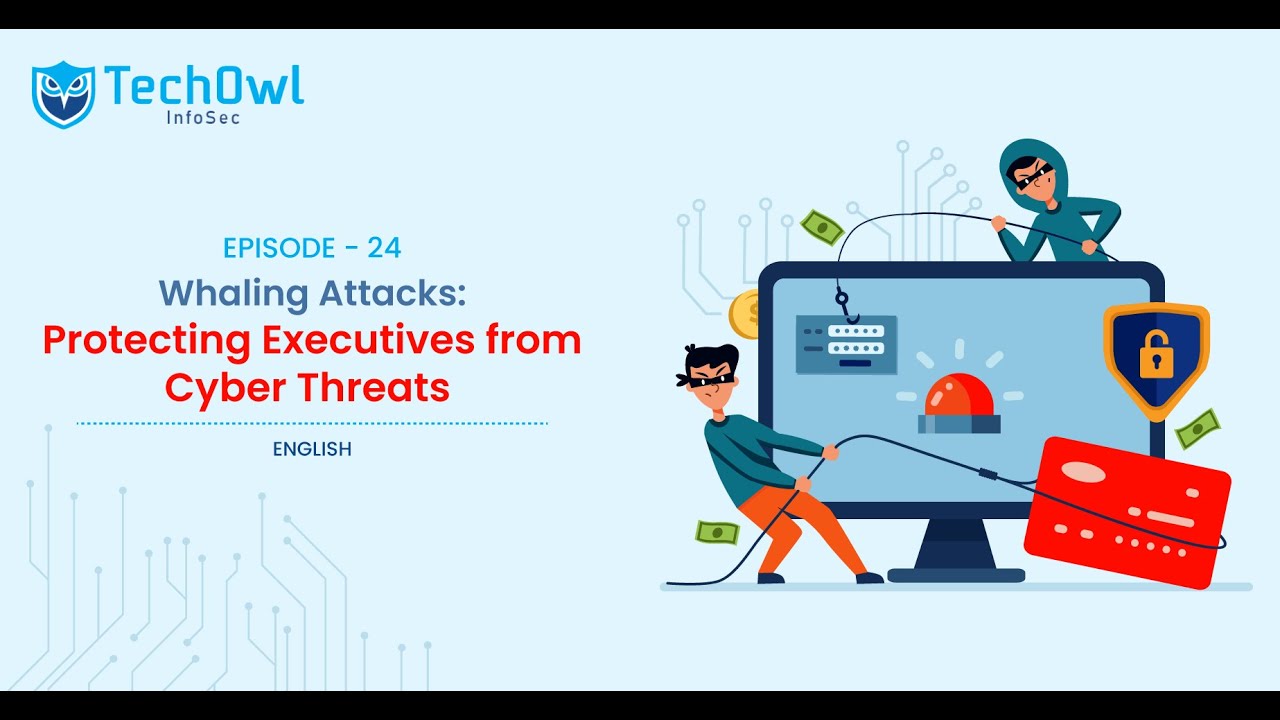
A whaling attack is a highly targeted form of phishing that focuses exclusively on high-level executives and senior leadership think CEOs, CFOs, legal counsel, and board members. The term “whaling” is a deliberate play on the word phishing: if regular phishing casts a wide net, and spear phishing targets specific individuals, then whaling goes after the biggest fish in the sea.
The whaling attack’s meaning goes beyond just a fancy email scam. It’s a sophisticated social engineering tactic that involves extensive research. Attackers study their targets’ LinkedIn profiles, press releases, company filings, and even social media activity to craft messages that appear completely legitimate. The goal is usually to steal sensitive data, gain access to financial systems, or trick someone into authorizing a wire transfer.
Because these attacks mimic legitimate executive communication, they’re incredibly hard to detect through traditional security filters alone.
How Is Whaling Different from Spear Phishing?
Whaling is a type of phishing attack — specifically, it’s a subset of spear phishing. But there are key differences worth understanding:
| Feature | Phishing | Spear Phishing | Whaling |
| Target | Mass audience | Specific individuals | C-suite executives |
| Personalization | Low | High | Very high |
| Research involved | Minimal | Moderate | Extensive |
| Potential damage | Moderate | High | Extremely high |
| Common goal | Credential theft | Data/money theft | Wire transfer, sensitive data |
So if someone asks, “Is whaling a type of phishing attack?” — yes, absolutely. But it’s the most dangerous variant because the targets have the authority to approve large transactions, access intellectual property, and override standard security protocols.
How Whaling Attacks Work
Understanding how whaling attacks work is the first step toward stopping them. Here’s the typical attack lifecycle:
1. Target Identification The attacker selects a high-value target — often someone listed as a C-suite executive on a company’s website or in a press release.
2. Deep Reconnaissance This is where whaling separates itself from ordinary phishing. Attackers spend days or weeks gathering information: the executive’s writing style, current business deals, internal org structure, and even recent travel. Social media and LinkedIn are goldmines for this.
3. Crafting the Whaling Email The attacker creates a convincing whaling email — often impersonating a trusted colleague, legal authority, or financial institution. These emails typically reference real projects, use correct company terminology, and create a sense of urgency.
4. The Ask Common requests include: authorizing a wire transfer, providing employee payroll information, clicking a malicious link, or sharing login credentials. Sometimes attackers follow up with a phone call to add pressure.
5. Execution and Damage Once the target complies, the damage is done — often before anyone realizes what happened.
Whaling Attack Examples from the Real World
Real-world whaling attack examples help illustrate just how convincing these scams can be.
Snapchat (2016): An employee in HR received an email that appeared to come from the CEO. The request? Employee payroll information for the entire company. The employee complied, exposing sensitive data for dozens of current and former staff.
Mattel (2015): A finance executive received what looked like an email from the newly appointed CEO requesting a wire transfer to a vendor in China. The company transferred nearly $3 million before discovering the fraud.
FACC (2016): The Austrian aerospace manufacturer lost €50 million after employees were tricked by a whaling email impersonating the CEO. The CFO was later fired for failing to implement adequate controls.
These aren’t isolated incidents; recent whaling attacks continue to make headlines, and the losses are only growing as attackers become more sophisticated.
Who Is the Target of a Whaling Attack?
So, who is the focus of whaling attacks? The targets of whaling phishing attacks are typically:
- CEOs and C-suite executives highest authority, with minimal oversight
- CFOs and finance directors have direct access to funds and wire transfer approval
- HR directors’ control over employee payroll information and sensitive personnel data
- IT administrators can grant system-level access and disable security controls
- Legal counsel — access to contracts, litigation details, and confidential communications
The common thread: authority + access + busy schedules. Executives receive hundreds of emails a day and are conditioned to act quickly. Attackers exploit that urgency.
Whaling vs. Business Email Compromise (BEC)
Whaling is closely related to business email compromise (BEC), and the two are often used interchangeably, but there’s a distinction. BEC is a broader category of fraud that involves compromising or impersonating legitimate business email addresses. Whaling is one method used to carry out BEC attacks.
When an attacker uses a spoofed email address to impersonate a CEO and request a wire transfer, that’s both a whaling attack and a BEC attack. The FBI has reported that BEC schemes have cost organizations billions globally, and whaling is a primary driver of those losses.
How to Prevent Whaling Attacks
The good news: whaling attacks are preventable with the right mix of technology, process, and employee awareness. Here’s what actually works.
1. Implement Multi-Factor Authentication (MFA)
Multi-factor authentication adds a critical layer of verification. Even if an attacker tricks someone into revealing login credentials, MFA makes it significantly harder to gain access to sensitive systems.
2. Use Anti-Phishing Software and Email Filters
Tools like Proofpoint, Mimecast, and Microsoft Defender for Office 365 offer advanced anti-phishing software that can detect spoofed domains, suspicious email headers, and known phishing patterns. These won’t catch everything, but they drastically reduce exposure.
3. Establish Verification Protocols for Financial Requests
Any request involving wire transferring funds or sharing sensitive data should require out-of-band verification, a phone call to a known number, not a reply to the same email thread. Make this policy mandatory, not optional.
4. Conduct Executive-Level Security Training
Most security awareness training focuses on general employees. But executives need tailored training that specifically addresses whaling phishing attacks, including how to recognize the warning signs and what to do when something feels off.
5. Monitor for Domain Spoofing
Services like Agari or DMARC Analyzer help organizations configure DMARC, DKIM, and SPF records — email authentication protocols that make it much harder for attackers to spoof your company’s email address.
6. Limit Public Exposure of Executive Information
The less an attacker knows, the harder it is to craft a convincing whaling email. Consider what information about executives is publicly available on company websites, press releases, and social media — and trim it where possible.
Tools to Defend Against Whaling Attacks
| Tool | Best For | Notable Feature |
| Proofpoint | Enterprise email security | Advanced threat intelligence, BEC detection |
| Mimecast | Email filtering + archiving | Impersonation protection, awareness training |
| Microsoft Defender for Office 365 | Microsoft 365 environments | Native integration, anti-phishing policies |
| KnowBe4 | Security awareness training | Simulated whaling/phishing campaigns |
| Agari | Brand protection + BEC | AI-driven identity threat detection |
| Abnormal Security | Behavioral email security | Detects unusual communication patterns |
These tools work best in combination — no single solution is a silver bullet against a well-researched whaling attack.
Final Thoughts
A whaling attack isn’t just a technical threat — it’s a human one. The most sophisticated firewall in the world won’t stop an executive from forwarding sensitive data or approving a fraudulent payment if they believe the request is legitimate.
The organizations that defend against whaling most effectively are those that treat it as a business risk, not just an IT problem. That means training at the executive level, enforcing verification protocols, deploying strong anti-phishing software, and building a culture where it’s genuinely okay to pause and double-check — even when the “CEO” says it’s urgent.
Because in the world of whaling, that one pause could save millions.
Frequently Asked Questions
What is the whaling attack’s meaning in simple terms?
A whaling attack is a targeted phishing scam aimed at senior executives. Attackers impersonate trusted parties to trick high-level employees into transferring money, sharing sensitive information, or granting system access.
Is whaling a social engineering attack?
Yes. Whaling is fundamentally a social engineering tactic — it manipulates human psychology (urgency, authority, trust) rather than exploiting technical vulnerabilities.
What type of phishing attack is whaling?
Whaling is a type of spear phishing attack, but it is directed specifically at high-level targets, such as CEOs and CFOs, rather than random employees.
Who is the target of a whaling attack?
C-suite executives, senior managers, HR leaders, and anyone with authority to approve financial transactions or access sensitive data.
How do whaling attacks differ from regular phishing?
Regular phishing is broad and low-effort. Whaling is a narrow and highly researched tactic that attackers invest significant time studying their targets to make their messages appear believable.
Can multi-factor authentication stop a whaling attack?
MFA significantly reduces risk, especially when credentials are stolen. But it won’t stop someone from being socially engineered into approving a wire transfer — which is why process controls and training are equally essential.




- Be Respectful
- Stay Relevant
- Stay Positive
- True Feedback
- Encourage Discussion
- Avoid Spamming
- No Fake News
- Don't Copy-Paste
- No Personal Attacks
- Be Respectful
- Stay Relevant
- Stay Positive
- True Feedback
- Encourage Discussion
- Avoid Spamming
- No Fake News
- Don't Copy-Paste
- No Personal Attacks
