Features of AI: 10 Key Features of Artificial Intelligence Explained
Published: 14 Sep 2025
Artificial Intelligence (AI) is no longer a futuristic idea—it is already embedded in the apps, devices, and services we use every day. From recommendation engines on Netflix and YouTube to virtual assistants, fraud detection systems, and smart healthcare tools, AI is transforming how people interact with technology. The reason these systems can learn, adapt, and make decisions is that they rely on a set of powerful features of AI that enable intelligent behavior.
The most important features of AI include learning capabilities, automation, problem-solving, natural language processing (NLP), computer vision, and adaptability. These characteristics allow AI systems to analyze data, recognize patterns, understand human language, and improve their performance over time. Modern technologies such as machine learning, deep learning, generative AI, and AI agents are built on these core capabilities.
In this guide, we will explore the key features of AI, explain how they work together, and examine real-world examples from healthcare, banking, education, and e-commerce. You will also learn how AI differs from traditional software and which emerging AI capabilities are shaping the future of intelligent systems.
Table of Contents
What Are the Features of AI?
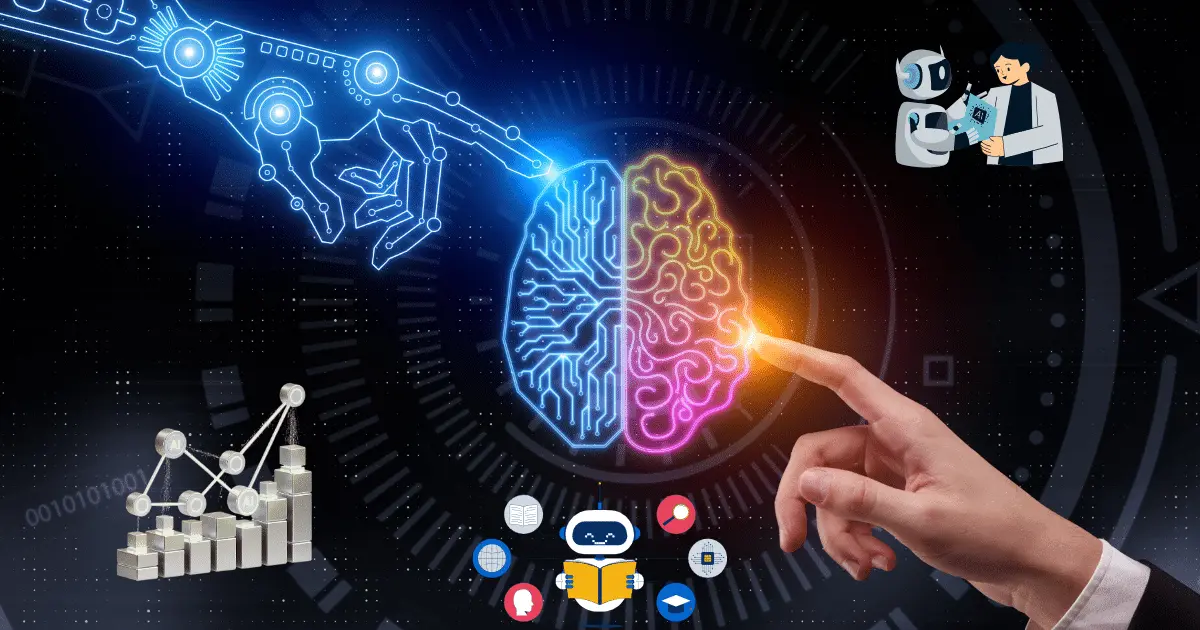
The features of AI are the fundamental capabilities that enable artificial intelligence systems to perform tasks that normally require human intelligence. Unlike traditional software, which follows predefined rules, AI systems can learn from data, recognize patterns, understand language, make decisions, and improve their performance based on new information. These capabilities allow AI to solve complex problems more efficiently and adapt to changing environments without requiring every action to be manually programmed.
At their core, the features of artificial intelligence are built on technologies such as machine learning, deep learning, natural language processing (NLP), and computer vision. Together, these technologies enable AI to process vast amounts of structured and unstructured data, identify meaningful relationships, generate predictions, and interact with humans in increasingly natural ways. Modern AI applications—including recommendation systems, virtual assistants, fraud detection platforms, autonomous vehicles, and generative AI tools—rely on these foundational capabilities rather than a single technology.
One of the defining characteristics of AI is its ability to continuously improve. For example, an email spam filter becomes more accurate as it analyzes new messages, while an AI-powered navigation app refines its route recommendations by learning from real-time traffic conditions. This ability to learn from experience distinguishes AI from conventional software, which can only perform tasks that have been explicitly programmed.
Understanding the key features of AI is essential because they explain why artificial intelligence is transforming industries such as healthcare, finance, manufacturing, education, cybersecurity, and retail. Whether an AI system is diagnosing medical conditions, detecting fraudulent transactions, translating languages, or generating content, its performance depends on a combination of these core features working together.
In simple terms: The features of AI are the capabilities that allow machines to learn, reason, understand information, make decisions, and continuously improve, enabling them to perform tasks that traditionally required human intelligence.
The following sections explore each of these features in detail, explaining how they work, why they matter, and where they are used in real-world applications.
Why Are the Features of AI Important?
The features of AI determine what an artificial intelligence system can accomplish and how effectively it performs real-world tasks. They are not individual functions but interconnected capabilities that enable AI to process information, learn from experience, solve problems, and adapt to changing conditions.
Without these features, AI would function like traditional software—executing fixed instructions without understanding context or improving its performance. Modern AI systems differ in that they combine multiple capabilities to analyze data, make predictions, and support informed decision-making.
The core features of AI make it possible to:
- Learn from data instead of relying solely on predefined rules.
- Recognize patterns across large volumes of structured and unstructured information.
- Make informed decisions using statistical models and learned relationships.
- Understand human language through Natural Language Processing (NLP).
- Interpret images and videos using Computer Vision.
- Automate repetitive tasks with greater speed and consistency.
- Adapt to new information by refining models as additional data becomes available.
These capabilities rarely operate in isolation. For example, a virtual assistant combines several AI features simultaneously:
- Natural Language Processing to understand spoken or typed requests.
- Machine Learning to improve responses over time.
- Reasoning algorithms to determine the most relevant answer.
- Speech synthesis to generate natural-sounding replies.
The same principle applies across industries. An AI-powered fraud detection system identifies unusual transaction patterns, while a medical imaging model analyzes scans to help clinicians detect abnormalities. Although the applications differ, both systems rely on the same foundational AI capabilities.
Why understanding AI features matters
Understanding the features of AI helps readers:
- Evaluate what AI systems can and cannot do.
- Distinguish artificial intelligence from conventional software.
- Understand why different AI applications perform differently.
- Make informed decisions when adopting AI tools in business or everyday life.
- Recognize the technologies that power modern innovations such as generative AI, AI agents, autonomous vehicles, and intelligent recommendation systems.
In the next section, we’ll examine the 10 key features of artificial intelligence, explaining how each feature works, why it matters, and where it is used in practical applications.
10 Key Features of Artificial Intelligence

Artificial intelligence is not defined by a single capability. Instead, it combines multiple features that allow machines to learn, reason, understand information, and perform tasks that traditionally required human intelligence. While different AI systems emphasize different capabilities, most modern applications rely on a combination of the following core features.
1. Learning Capability
The ability to learn from data is one of the defining features of AI. Instead of following only fixed instructions, AI systems identify patterns, improve their predictions, and refine their performance as they process more information.
Machine Learning is the primary technology that enables this capability. Rather than being programmed for every possible scenario, a machine learning model discovers relationships within data and uses them to make future predictions or decisions.
How AI learning works
In a typical learning process, an AI system:
- Collects data from one or more sources.
- Identifies patterns and relationships within the data.
- Builds a predictive model.
- Tests its predictions against new data.
- Improves its accuracy through repeated training.
This iterative process allows AI models to become more reliable over time, provided they receive high-quality and representative data.
Real-world examples
Learning capability powers many AI applications that people use every day, including:
- Email services that improve spam detection as new threats emerge.
- Streaming platforms that recommend movies and music based on viewing history.
- E-commerce websites that personalize product recommendations.
- Financial institutions that detect potentially fraudulent transactions.
- Healthcare systems that assist in identifying diseases from medical images.
Although these applications serve different purposes, they all rely on the same underlying ability to learn from historical data and apply that knowledge to new situations.
Why learning capability matters
Without learning capability, AI would behave like conventional software that executes predefined rules without adapting to new information.
Learning enables AI systems to:
- Improve prediction accuracy over time.
- Adapt to changing environments and user behavior.
- Reduce manual rule creation.
- Support data-driven decision-making.
- Handle increasingly complex tasks across different industries.
Learning capability forms the foundation of many advanced AI technologies, including deep learning, generative AI, and large language models (LLMs). These technologies extend the same principle by training on significantly larger datasets and more complex neural network architectures.
2. Reasoning and Decision-Making
Another defining feature of AI is its ability to evaluate information and make decisions based on learned patterns, predefined objectives, or probabilistic models. Rather than simply executing commands, AI systems assess multiple possibilities before selecting the most appropriate action.
The complexity of decision-making depends on the application. A recommendation engine chooses products that are most relevant to a customer, while an autonomous vehicle continuously evaluates road conditions, traffic signals, and nearby objects to determine the safest driving action.
How AI makes decisions
AI decision-making generally involves:
- Analyzing available data.
- Evaluating multiple possible outcomes.
- Applying statistical or learned models.
- Selecting the action with the highest predicted confidence.
- Updating future decisions as new information becomes available.
Unlike human reasoning, AI does not rely on intuition or emotions. Its decisions are based on patterns found in data and the objectives defined during training.
Real-world examples
Decision-making capabilities are used in:
- Credit risk assessment by financial institutions.
- Route optimization in navigation applications.
- Personalized product recommendations in e-commerce.
- Cybersecurity systems that detect suspicious network activity.
- Supply chain optimization for inventory and logistics planning.
Why reasoning and decision-making matter
These capabilities enable AI to:
- Process large volumes of information faster than manual analysis.
- Improve consistency in repetitive decision-making tasks.
- Support professionals with data-driven insights.
- Respond more effectively to dynamic environments.
- Reduce operational inefficiencies in many industries.
As AI models continue to evolve, reasoning capabilities are becoming increasingly sophisticated, allowing modern systems to solve multi-step problems and assist with complex analytical tasks rather than simple automation alone.
3. Problem-Solving
Problem-solving is a defining feature of AI that enables systems to analyze situations, evaluate possible solutions, and recommend or execute the most effective course of action. Unlike traditional software that follows predefined instructions, AI can process large amounts of information, identify relationships, and solve problems that involve uncertainty or constantly changing variables.
AI approaches problem-solving by combining data analysis, machine learning, reasoning, and optimization techniques. Depending on the application, it may search through millions of possible outcomes before selecting the option that best meets a specific objective.
How AI solves problems
AI problem-solving typically follows these steps:
- Define the objective or desired outcome.
- Collect and analyze relevant data.
- Identify patterns and constraints.
- Evaluate multiple possible solutions.
- Select the option with the highest probability of success.
- Learn from the outcome to improve future decisions.
This process allows AI to handle problems that would be difficult, time-consuming, or impossible to solve manually.
Real-world examples
Problem-solving capabilities are widely used across industries:
- Navigation apps calculate the fastest route by analyzing traffic, accidents, and road conditions in real time.
- Logistics companies optimize delivery routes to reduce fuel costs and delivery times.
- Healthcare systems help physicians identify possible diagnoses by analyzing patient symptoms, medical history, and diagnostic images.
- Manufacturers use AI to predict equipment failures before they interrupt production.
- Financial institutions detect suspicious transactions by identifying unusual spending patterns.
Although these applications serve different purposes, they all rely on AI’s ability to evaluate information and recommend effective solutions.
Why problem-solving matters
Strong problem-solving capabilities allow AI systems to:
- Analyze complex situations more efficiently.
- Improve operational efficiency by reducing manual analysis.
- Support faster and more consistent decision-making.
- Optimize resources while reducing costs.
- Assist professionals with data-driven recommendations rather than replacing human expertise.
As AI models become more advanced, they are increasingly capable of solving multi-step problems that require planning, reasoning, and continuous adaptation.
4. Natural Language Processing (NLP)
Natural Language Processing (NLP) is the AI capability that enables computers to understand, interpret, generate, and respond to human language. It bridges the gap between human communication and machine understanding, allowing people to interact with AI using natural speech or text instead of programming commands.
Modern NLP combines machine learning, deep learning, and large language models to analyze grammar, context, intent, and meaning. Rather than simply recognizing individual words, advanced NLP systems interpret relationships between words to generate more accurate and context-aware responses.
How Natural Language Processing works
A typical NLP system performs several tasks simultaneously:
- Identifies words and sentence structure.
- Understands context and user intent.
- Extracts important information from text or speech.
- Generates meaningful responses.
- Improves performance through additional training and user interactions.
These capabilities allow AI to process both written and spoken language with increasing accuracy.
Real-world examples
Natural Language Processing powers many everyday AI applications, including:
- AI chatbots that answer customer questions.
- Virtual assistants such as Siri, Alexa, and Google Assistant.
- Language translation services.
- Email spam detection.
- Text summarization tools.
- AI writing assistants.
- Sentiment analysis is used to evaluate customer feedback and social media discussions.
Large Language Models (LLMs), including ChatGPT, Gemini, and Claude, represent one of the most advanced applications of Natural Language Processing. They generate human-like responses by predicting the most appropriate sequence of words based on context and extensive training data.
Why Natural Language Processing matters
NLP has significantly expanded how humans interact with technology by making communication more intuitive and accessible.
Its benefits include:
- Faster access to information through conversational interfaces.
- Improved customer support with AI-powered assistants.
- More accurate translation between languages.
- Automation of document analysis and text processing.
- Better accessibility through voice-controlled technologies.
As conversational AI continues to evolve, Natural Language Processing remains one of the most influential features driving modern artificial intelligence systems.
5. Computer Vision
Computer Vision is the branch of artificial intelligence that enables machines to interpret and understand visual information from images, videos, and live camera feeds. Instead of simply capturing images, AI systems analyze visual data to identify objects, detect patterns, recognize faces, and understand their surroundings.
This capability is powered by deep learning models, particularly convolutional neural networks (CNNs), which are trained on millions of labeled images to recognize visual features with increasing accuracy.
How Computer Vision works
A Computer Vision system generally follows these steps:
- Captures an image or video.
- Processes the visual data to improve quality.
- Detects important objects, shapes, or patterns.
- Classifies what it identifies.
- Produces a prediction or recommended action.
Modern Computer Vision systems can perform these tasks in real time, making them suitable for applications where speed and accuracy are critical.
Real-world examples
Computer Vision is widely used across industries, including:
- Healthcare systems that analyze X-rays, CT scans, and MRI images to support medical diagnosis.
- Autonomous vehicles that identify pedestrians, traffic signs, lane markings, and other vehicles.
- Manufacturing plants that automatically detect product defects during quality inspections.
- Retail stores that use cashier-less checkout systems.
- Smartphones that unlock using facial recognition.
- Agricultural drones that monitor crop health and detect plant diseases.
Why Computer Vision matters
Computer Vision enables AI systems to interpret the physical world with greater speed and consistency than manual inspection in many situations.
Its advantages include:
- Faster image analysis.
- Improved accuracy for repetitive visual tasks.
- Continuous monitoring without fatigue.
- Early detection of defects, diseases, or safety risks.
- Better support for professionals in healthcare, manufacturing, and transportation.
Rather than replacing human expertise, Computer Vision often serves as a decision-support tool that helps professionals work more efficiently.
6. Pattern Recognition
Pattern recognition is one of the core features of AI that enables systems to identify meaningful relationships within large datasets. Instead of treating every piece of information independently, AI looks for recurring structures, trends, similarities, and anomalies that may not be immediately visible to humans.
Pattern recognition forms the foundation of many machine learning models. The better an AI system identifies patterns, the more accurately it can make predictions, classify information, or detect unusual events.
How pattern recognition works
An AI system typically:
- Collects data from multiple sources.
- Identifies recurring relationships.
- Groups similar data points.
- Detects unusual or unexpected patterns.
- Uses those patterns to make future predictions.
As additional data becomes available, AI models continue refining their understanding of these relationships.
Real-world examples
Pattern recognition supports numerous AI applications, such as:
- Banks identifying fraudulent financial transactions.
- Email services filtering spam messages.
- Streaming platforms recommending movies based on viewing habits.
- Weather forecasting models predicting changing conditions.
- Cybersecurity systems detecting abnormal network activity.
- Hospitals identifying disease patterns from patient records.
Although the applications differ, each relies on AI’s ability to recognize relationships hidden within large amounts of data.
Why pattern recognition matters
Pattern recognition allows AI systems to:
- Detect trends more quickly than manual analysis.
- Improve prediction accuracy.
- Identify anomalies before they become major problems.
- Personalize recommendations based on user behavior.
- Support faster and more informed decision-making.
Many advanced AI capabilities—including recommendation engines, predictive analytics, fraud detection, and medical diagnostics—would not be possible without accurate pattern recognition.
7. Automation
Automation is one of the most practical features of AI because it enables systems to perform repetitive or time consuming tasks with minimal human intervention. Unlike traditional automation, which follows predefined rules, AI driven automation can analyze new information, adapt to changing conditions, and make decisions based on data.
This capability allows organizations to automate complex workflows that previously required human judgment. As AI models continue to learn from new data, they can improve both the speed and quality of automated processes.
How AI automation works
AI automation typically follows this process:
- Receives data from users, sensors, or connected systems.
- Analyzes the information using trained AI models.
- Determines the most appropriate action.
- Executes the task automatically.
- Learns from feedback to improve future performance.
Because AI can process information continuously, it can complete many tasks faster and with greater consistency than manual processes.
Real-world examples
Automation powered by AI is widely used across industries.
- Customer service chatbots answer routine questions around the clock.
- Banks automatically detect suspicious financial transactions for further review.
- Manufacturers use AI to monitor production lines and identify quality issues.
- Logistics companies optimize delivery schedules based on traffic and weather conditions.
- Smart homes automatically adjust lighting, heating, and security settings based on user preferences.
These examples show that AI automation is not simply about replacing manual work. It is about improving efficiency while allowing people to focus on tasks that require creativity, critical thinking, or complex decision making.
Why automation matters
AI powered automation provides several important benefits.
- Increases operational efficiency.
- Reduces repetitive manual work.
- Improves consistency and accuracy.
- Responds quickly to changing conditions.
- Supports business scalability without proportionally increasing workload.
As organizations generate larger amounts of data, intelligent automation has become one of the primary reasons businesses invest in artificial intelligence.
8. Adaptability
Adaptability is the ability of an AI system to adjust its behavior when new data, environments, or situations are introduced. Rather than remaining fixed after deployment, many AI systems continue to improve as they receive additional information.
This capability is especially valuable because real world conditions constantly change. Customer preferences evolve, financial markets fluctuate, cybersecurity threats become more sophisticated, and traffic conditions vary throughout the day. AI systems that can adapt are better equipped to maintain their performance under these changing conditions.
How adaptability works
Adaptability depends on continuous learning and model improvement.
A typical adaptive AI system:
- Collects new information from its environment.
- Compares new data with previous patterns.
- Updates its predictions when necessary.
- Refines its decision-making process over time.
- Maintains performance as conditions evolve.
Not every AI system continuously learns after deployment. In many commercial applications, models are periodically retrained using updated datasets to improve accuracy and account for changing conditions.
Real-world examples
Adaptability is essential in many AI applications.
- Navigation apps recommend alternative routes when traffic conditions change.
- Recommendation systems adjust suggested products as customer interests evolve.
- Cybersecurity platforms update detection models to identify emerging threats.
- Fraud detection systems recognize new patterns of suspicious activity.
- Voice assistants improve speech recognition as they process more user interactions.
These examples demonstrate that adaptability enables AI systems to remain useful even as the environment around them changes.
Why adaptability matters
Adaptability makes artificial intelligence more reliable in dynamic environments because it allows systems to:
- Improve performance over time.
- Respond to changing user behavior.
- Reduce the impact of outdated information.
- Maintain accuracy as new data becomes available.
- Support long-term decision-making in rapidly changing industries.
Combined with learning capability, adaptability enables AI systems to deliver more accurate, efficient, and relevant outcomes throughout their operational lifecycle.
9. Continuous Improvement
One of the most valuable features of AI is its ability to improve over time. While traditional software typically performs the same way unless it is manually updated, many AI systems become more accurate as they are trained with new, high quality data. This process helps AI models refine their predictions, reduce errors, and adapt to changing conditions.
Continuous improvement does not mean that an AI system automatically learns from every interaction after deployment. In many real world applications, developers periodically retrain AI models using updated datasets to improve performance and address new challenges.
How continuous improvement works
Most AI systems improve through a structured process that includes:
- Collecting new and relevant data.
- Evaluating the model’s current performance.
- Identifying prediction errors or performance gaps.
- Retraining the model using updated datasets.
- Testing the improved model before deployment.
This cycle enables AI systems to remain accurate and relevant as data and user behavior evolve.
Real world examples
Continuous improvement supports many AI applications, including:
- Search engines that refine search results based on updated information.
- Speech recognition systems that improve accuracy across different accents and languages.
- Recommendation engines that adjust suggestions as user preferences change.
- Fraud detection platforms that learn to recognize emerging fraud techniques.
- Autonomous driving systems that improve object detection using new driving data.
Why continuous improvement matters
Continuous improvement helps AI systems:
- Maintain accuracy in changing environments.
- Deliver more reliable predictions.
- Reduce performance degradation over time.
- Respond to new patterns that were not present during initial training.
- Increase long term value for businesses and users.
As AI adoption continues to grow, the ability to improve over time remains one of its greatest advantages over conventional software systems.
10. Perception
Perception is the ability of an AI system to collect, interpret, and understand information from its surrounding environment. Just as humans use their senses to observe the world, AI systems use sensors, cameras, microphones, and other input devices to gather data before making decisions or taking action.
Perception combines technologies such as Computer Vision, speech recognition, sensor fusion, and machine learning to transform raw data into meaningful information. This capability allows AI to recognize objects, understand spoken language, detect movement, and respond to changes in real time.
Without perception, an AI system would have no reliable way to understand the environment in which it operates.
How AI perception works
Most AI systems follow a structured perception process:
- Collect information through cameras, microphones, sensors, or connected devices.
- Process raw data to remove noise and improve quality.
- Identify objects, sounds, text, or other meaningful patterns.
- Interpret the information using trained AI models.
- Pass the processed information to other AI capabilities, such as reasoning, decision making, or automation.
Perception is often the first stage in an AI system’s workflow because accurate decisions depend on accurate observations.
Real world examples
Perception enables a wide range of AI applications.
- Autonomous vehicles detect pedestrians, traffic signs, road markings, and nearby vehicles using cameras, radar, and LiDAR.
- Voice assistants recognize spoken commands before generating responses.
- Facial recognition systems verify a person’s identity by analyzing facial features.
- Smart security cameras identify unusual activity and send real time alerts.
- Industrial robots monitor production lines to detect defects or equipment issues.
Although these systems operate in different environments, they all rely on AI’s ability to perceive and interpret the world around them.
Why perception matters
Perception is essential because it provides the information that drives every other AI capability.
It enables AI systems to:
- Understand their environment before making decisions.
- Improve the accuracy of predictions and recommendations.
- Respond to changing conditions in real time.
- Support safer operation in applications such as autonomous driving and industrial automation.
- Enhance human interaction through voice, image, and gesture recognition.
Modern AI would not be capable of understanding speech, recognizing faces, interpreting medical images, or navigating complex environments without strong perception capabilities. It serves as the foundation that allows learning, reasoning, and decision making to operate effectively.
How AI Features Work Together
The individual features of AI rarely operate in isolation. Modern artificial intelligence systems combine multiple capabilities to analyze information, make decisions, and complete tasks efficiently. A virtual assistant, for example, does not rely on a single AI feature. It uses several technologies simultaneously to understand a request, process information, determine the most appropriate response, and improve future interactions.
Understanding how these capabilities work together provides a clearer picture of why artificial intelligence is far more powerful than traditional software. Rather than following a fixed sequence of rules, AI systems continuously process information, identify relationships, and adapt their behavior based on new data.
A typical AI workflow
Most AI systems follow a sequence of interconnected processes:
- Data collection
- Information is gathered from sources such as sensors, databases, cameras, documents, or user interactions.
- Pattern recognition
- Machine learning algorithms identify relationships, trends, and anomalies within the collected data.
- Learning
- The AI model uses these patterns to improve its understanding and refine future predictions.
- Reasoning and decision making
- The system evaluates possible outcomes and selects the action that best matches its objective.
- Automation
- Once a decision is made, the AI system performs the required task or provides recommendations.
- Continuous improvement
- Feedback and new data are used to retrain the model, helping it improve accuracy over time.
This interconnected process enables AI to handle complex tasks that would be difficult to accomplish using conventional software alone.
Example: How an AI-powered navigation app works
Consider a navigation application that recommends the fastest route to your destination.
It combines several features of AI at the same time:
- Data processing collects information from GPS satellites, traffic sensors, road maps, and user devices.
- Pattern recognition identifies recurring traffic congestion and travel trends.
- Learning capability improves route recommendations based on historical and real time traffic data.
- Reasoning and decision-making evaluate multiple routes to determine the fastest option.
- Adaptability updates directions immediately when accidents or road closures occur.
- Automation delivers turn by turn guidance without requiring manual calculations.
No single capability makes the system intelligent. Instead, intelligence emerges from the interaction of multiple AI features working together toward a common objective.
This same principle applies to healthcare diagnostics, financial fraud detection, recommendation systems, autonomous vehicles, and modern generative AI platforms. While each application serves a different purpose, they all rely on the coordinated use of multiple features of artificial intelligence to deliver accurate, efficient, and context aware results.
How AI Features Work Together
Artificial intelligence is most effective when its core capabilities work together rather than independently. A modern AI system does not rely on a single feature such as learning or automation. Instead, it combines multiple features of AI to understand information, make decisions, solve problems, and improve performance over time.
This interaction between capabilities is what makes artificial intelligence fundamentally different from traditional software. Conventional programs follow predefined instructions, while AI systems analyze data, recognize patterns, reason through possible outcomes, and adapt their behavior as new information becomes available.
The AI decision making process
Although AI applications vary across industries, most systems follow a similar sequence of operations.
- Perceive information AI collects data from one or more sources, such as images, sensors, text, audio, databases, or user interactions.
- Recognize patterns Machine learning algorithms identify meaningful relationships, trends, and anomalies within the collected data.
- Learn from experience The AI model compares new information with previous training data to improve future predictions and responses.
- Reason and evaluate The system analyzes different possibilities and determines which action is most appropriate for the given objective.
- Take action Based on its decision, the AI system performs a task, generates a recommendation, or supports a human decision.
- Improve over time Feedback and updated data are used to refine the model, helping the AI system become more accurate and reliable.
Each stage depends on the one before it. If the system receives poor quality data or incorrectly recognizes patterns, the final decision is also likely to be less accurate. This is why data quality, model training, and continuous evaluation remain essential components of responsible AI development.
Example: An AI powered fraud detection system
Banks process millions of financial transactions every day. Reviewing each transaction manually would be impractical, so financial institutions use AI to identify potentially fraudulent activity.
A typical fraud detection system combines several AI features simultaneously.
| AI Feature | Role in Fraud Detection |
|---|---|
| Learning Capability | Learns from historical fraud cases to improve detection accuracy. |
| Pattern Recognition | Identifies unusual spending behavior or transaction patterns. |
| Reasoning and Decision Making | Evaluates whether a transaction is likely to be legitimate or suspicious. |
| Adaptability | Adjusts to new fraud techniques as criminals change their methods. |
| Automation | Flags or temporarily blocks suspicious transactions for review. |
| Continuous Improvement | Improves future performance through retraining with newly confirmed fraud cases. |
No single feature detects fraud on its own. The system produces reliable results because multiple AI capabilities work together throughout the decision making process.
Why this relationship matters
Understanding how AI features interact provides a more accurate picture of artificial intelligence than studying each capability separately.
It also explains why modern AI systems can:
- Solve complex problems that involve multiple variables.
- Produce more accurate predictions as additional data becomes available.
- Adapt to changing environments without requiring constant manual updates.
- Support faster and more consistent decision making.
- Deliver intelligent services across healthcare, finance, manufacturing, education, transportation, and many other industries.
Rather than operating as isolated technologies, the features of artificial intelligence form an interconnected system where each capability strengthens the others. This relationship is what enables AI to deliver practical value in real-world applications.
AI Features in Real World Applications
The features of AI become easier to understand when you see how they are applied in real world scenarios. While industries use artificial intelligence for different purposes, they all rely on the same core capabilities, including learning, reasoning, pattern recognition, Natural Language Processing, Computer Vision, automation, and adaptability. The combination of these features allows AI systems to solve problems, improve efficiency, and support better decision making across diverse sectors.
Healthcare
Artificial intelligence is helping healthcare professionals analyze medical data more efficiently and make better informed clinical decisions. Rather than replacing doctors, AI serves as a decision support tool that assists with diagnosis, treatment planning, and patient monitoring.
Key AI features used
- Learning Capability
- Computer Vision
- Pattern Recognition
- Reasoning and Decision Making
Common applications
- Detecting abnormalities in X rays, CT scans, and MRI images.
- Predicting patient health risks using medical records.
- Supporting clinicians with diagnostic recommendations.
- Accelerating drug discovery by analyzing biological data.
Finance
Banks and financial institutions use AI to improve security, reduce fraud, and automate routine financial processes. AI systems continuously evaluate transaction data, allowing organizations to respond more quickly to suspicious activities and changing market conditions.
Key AI features used
- Pattern Recognition
- Learning Capability
- Automation
- Adaptability
Common applications
- Fraud detection.
- Credit risk assessment.
- Algorithmic trading.
- Personalized financial recommendations.
- Anti money laundering monitoring.
Retail and Ecommerce
Retailers use AI to create more personalized shopping experiences while improving inventory management and operational efficiency. By analyzing customer behavior and purchasing patterns, AI helps businesses deliver products and services that better match individual preferences.
Key AI features used
- Learning Capability
- Pattern Recognition
- Natural Language Processing
- Automation
Common applications
- Personalized product recommendations.
- AI powered customer support.
- Demand forecasting.
- Inventory optimization.
- Dynamic pricing.
Manufacturing
Manufacturers use AI to improve product quality, reduce equipment downtime, and optimize production processes. AI systems continuously monitor machines and production lines to identify issues before they affect operations.
Key AI features used
- Computer Vision
- Automation
- Pattern Recognition
- Continuous Improvement
Common applications
- Automated quality inspection.
- Predictive maintenance.
- Industrial robotics.
- Production scheduling.
- Workplace safety monitoring.
Transportation
Artificial intelligence plays an increasingly important role in improving transportation safety, efficiency, and logistics. AI analyzes large volumes of traffic and vehicle data to support better navigation and operational planning.
Key AI features used
- Computer Vision
- Adaptability
- Reasoning and Decision Making
- Automation
Common applications
- Route optimization.
- Traffic prediction.
- Driver assistance systems.
- Fleet management.
- Autonomous vehicle technology.
Education
Educational institutions use AI to personalize learning experiences and reduce administrative workloads. AI systems analyze student performance to identify learning gaps and recommend educational resources that match individual needs.
Key AI features used
- Learning Capability
- Natural Language Processing
- Automation
- Pattern Recognition
Common applications
- Intelligent tutoring systems.
- Automated grading assistance.
- Personalized learning pathways.
- Language learning applications.
- Student performance analytics.
A Common Foundation Across Every Industry
Although the applications vary, the underlying technology remains the same. Every AI system depends on a combination of core capabilities that work together to process information, identify patterns, make decisions, and improve performance over time.
For example, a hospital uses AI to analyze medical images, a bank uses AI to detect fraudulent transactions, and an online retailer uses AI to recommend products. Each system solves a different problem, yet all rely on the same features of AI to deliver accurate and efficient results.
This demonstrates an important principle of artificial intelligence. The industries may differ, but the foundational capabilities remain consistent. Understanding these capabilities makes it easier to evaluate how AI systems work today and how they will continue to evolve across healthcare, finance, manufacturing, education, transportation, retail, and many other sectors.
AI Features vs Traditional Software: What’s the Difference?
Artificial intelligence and traditional software are both designed to solve problems, but they do so in fundamentally different ways. Traditional software follows predefined instructions written by developers, while AI systems learn from data, identify patterns, and make decisions based on experience and probability.
This distinction is one of the reasons AI has become a transformative technology across industries. Instead of requiring developers to anticipate every possible scenario, AI systems can adapt to new information and improve their performance over time.
The table below highlights the key differences.
| Feature | Artificial Intelligence | Traditional Software |
|---|---|---|
| Learning | Learns from data and improves performance through training. | Does not learn unless developers manually update the program. |
| Decision Making | Evaluates data and predicts the most appropriate outcome. | Executes predefined rules and logical conditions. |
| Adaptability | Adjusts to changing inputs and environments. | Produces the same output for the same input. |
| Pattern Recognition | Detects relationships and trends within large datasets. | Cannot recognize patterns unless explicitly programmed. |
| Handling Uncertainty | Can make predictions even when information is incomplete or uncertain. | Requires clearly defined inputs and rules. |
| Performance Over Time | Often improves after retraining with new data. | Remains unchanged until new code is deployed. |
When traditional software is the better choice
Artificial intelligence is not always the right solution. In many situations, traditional software is more practical because it is predictable, easier to test, and requires fewer computing resources.
Traditional software is well-suited for tasks such as:
- Payroll calculations.
- Inventory management based on fixed rules.
- Basic calculators.
- File management systems.
- Standard database operations.
These applications follow clearly defined business rules that rarely change, making AI unnecessary.
When AI provides a significant advantage
AI becomes valuable when problems involve large volumes of data, changing conditions, or decisions that cannot easily be described using fixed rules.
Examples include:
- Detecting fraudulent financial transactions.
- Translating text between languages.
- Recommending products based on customer behavior.
- Identifying diseases from medical images.
- Predicting equipment failures in manufacturing.
- Assisting autonomous vehicles with real-time navigation.
In these situations, AI can analyze far more information than humans or conventional software within the same amount of time.
Common Misconceptions About AI Features
Artificial intelligence has advanced rapidly over the past decade, but many misconceptions still exist about its capabilities. Understanding what AI can and cannot do helps set realistic expectations and encourages more informed adoption across industries.
AI thinks like humans
One of the most common misconceptions is that AI thinks and reasons in the same way humans do. In reality, AI does not possess consciousness, emotions, or self awareness.
AI systems analyze data, identify patterns, and generate outputs based on mathematical models and statistical probabilities. Even advanced systems that produce human like responses do not understand information in the same way people do.
AI learns everything on its own
Many people believe AI automatically becomes smarter through every interaction. While some AI systems can adapt after deployment, many commercial AI models improve through periodic retraining with carefully prepared datasets.
The quality of the data used for training has a direct impact on the accuracy and reliability of an AI system.
AI always produces accurate results
Artificial intelligence can achieve high levels of accuracy, but it is not infallible. AI models can make incorrect predictions, misunderstand context, or generate inaccurate information when trained on incomplete, outdated, or biased data.
For this reason, AI outputs should be reviewed by human experts in areas where accuracy is critical, such as healthcare, finance, legal services, and scientific research.
AI replaces human expertise
AI is often presented as a replacement for human workers, but its primary role is to support human decision making rather than eliminate it.
For example:
- Doctors use AI to assist with medical image analysis.
- Financial analysts use AI to identify market trends.
- Cybersecurity professionals use AI to detect suspicious network activity.
- Manufacturers use AI to monitor production quality.
In each case, AI helps professionals work more efficiently, while final decisions remain the responsibility of qualified individuals.
Every AI system has the same features
Not all AI systems are designed to perform the same tasks. A chatbot that answers customer questions has different capabilities from an autonomous vehicle or a medical diagnostic system.
The combination of AI features depends on the application’s purpose. Some systems rely heavily on Natural Language Processing, while others depend on Computer Vision, pattern recognition, or reasoning and decision making.
Understanding these differences makes it easier to evaluate AI products and choose solutions that match specific business or personal needs.
The key takeaway
Artificial intelligence is neither a magical technology nor a replacement for human intelligence. Its strength comes from combining multiple features such as learning, reasoning, pattern recognition, language understanding, and automation to solve specific problems efficiently.
Recognizing both the capabilities and limitations of AI provides a more balanced understanding of how modern intelligent systems work and where they deliver the greatest value.
Can AI replace traditional software?
Artificial intelligence is not replacing traditional software. Instead, the two technologies increasingly work together.
For example, an online shopping platform still relies on conventional software to manage customer accounts, process payments, and maintain product databases. AI is added to enhance specific functions such as product recommendations, customer support, demand forecasting, and fraud detection.
This combination allows organizations to benefit from the reliability of traditional software while using the features of AI to solve more complex, data-driven problems.
Understanding this difference helps explain why AI is best viewed as an enhancement rather than a replacement. The most effective digital systems combine conventional software with artificial intelligence, using each where it delivers the greatest value.
Conclusion
The features of AI are the foundation of every modern artificial intelligence system. Capabilities such as learning, reasoning, problem solving, Natural Language Processing, Computer Vision, pattern recognition, automation, adaptability, and continuous improvement enable AI to analyze information, make informed decisions, and support people across countless real world applications.
As AI continues to evolve, these core features are becoming more sophisticated, allowing intelligent systems to solve increasingly complex challenges in healthcare, finance, manufacturing, education, transportation, retail, and many other industries. At the same time, understanding AI’s capabilities and limitations is essential for using the technology responsibly and effectively.
Whether you are a student exploring artificial intelligence, a business evaluating AI solutions, or a technology professional building intelligent applications, understanding these fundamental features provides the knowledge needed to make informed decisions in an AI driven world.
Artificial intelligence is not defined by a single capability. Its true strength comes from the way multiple features work together to process information, learn from experience, adapt to change, and deliver meaningful outcomes. As new AI technologies continue to emerge, these foundational capabilities will remain at the core of the next generation of intelligent systems.
FAQs-Features of AI
What are the main features of AI?
AI features include learning (machine learning & deep learning), automation, problem-solving, human-like interaction (NLP, computer vision), and adaptability.
What are the advantages of AI features in daily life?
AI improves accuracy, reduces costs, and offers personalized services — from e-commerce recommendations to AI-driven banking, healthcare, and education tools.
How is AI used in India today?
In India, AI is used in fintech (fraud detection, digital lending), EdTech (personalized learning), healthcare (diagnostics), and e-commerce (chatbots, product recommendations).
What are ethical features of AI?
Key ethical features include fairness, transparency, bias detection, explainability, and human oversight — all crucial for responsible AI use.
What are future features of AI to watch?
Emerging AI features include generative AI (creating text, images, video), self-supervised learning, autonomous systems, and Edge AI (on-device intelligence).
What is the difference between AI and Machine Learning features?
AI refers to the broader concept of creating intelligent systems, while ML is a subset of AI focused on learning from data. ML powers many of AI’s key features.

AI Text Message Generator: How Smart Automated Text Generation is Changing Communication





- Be Respectful
- Stay Relevant
- Stay Positive
- True Feedback
- Encourage Discussion
- Avoid Spamming
- No Fake News
- Don't Copy-Paste
- No Personal Attacks
- Be Respectful
- Stay Relevant
- Stay Positive
- True Feedback
- Encourage Discussion
- Avoid Spamming
- No Fake News
- Don't Copy-Paste
- No Personal Attacks
