Why Edge AI is the Future of Digital Privacy?
Published: 22 Feb 2026
Edge AI is emerging as a pivotal technology that promises to redefine digital privacy. Unlike traditional Cloud AI, where data is sent to data centers for processing, Edge AI processes data directly on devices like smartphones, smart speakers, and even home appliances. This on-device AI processing minimizes the need to transmit sensitive information over the internet, offering a significant boost to user privacy. The main benefits of Edge AI include enhanced security, reduced latency, and the ability to function offline, ensuring continuous operation even without network connectivity. Key applications span across healthcare for health data analysis on smartwatches, finance for secure transactions, and everyday consumer electronics like smartphones for facial recognition.
The core components enabling this shift are advances in semiconductors, including logic chips, memory, and sensors. This article explores the growing concerns surrounding digital privacy, the mechanics of Edge AI and edge computing, its advantages for privacy and security, real-world applications, and the challenges and risks it presents. Ultimately, we will discuss why Edge AI is not just a technological advancement but a crucial step towards a more secure and privacy-centric digital future.
Table of Contents
The Growing Problem of Digital Privacy
Digital privacy is increasingly threatened in an era where vast amounts of personal data are collected, stored, and analyzed. The pervasive nature of the internet and the proliferation of connected devices have created unprecedented opportunities for data breaches, surveillance, and misuse of personal information.
Why is Digital Privacy a Problem?
Digital privacy is a problem because the collection and misuse of personal data can lead to several negative consequences. These include identity theft, financial fraud, and unauthorized access to sensitive information. Additionally, the aggregation of personal data can enable targeted advertising and manipulation, raising ethical concerns about autonomy and free will. The concentration of data in large data centers also creates attractive targets for cyberattacks, potentially exposing the personal information of millions of individuals.
The Future of Digital Privacy: A Looming Crisis?
Without proactive measures, the future of digital privacy looks increasingly bleak. As AI becomes more integrated into daily life, the volume and sensitivity of the data collected will only continue to grow. The increasing sophistication of AI-driven surveillance technologies poses a significant threat to individual freedoms and autonomy. Addressing this looming crisis requires a shift towards privacy-preserving technologies like Edge AI and the implementation of robust data protection regulations.
Understanding Edge AI and Edge Computing
To understand why Edge AI is the future of digital privacy, it’s crucial to define and differentiate between Edge AI and edge computing, highlighting their unique roles and benefits.
What is Edge AI?
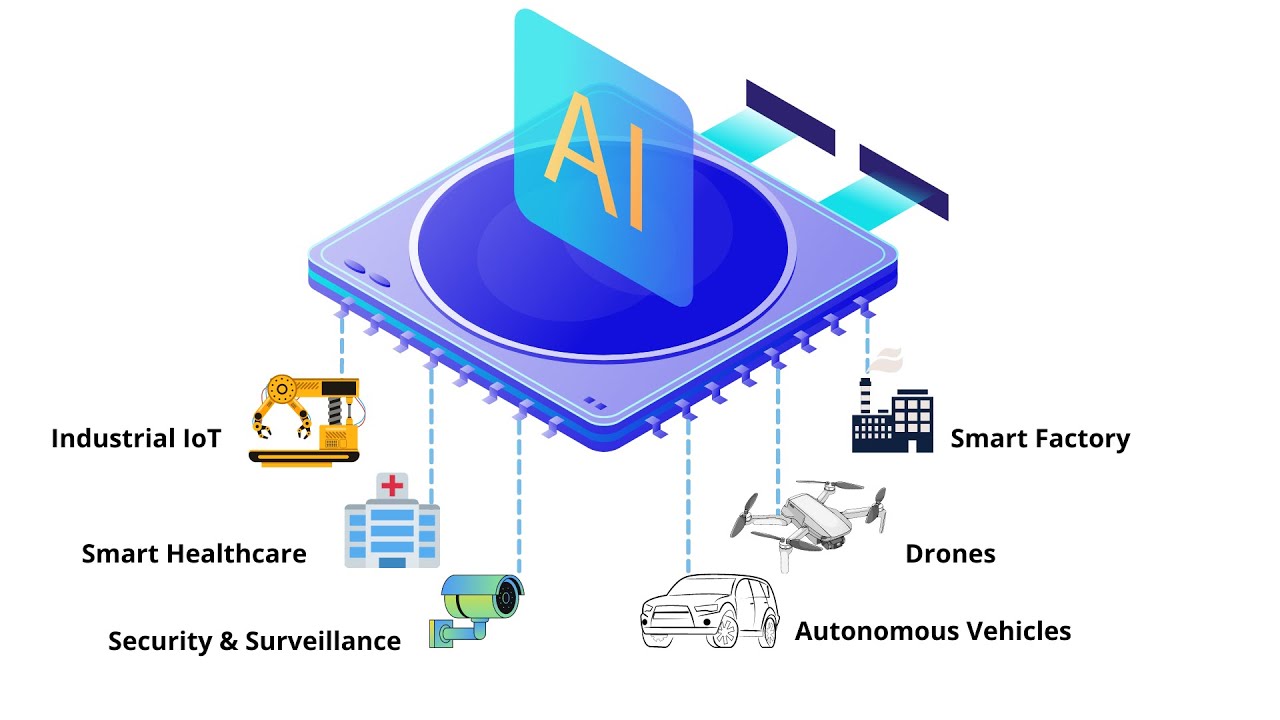
Edge AI refers to the deployment of AI algorithms on edge devices, such as smartphones, AI-enabled cameras, and smart speakers, rather than relying on remote data centers. This allows AI processing to occur locally, closer to the data source, enhancing privacy and reducing latency. Edge AI leverages specialized hardware like NPUs, TPUs, and GPUs to perform complex computations efficiently on-device.
What is Edge Computing?
Edge computing is a distributed computing paradigm that brings computation and data storage closer to the location where it is needed, improving response times and saving bandwidth. Edge computing provides the infrastructure necessary to enable Edge AI by providing the necessary processing power and storage capabilities at the network’s edge.
Why Edge Computing is the Future
Edge computing is the future because it addresses several critical limitations of traditional cloud computing. By processing data closer to the source, edge computing reduces latency, conserves network bandwidth, and enhances privacy and security. This decentralized approach is particularly beneficial for applications requiring real-time responses, such as autonomous vehicles, industrial automation, and remote healthcare.
Edge AI: A Solution for Enhanced Privacy
Edge AI offers a compelling solution to the growing problem of digital privacy by minimizing the need to transmit sensitive data to remote servers. This approach enhances privacy, security, and reduces latency, making it a key technology for the future of digital interactions.
How Edge AI Enhances Privacy
Edge AI enhances privacy by processing data locally on the device, eliminating the need to send sensitive information to data centers. This minimizes the risk of data breaches, unauthorized access, and surveillance. By keeping data on the device, Edge AI empowers users with greater control over their personal information.
The Role of Edge AI in Privacy
The role of Edge AI in privacy is to provide a decentralized approach to data processing that prioritizes user control and security. By enabling on-device AI, Edge AI reduces the attack surface for cybercriminals and minimizes the potential for misuse of personal data. This paradigm shift is essential for building a more trustworthy and privacy-centric digital ecosystem.
Edge AI Benefits for Privacy and Security
The advantages of Edge AI extend beyond privacy, offering significant security benefits. Processing data locally reduces reliance on cloud infrastructure, minimizing the risk of data breaches and unauthorized access.
Edge AI Privacy Advantages
Edge AI’s privacy advantages include data localization, reduced data transmission, and enhanced user control. By processing data on the device, Edge AI ensures that sensitive information remains within the user’s control and is not subject to external surveillance or interference.
Edge AI Security Benefits
Edge AI’s security benefits include a smaller attack surface, reduced reliance on cloud infrastructure, and enhanced resilience against cyberattacks. By decentralizing data processing, Edge AI minimizes the potential impact of data breaches and unauthorized access.
Benefits of Edge AI for Privacy
The benefits of Edge AI for privacy are numerous. It offers decentralized data governance, on-device model training, and local inference protection. This leads to reduced cloud dependency, eliminating data transmission and bypassing centralized vulnerabilities. The result is personalized privacy controls and context-aware privacy policies, enhancing overall data protection.
Edge AI and Data Privacy
Edge AI directly addresses data privacy concerns by ensuring data localization and minimizing the transmission of sensitive information. By processing data on the device, Edge AI empowers users with greater control over their personal data and reduces the risk of unauthorized access or misuse.
Edge AI and Data Security
Edge AI significantly enhances data security by reducing the attack surface and minimizing the risk of data breaches. By processing data locally, Edge AI ensures that sensitive information remains within the user’s control and is not subject to external threats.
Edge AI Data Security
Edge AI data security is enhanced through on-device processing, which reduces the reliance on cloud infrastructure and minimizes the risk of data breaches. By keeping data on the device, Edge AI ensures that sensitive information remains within the user’s control and is not subject to external threats.
Is Edge AI More Secure?
Yes, Edge AI is generally more secure than traditional Cloud AI due to its decentralized architecture and reduced attack surface. By processing data locally, Edge AI minimizes the risk of data breaches and unauthorized access. However, it’s important to note that Edge AI also introduces new security challenges, such as the need to secure individual edge devices.
Edge AI Privacy Applications
Edge AI is transforming various sectors by providing privacy-preserving solutions. Its applications in healthcare and finance, among others, are particularly noteworthy.
Edge AI for Privacy
Edge AI is revolutionizing privacy by enabling on-device processing of sensitive data. This approach minimizes the need to transmit data to remote servers, reducing the risk of data breaches and unauthorized access. Edge AI empowers users with greater control over their personal information and enhances overall data protection.
Edge AI Privacy Applications in Healthcare
In healthcare, Edge AI enables health data analysis on smartwatches and other wearable devices without transmitting sensitive medical information to the cloud. This ensures patient privacy and reduces the risk of data breaches. Edge AI can also support on-site assessments in portable diagnostic devices, even without stable internet access.
Edge AI Privacy Applications in Finance
In finance, Edge AI enables secure transactions and fraud detection without exposing sensitive financial information to cloud-based systems. Mobile banking applications can provide personalized financial insights while keeping account information local, enhancing user privacy and security.
Edge AI Security: Challenges and Risks
While Edge AI offers numerous security benefits, it also presents unique challenges and risks that must be addressed to ensure its widespread adoption.
Edge AI Security Challenges
Edge AI security challenges include securing individual edge devices, managing updates across a distributed network, and addressing the potential for model theft or manipulation. Securing millions of devices, each with different security postures and update schedules, presents a significant logistical challenge.
Edge AI Security Risks
Edge AI security risks include device compromise, model poisoning, and data leakage. If hackers compromise an edge AI system, they gain access to both the AI model and the local data it processes. Model poisoning attacks can manipulate the AI model to produce incorrect or malicious outputs.
Edge AI Privacy Concerns and Solutions
Despite its privacy benefits, Edge AI raises certain privacy concerns that must be addressed to ensure its responsible deployment.
Edge AI Privacy Concerns
Edge AI privacy concerns include the potential for data re-identification, the lack of transparency in AI decision-making, and the risk of bias in AI models. Even with on-device processing, there is a risk that anonymized data can be re-identified through sophisticated data analysis techniques.
Edge AI Privacy Solutions
Edge AI privacy solutions include differential privacy, federated learning, and secure multi-party computation. Differential privacy adds noise to data to prevent re-identification. Federated learning allows AI models to be trained on distributed data without centralizing the data itself. Secure multi-party computation enables secure computation on encrypted data.
Edge Computing Privacy and Security
Edge computing, as the infrastructure enabling Edge AI, also has its own set of privacy and security considerations.
Edge Computing Privacy
Edge computing privacy is enhanced by processing data closer to the source, reducing the need to transmit sensitive information over the network. This minimizes the risk of data breaches and unauthorized access. However, it’s important to note that edge computing also introduces new privacy challenges, such as the need to protect data stored on edge devices.
Edge Computing Security
Edge computing security is enhanced by decentralizing data processing and reducing the attack surface. However, edge computing also introduces new security challenges, such as the need to secure individual edge devices and manage updates across a distributed network. Robust security measures, such as encryption, access controls, and intrusion detection systems, are essential for protecting edge computing environments.
The Future of Edge AI and Digital Privacy
The future of Edge AI is bright, with ongoing advancements in semiconductor technology and AI algorithms paving the way for more sophisticated and privacy-preserving applications.
Edge AI Future
The Edge AI future involves more sophisticated AI models running on increasingly powerful and energy-efficient edge devices. Advances in semiconductors, such as GAA transistors and high-speed memory, will enable more complex AI processing on-device. Federated learning and other privacy-preserving techniques will further enhance the privacy benefits of Edge AI.
The Future of Digital Privacy with Edge AI
The future of digital privacy with Edge AI involves a paradigm shift towards decentralized data processing and user control. As Edge AI becomes more widespread, users will have greater control over their personal data and be less reliant on cloud-based services. This will lead to a more trustworthy and privacy-centric digital ecosystem.
Conclusion
Edge AI is poised to revolutionize digital privacy by shifting AI processing from centralized data centers to individual devices. This approach, enabled by advancements in semiconductors and AI algorithms, offers enhanced security, reduced latency, and greater user control over personal data. Key applications span healthcare, finance, and everyday consumer electronics, promising a future where AI enriches daily life without compromising privacy. While challenges remain in securing edge devices and addressing privacy concerns, ongoing innovations like federated learning and secure multi-party computation offer viable solutions. Ultimately, Edge AI represents a crucial step towards a more secure and privacy-centric digital future, empowering users and fostering trust in an increasingly connected world.
FAQs
Is edge AI the future?
Yes, edge AI is considered the future because it brings intelligence closer to where data is created, allowing systems to act instantly while keeping sensitive information on local devices instead of distant servers.
Why is edge AI important?
Edge AI is important because it improves speed, reliability, and security by processing data locally, which reduces delays, works even with limited internet access, and lowers the risk of data exposure.
What is the future of AI and privacy?
The future of AI and privacy lies in decentralized intelligence, where AI models operate on personal and enterprise devices, enabling advanced features while giving users greater control over how their data is used and protected.
What were the three benefits of edge AI outlined?
The three benefits of edge AI are stronger privacy through on-device processing, faster real-time decision making due to low latency, and reduced bandwidth and infrastructure costs by limiting cloud data transfers.





- Be Respectful
- Stay Relevant
- Stay Positive
- True Feedback
- Encourage Discussion
- Avoid Spamming
- No Fake News
- Don't Copy-Paste
- No Personal Attacks
- Be Respectful
- Stay Relevant
- Stay Positive
- True Feedback
- Encourage Discussion
- Avoid Spamming
- No Fake News
- Don't Copy-Paste
- No Personal Attacks
