What Is LoRaWAN, How It Works, and Why It Matters for IoT
Published: 28 Apr 2026
LoRaWAN (Long Range Wide Area Network) is a low-power wireless networking protocol that connects battery-operated IoT devices across long distances using unlicensed radio frequencies. It sits on top of LoRa radio technology, handling the network logic: device authentication, message routing, data encryption, and communication between sensors and cloud applications. Where Wi-Fi typically tops out at a few hundred feet, and cellular requires expensive infrastructure contracts, LoRaWAN can reach up to 15 kilometers (9.3 miles) in open terrain while operating on coin-cell batteries for years.
The 4 main benefits of LoRaWAN are low power consumption, long-range coverage, low deployment cost, and strong end-to-end security using AES-128 encryption. These qualities make it well-suited for deployments where devices need to report infrequently from remote or hard-to-reach locations.
LoRaWAN is actively used across six major application categories: smart city infrastructure, precision agriculture, asset tracking, environmental monitoring, industrial sensing, and cold chain logistics. The LoRa Alliance reports that LoRaWAN networks are now active in nearly every country in the world, with nearly 200 public network operators as of 2023.
The protocol operates through 4 core components: end devices (sensors and actuators), gateways (which receive radio signals and forward data over IP), a network server (which manages message routing and security), and an application server (which processes data for the end user). Understanding how these layers interact explains why LoRaWAN performs where other wireless protocols fall short.
Table of Contents
LoRa vs LoRaWAN: The Evolution of LoRa Technology
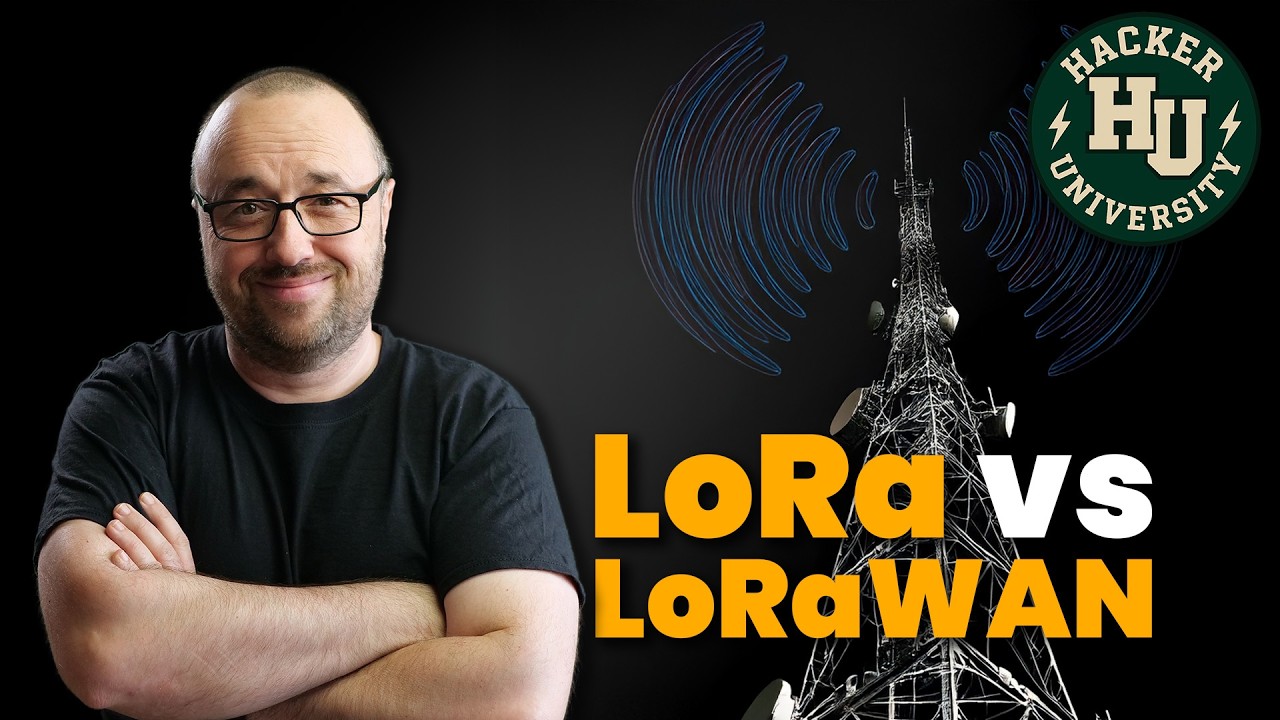
The terms LoRa and LoRaWAN get used interchangeably, but they describe two different things. Confusing them leads to real misunderstandings when planning a deployment.
What Is LoRa?
LoRa is a physical layer radio modulation technique developed by Semtech Corporation. It uses Chirp Spread Spectrum (CSS) modulation, encoding data into frequency chirps that sweep across a defined bandwidth. This approach lets receivers detect signals that are up to 20 dB below the noise floor, which is what gives LoRa its remarkable range without high transmit power. LoRa handles the radio signal itself: how bits are modulated onto the air. It does not define how devices join a network, how messages are routed, or how data is secured.
What Is LoRaWAN?
LoRaWAN is the Media Access Control (MAC) layer protocol built on top of LoRa. Maintained by the LoRa Alliance, it defines how LoRa-enabled devices communicate in a standardized, scalable way. LoRaWAN specifies device activation procedures, message formatting, adaptive data rates, duty cycle management, and the two-layer AES-128 encryption that protects data from the device all the way to the application server. The first LoRaWAN specification was released in January 2015. LoRaWAN 1.1 introduced the Join Server for more secure device activation, while LoRaWAN 1.0.3 remains widely deployed across existing infrastructure.
The practical distinction: LoRa is a hardware-level radio technology. LoRaWAN is the software standard and network architecture that makes LoRa deployments interoperable, secure, and manageable at scale.
How LoRa and LoRaWAN Work in IoT
LoRaWAN Architecture
LoRaWAN follows a star-of-stars topology. End devices communicate with gateways via LoRa radio signals. Gateways relay those messages to a central network server over an IP backhaul connection, which can be Ethernet, 4G/LTE, or Wi-Fi. The network server processes, deduplicates, and routes messages to an application server, where the data gets interpreted and acted upon.
The 4 primary components of a LoRaWAN network are:
- End devices (sensors or actuators equipped with LoRa radios, typically battery-powered)
- Gateways (transparent bridges that receive LoRa signals and forward packets over IP)
- Network server (manages deduplication, adaptive data rate, security verification, and downlink scheduling)
- Application server (decrypts and processes application-specific payloads)
A Join Server is also present in LoRaWAN 1.1 deployments. The Join Server manages device activation, root key storage, and session key generation, keeping root keys off the network server and reducing the exposure window if a server is compromised.
How Does LoRa Work?
LoRa encodes data using CSS modulation. Each data symbol is represented by a chirp: a signal that sweeps from a low frequency to a high frequency across the transmission bandwidth. The spreading factor (SF), which ranges from SF5 to SF12, controls how many bits are packed into each chirp. Higher spreading factors slow the data rate but dramatically extend range and improve sensitivity in noisy environments. Forward error correction is applied on top of CSS to further harden transmissions against interference.
A device set to SF12 transmitting at 125 kHz bandwidth can reach distances that SF7 at the same power simply cannot. The tradeoff is airtime: higher SFs produce longer transmissions, which matters for duty cycle compliance in regulated ISM bands.
How Does LoRaWAN Work?
When a LoRaWAN end device has data to send, it transmits a packet. Because the network uses an ALOHA-based access protocol, devices do not need to negotiate with a specific gateway before transmitting. Any gateway within range will receive the signal and forward it to the network server.
A typical end-to-end flow looks like this: a soil moisture sensor wakes from sleep, formats a data packet, and transmits on a LoRa channel at 868.3 MHz. Three gateways within range receive the signal and all three forward it to the network server. The network server deduplicates the 3 copies, verifies the Message Integrity Code (MIC), and routes the decrypted payload to the application server. If Adaptive Data Rate (ADR) is active, the network server may also signal the device to adjust its spreading factor for better efficiency on the next uplink.
End devices fall into 3 classes based on their downlink behavior:
| Device Class | Receive Windows | Power Draw | Best For |
|---|---|---|---|
| Class A | 2 short windows after each uplink only | Lowest | Battery-operated sensors reporting infrequently |
| Class B | Scheduled windows synced to beacon signals | Medium | Devices needing predictable downlink timing |
| Class C | Receiver open whenever not transmitting | Highest | Battery-operated sensors report infrequently |
Key Features of the LoRaWAN Protocol
Bandwidth
LoRaWAN operates at narrow bandwidths, typically 125 kHz or 500 kHz depending on the region and channel plan. This narrowband operation is a deliberate design choice. Narrower bandwidth means the receiver can focus on a tight frequency slice, which improves sensitivity and reduces interference from adjacent signals. The tradeoff is throughput: LoRaWAN payloads max out at 242 bytes and typical real-world data rates range from 0.3 kbps to 50 kbps. This makes LoRaWAN well suited for infrequent, small-payload sensor data rather than video, audio, or high-frequency telemetry.
Low Power
LoRaWAN end devices are built to sleep. Class A devices, which cover the vast majority of deployed sensors, only power their radio for the brief uplink transmission and two short receive windows. Outside those windows, the device sits in deep sleep, drawing microamps. A well-designed LoRaWAN sensor node reporting hourly can run for 5 to 10 years on a single AA battery, depending on payload size, spreading factor, and regional duty cycle rules. This battery life profile is what separates LoRaWAN from cellular IoT options like NB-IoT (Narrowband IoT) and LTE-M, which draw more power and require SIM infrastructure.
Range
In open rural terrain, a LoRaWAN gateway covers up to 15 km (9.3 miles). In dense urban environments, practical coverage per gateway drops to roughly 2 to 5 km (1.2 to 3.1 miles) due to building attenuation. LoRaWAN also penetrates building materials well enough to reach sensors in basements, underground utilities, and warehouse interiors where Wi-Fi and Zigbee struggle. A coastal environmental monitoring buoy, an underground water meter, or a basement flood detection sensor all sit comfortably within LoRaWAN’s operating range from a single gateway.
Frequency
LoRaWAN operates in the unlicensed ISM (Industrial, Scientific, and Medical) bands. Frequency plans are region-specific because national radio regulations differ.
Unlicensed LoRa Frequency Bands
The 5 primary LoRaWAN frequency bands by region are:
| Region | Frequency Plan | Band | Uplink Channels | Key Restriction |
|---|---|---|---|---|
| Europe | EU868 | 863–870 MHz | 8 default channels | Max 1% duty cycle per channel |
| North America | US915 | 902–928 MHz | 64 × 125 kHz + 8 × 500 kHz | Max 400 ms transmission time |
| Australia / South America | AU915/AS923-1 | 915–928 MHz | Regional subset | Follows regional parameters |
| Asia | AS923 | 915–928 MHz | Country-specific variants | LBT required in Japan |
| India | IN865 | 865–867 MHz | 3 default channels | LBT is required in Japan |
Operating on unlicensed spectrum means there are no carrier contracts or frequency licensing fees to deploy a LoRaWAN network. An organization can install gateways, provision devices, and own the full network stack without paying a spectrum authority.
Benefits of LoRaWAN
Advantages of LoRaWAN Networks
LoRaWAN has 5 concrete advantages that make it the right choice for specific IoT deployments.
Low operating cost. Because LoRaWAN uses unlicensed spectrum, there are no per-device cellular data plan fees. A private network built with owned gateways can serve thousands of sensors with no recurring spectrum cost. For large-scale deployments in agriculture or industrial settings, this produces measurable savings over the life of the installation.
Long battery life. The protocol’s Class A sleep architecture keeps devices alive for years without battery replacement. For deployments in remote terrain, tunnel construction monitoring, or mountainous locations where maintenance visits are expensive, this matters operationally.
Flexible network infrastructure. LoRaWAN runs equally well as a private network serving a single facility, a public network spanning a city, or a hybrid arrangement combining both. The same hardware and software stack supports all three models, so organizations are not locked into one deployment pattern.
Geolocation without GPS. A LoRaWAN network can estimate device location through Time Difference of Arrival (TDoA) triangulation when at least 3 gateways receive the same signal. This allows coarse positioning for asset tracking without the added cost and power draw of a GPS module.
Strong security. LoRaWAN implements AES-128 encryption at two independent layers. Network-level encryption protects message integrity between the device and the network server. Application-level encryption protects the data payload so that even a network operator with access to the network server cannot read the application data. The International Telecommunication Union (ITU) officially recognized LoRaWAN as an LPWAN standard in December 2021.
Common Applications and Use Cases
LoRaWAN gets deployed wherever devices need to report small amounts of data from locations that are hard to wire and where battery replacement is inconvenient or impractical.
Smart city applications are among the most visible. Municipal operators use LoRaWAN to monitor waste bin fill levels for optimized collection routing, detect parking lot occupancy in real time, manage streetlight and traffic light control, and track water meter readings across entire districts without manual reads.
Precision agriculture is another strong fit. LoRa sensors deployed across large fields monitor soil moisture, temperature, and nutrient levels for smarter irrigation scheduling. Cattle tracking devices report animal location and activity across ranches that cover thousands of acres. Crop growth cycle monitoring gives farmers granular data that manual inspection cannot match at scale.
Industrial and environmental monitoring use LoRaWAN for predictive maintenance on rotating equipment, indoor air quality sensing in manufacturing facilities, and coastal environmental monitoring of water quality and tidal conditions. Cold chain logistics deployments track temperature and humidity for pharmaceuticals and perishable goods throughout the distribution chain.
Healthcare applications include patient fall detection in care facilities and tracking of medical assets and vaccine cold chains within hospital systems. Maritime operators use LoRaWAN for buoy tracking and vessel monitoring in areas with no cellular coverage.
The common thread across all of these is low data rate, infrequent reporting, long battery life, and wide geographic spread. Where any one of those requirements is absent, a different protocol may be a better fit.
LoRaWAN in Private vs. Public Networks
LoRaWAN supports 3 network deployment models: private, public, and hybrid.
A private LoRaWAN network is owned and operated by a single organization. The organization installs its own gateways, runs its own network server, and controls the full stack. Private networks make sense for facilities that need strict data sovereignty, such as utilities, defense contractors, or healthcare providers. They also make sense for single-building applications or campus deployments where a small number of gateways covers the required area. The main advantages of private LoRaWAN networks are low battery consumption, cost-effective connectivity for owned infrastructure, and full control over network security and access policies.
A public LoRaWAN network is operated by a network operator, such as KORE or The Things Network. Customers connect their devices to the operator’s existing gateway infrastructure rather than deploying their own. This approach works well for applications that need rapid coverage across a city or region without the capital outlay of building a gateway network from scratch. Public network use cases include smart city applications like waste management, parking meters, streetlights, and traffic lights, as well as agriculture deployments covering crop production measurement and cattle tracking across rural terrain.
A hybrid deployment combines both. An organization might run private gateways inside a facility for dense indoor coverage while relying on a public network for coverage in surrounding outdoor areas or in other cities where the organization has no gateway infrastructure.
Security in LoRa Communication
LoRaWAN Encryption Mechanisms
LoRaWAN security is built around 3 AES-128 cryptographic layers.
Mutual authentication at join. When a device connects to a LoRaWAN network using Over-the-Air Activation (OTAA), the device and the Join Server authenticate each other before any session keys are issued. The Join Server processes the join request, generates two 128-bit session keys, and distributes them to the appropriate servers. Only authenticated devices can join the network.
Network Session Key (NwkSKey). This key ensures message integrity between the end device and the network server. It generates the Message Integrity Code (MIC) appended to each uplink. The network server verifies the MIC on every received message, which prevents both tampering and replay attacks.
Application Session Key (AppSKey). This key encrypts the payload itself. Only the application server holds the AppSKey. This means the network server, the gateway operator, and any intermediate party cannot read the application data even if they have full access to the network infrastructure. For regulated industries, this separation of network and application-level encryption is a significant architectural advantage.
Activation by Personalization (ABP) is a second activation method where session keys are hardcoded into the device at manufacture. ABP simplifies deployment but has security tradeoffs because the same keys persist across power cycles, and the device cannot rotate them the way OTAA does through dynamic session key generation.
Backend interfaces between network and application servers can be further secured using HTTPS and VPN connections, adding a transport-layer protection on top of the application-layer encryption.
Understanding LoRa Modules and Devices
A LoRa module is a self-contained radio component that combines a Semtech LoRa chipset, typically the SX1261, SX1262, or SX1276 series, with antenna connections, power management circuitry, and often a microcontroller for running the LoRaWAN stack. Manufacturers integrate these modules into end devices ranging from simple temperature sensors to complex multi-parameter environmental loggers.
LoRa end devices communicate with one or more gateways simultaneously. Because the network uses a star-of-stars topology, a device does not need to know which gateway it is paired with. It transmits, and any gateway within range picks up the signal. If multiple gateways receive the same uplink, the network server handles deduplication automatically.
Gateways are more complex. A LoRaWAN gateway contains a concentrator board capable of receiving multiple channels simultaneously, on-board processing to forward packets over IP, and either Ethernet or cellular backhaul. Indoor gateways handle single-building coverage with typical ranges of a few hundred meters through walls. Outdoor gateways, often with IP-67 weatherproof ratings, can serve entire districts from a rooftop mount. Co-location with existing cellular base stations is common because it reuses the backhaul infrastructure already in place.
Device range, power consumption, and data rate all interact through the spreading factor. Adaptive Data Rate (ADR) is the mechanism LoRaWAN uses to automatically tune spreading factors across the device population. Devices close to a gateway get assigned lower spreading factors: faster data rates, shorter airtime, and more efficient use of channel capacity. Devices at the edge of coverage get higher spreading factors to maintain link reliability. The network server manages these adjustments without manual intervention.
LoRaWAN Products and Solutions
Digi X-ON Solution
The Digi X-ON solution is a managed IoT connectivity platform designed to simplify LoRaWAN deployments. It provides device management, connectivity orchestration, and network visibility in a single platform, reducing the operational overhead of running large-scale LoRaWAN installations. The platform supports both private and public network configurations, allowing organizations to manage devices across multiple gateways and network providers from a single interface.
Achieve IoT Connectivity with KORE
KORE is an IoT connectivity provider offering a managed LoRaWAN service that removes the infrastructure burden from organizations deploying at scale. KORE’s LoRa platform, KORA, manages device deployments across multiple networks and providers, giving operators a single view of their connected devices regardless of the underlying gateway infrastructure.
KORE offers its LoRaWAN Connectivity as a Service model as a downloadable datasheet for organizations evaluating whether a managed connectivity approach fits their deployment. For teams without the internal resources to operate a private LoRaWAN network, a managed service like KORE’s covers gateway management, network server operations, and device provisioning without requiring in-house expertise.
What’s Next?
For organizations evaluating LoRaWAN, the practical starting point is identifying whether the use case matches the protocol’s profile: infrequent small-payload data, devices that need to run on battery for years, and coverage requirements that exceed what Wi-Fi can deliver without the cost of cellular per-device data plans. Private deployments work well for controlled campuses and facilities. Public network access through operators like KORE works well when rapid geographic coverage is needed without capital investment in gateway infrastructure.
For specific technical implementation guidance, the LoRa Alliance publishes the official regional parameters and device certification requirements. The Things Network provides an open LoRaWAN network server and developer resources for getting started without a managed service contract.
Reach out to an IoT expert at KORE to discuss which deployment model fits your connectivity requirements.
FAQs
What is the full form of LoRaWAN?
LoRaWAN stands for Long Range Wide Area Network. It is a low-power networking protocol for connecting IoT devices across long distances using unlicensed radio frequencies.
What is the difference between LoRa and LoRaWAN?
LoRa is the physical radio modulation technology developed by Semtech, using Chirp Spread Spectrum (CSS) to transmit signals. LoRaWAN is the network protocol built on top of LoRa that defines how devices join networks, how messages are routed and secured, and how the overall architecture is organized.
What is a LoRaWAN gateway?
A LoRaWAN gateway is a device that receives LoRa radio signals from end devices and forwards the data packets to a network server over an IP connection. Gateways act as transparent bridges and do not process or decrypt application data.
What is a LoRaWAN network server?
A LoRaWAN network server is the central component that manages device authentication, deduplicates uplink messages received from multiple gateways, verifies message integrity, schedules downlinks, and routes application payloads to the application server.
What is ADR in LoRaWAN?
ADR stands for Adaptive Data Rate. It is a mechanism by which the LoRaWAN network server adjusts the spreading factor and transmission power of individual devices to optimize the balance between data rate, airtime, and link reliability across the device population.
What is the LoRaWAN range?
LoRaWAN reaches up to 15 km (9.3 miles) in open rural terrain and 2 to 5 km (1.2 to 3.1 miles) in dense urban environments. Range varies by spreading factor, regional frequency plan, gateway placement, and the physical environment.
What is LoRaWAN used for?
LoRaWAN is used for IoT applications that require long-range, low-power connectivity for devices that transmit small amounts of data infrequently. Common deployments include smart city infrastructure, precision agriculture, environmental monitoring, asset tracking, cold chain logistics, and industrial sensing.
What is the LoRaWAN frequency?
LoRaWAN operates in unlicensed ISM bands. The primary frequencies are 868 MHz in Europe (EU868), 915 MHz in North America (US915), 915 to 928 MHz in Australia and South America (AU915/AS923-1), 915 to 928 MHz in Asia (AS923), and 865 to 867 MHz in India (IN865).
What is LoRaWAN Class C?
LoRaWAN Class C devices keep their receiver open at all times when not actively transmitting. This allows the network server to send downlink messages at any time with minimal latency. Class C devices consume more power than Class A or Class B and are suited for powered actuators rather than battery-operated sensors.
What is SF in LoRaWAN?
SF stands for Spreading Factor. It is a parameter from 5 to 12 that controls how LoRa encodes data. Higher spreading factors increase range and receiver sensitivity but reduce data rate and increase the time a transmission occupies the channel.
What is RSSI in LoRaWAN?
RSSI stands for Received Signal Strength Indicator. It is a measurement of the power level of a received LoRa signal at the gateway, expressed in dBm. RSSI is used alongside Signal-to-Noise Ratio (SNR) to assess link quality and inform adaptive data rate decisions.




- Be Respectful
- Stay Relevant
- Stay Positive
- True Feedback
- Encourage Discussion
- Avoid Spamming
- No Fake News
- Don't Copy-Paste
- No Personal Attacks
- Be Respectful
- Stay Relevant
- Stay Positive
- True Feedback
- Encourage Discussion
- Avoid Spamming
- No Fake News
- Don't Copy-Paste
- No Personal Attacks
