What is MQTT? A Comprehensive Guide to the IoT Messaging Protocol
Published: 22 Apr 2026
MQTT (Message Queuing Telemetry Transport) is a lightweight, standards-based messaging protocol built for machine-to-machine communication. It operates on a publish/subscribe model, where devices send data to a central broker, and that broker forwards the data to any connected client that has registered interest in receiving it. The result is a communication system where senders and receivers never need to know about each other directly.
The protocol was designed from the ground up for conditions where bandwidth is scarce and battery life matters. A minimal MQTT control message can be as small as two bytes. That efficiency is why MQTT has become the default messaging protocol for Internet of Things (IoT) deployments at scale.
Its main strengths are that it is lightweight enough to run on small microcontrollers, reliable enough to function over unreliable cellular networks, and secure enough to support modern authentication mechanisms, including TLS 1.3, OAuth, and Customer Managed Certificates. Developers working in Python and dozens of other languages have access to mature MQTT libraries, which shorten implementation time considerably.
MQTT is used across smart home systems, industrial automation, precision agriculture, connected vehicles, healthcare monitoring, and oil and gas infrastructure. It connects the sensor on a factory floor to a cloud dashboard just as readily as it connects a wearable device to a mobile application.
The architecture behind MQTT centers on three components: the MQTT client, the MQTT broker, and the connection between them. Clients are any devices that publish or subscribe to messages. The broker handles routing. The connection is initiated through a CONNECT packet sent over TCP/IP (Transmission Control Protocol/Internet Protocol). This structure, combined with three distinct Quality of Service (QoS) levels and configurable message persistence, gives engineers precise control over how data moves through a system.
Table of Contents
The History and Evolution of MQTT
In 1999, Andy Stanford-Clark of IBM and Arlen Nipper of Arcom developed MQTT to solve a specific problem: monitoring oil pipelines through satellite connections with minimal bandwidth and battery consumption. The networks were unreliable, the power budgets were tight, and existing protocols were too heavy.
The name came from IBM’s MQ Series product, which provided the initial infrastructure that made MQTT possible. For the next decade, IBM used the protocol internally. In 2010, the company released MQTT 3.1 as a royalty-free, open protocol. Three years later, IBM submitted it to the Organization for the Advancement of Structured Information Standards (OASIS) for formal standardization. OASIS ratified MQTT as an official standard on October 29, 2014.
The protocol has since shed its original acronym. MQTT is no longer short for anything. It is simply the name of the protocol.
The Role of OASIS in Standardizing MQTT
OASIS (Organization for the Advancement of Structured Information Standards) is a nonprofit international consortium founded in 1993. It develops open standards for the Internet and related technologies, including AMQP, SAML, and DocBook. When OASIS took over stewardship of MQTT, the goal was clear: make it vendor-neutral and accessible to anyone without licensing fees.
The standardization process introduced governance that the open-source ecosystem needed. It also created a structured path for new versions. In March 2019, OASIS ratified MQTT version 5, which added features built specifically for cloud-scale IoT deployments, including better error reporting, session expiry intervals, and request/response messaging patterns.
MQTT version 5 is a meaningful upgrade over MQTT 3.1. It handles edge cases that become serious problems at high device counts, particularly around session management and error handling in mission-critical applications.
Why is MQTT Important for IoT and IIoT?
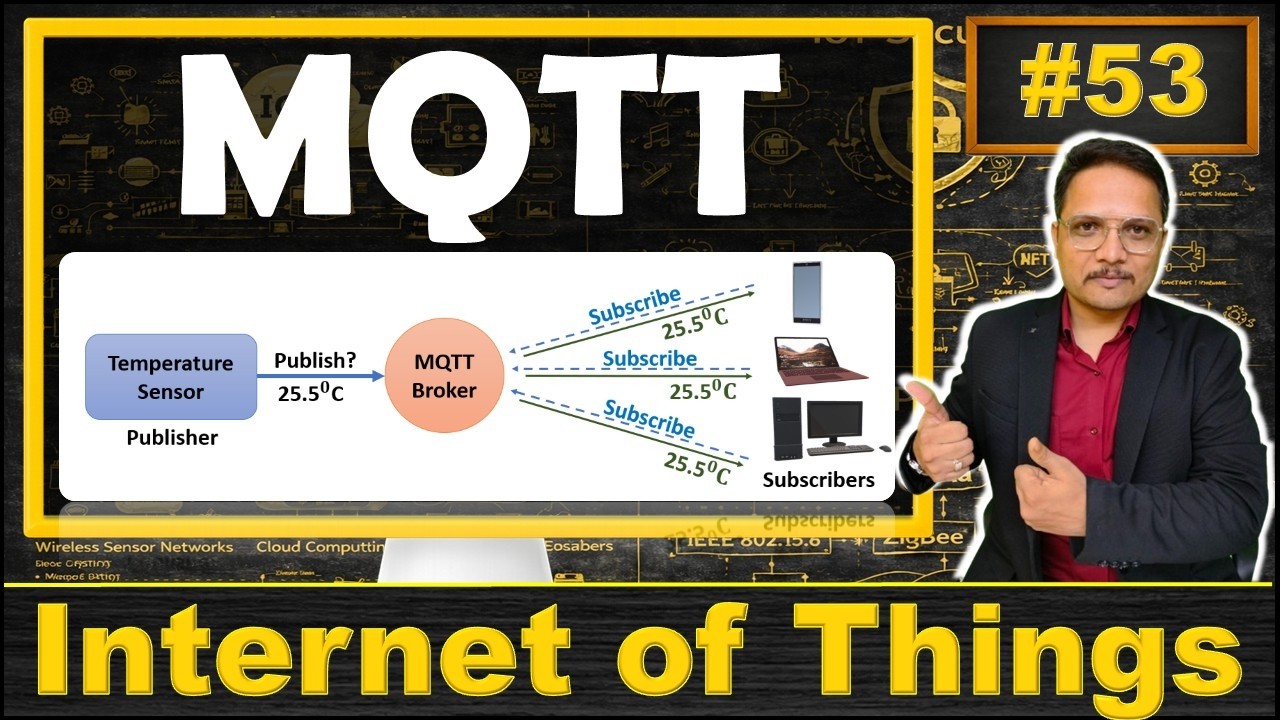
IoT devices operate in environments that most network protocols were not designed for. Unstable connections, constrained hardware, low power budgets, and high device counts combine to create communication requirements that HTTP and similar request-response protocols handle poorly. MQTT was built for exactly these conditions.
Industrial IoT (IIoT) adds further demands. In a factory, a communication failure is not just inconvenient. It can halt production or create safety hazards. The protocol needs to guarantee message delivery at the right time, not just most of the time.
Key Benefits: Lightweight, Scalable, and Reliable
MQTT’s fixed header is small. Messages can be as compact as two bytes. This matters on devices with limited memory and processing power, and it matters on networks where every kilobyte adds latency and cost.
Scalability is built into the broker architecture. A single MQTT broker can handle connections from millions of devices simultaneously. Brokers like Mosquitto, EMQX, and HiveMQ are designed to scale horizontally and handle high message throughput without requiring changes to client-side code.
Reliability is addressed through three Quality of Service levels. QoS 0 delivers messages at most once with no confirmation. QoS 1 guarantees at least once delivery and retransmits if no acknowledgment arrives. QoS 2 guarantees exactly once delivery using a four-step handshake. Engineers choose the level that matches what their application actually requires, because higher QoS comes with higher overhead.
Security in MQTT is handled through TLS 1.3 encryption, OAuth authentication, and SSL certificates. The broker acts as a single authenticated gateway, which means there is one controlled access point rather than many open device endpoints.
Why MQTT is Trending: Connected Devices and Real-Time Insights
The number of connected devices has grown faster than most infrastructure predictions expected. Sensors on factory floors, building management systems, agricultural equipment, medical devices, and consumer electronics all need a way to share data with something else. Many of those devices cannot run a full HTTP stack. MQTT can.
Real-time data requirements have also intensified. Operators managing power grids, life safety systems, or logistics networks cannot afford delays. MQTT’s low-latency design moves messages quickly, and its persistent connection model eliminates the overhead that comes with re-establishing connections on each data transfer.
Cloud integration has made MQTT adoption easier. AWS IoT Core, Microsoft Azure IoT Hub, and Google Cloud IoT all support MQTT natively. Setting up an MQTT-connected device on a major cloud platform is now a routine task rather than a specialized one.
Core Principles and Architecture
MQTT Components: Clients, Brokers, and Connections
An MQTT client is any device that communicates over the MQTT protocol. It can be a sensor on a production line, a smartphone application, a server, or a microcontroller with 256KB of memory. If it can send or receive MQTT messages over a network, it qualifies as an MQTT client. When a client sends messages, it is acting as a publisher. When it receives them, it is acting as a subscriber. One device can do both simultaneously.
The MQTT broker is the central routing component. It receives messages from publishers, filters them by topic, and delivers them to the appropriate subscribers. Well-known brokers include Mosquitto, EMQX, and HiveMQ. The broker also handles client authentication, session management, and can pass data to external systems for further processing.
The MQTT connection begins when a client sends a CONNECT packet to the broker. The broker responds with a CONNACK packet to confirm the session is established. All communication runs over TCP/IP. Clients never connect directly to each other. Every message passes through the broker.
The Messaging Model: Decoupling (Space, Time, and Synchronization)
MQTT uses a publish/subscribe pattern, which separates the publisher from the subscriber in three specific ways.
Space decoupling means the publisher and subscriber do not know each other’s network location. No IP addresses or port numbers are exchanged between them. The broker handles routing transparently.
Time decoupling means the publisher and subscriber do not need to be connected at the same time. A publisher can send a message when the subscriber is offline. With the right persistence configuration, that message will be delivered when the subscriber reconnects.
Synchronization decoupling means neither side blocks the other. The subscriber does not wait for the publisher to send something, and the publisher does not wait for the subscriber to acknowledge receipt before continuing its own operation.
This separation makes MQTT well-suited for large systems where devices go offline unpredictably and where the producing side of a data stream should not be coupled to the consuming side.
Topics and Subscriptions
Topics in MQTT are strings that the broker uses to route messages. They follow a hierarchical structure using forward slashes as separators, similar to a file path. A topic like ourhome/groundfloor/livingroom/temperature gives the broker and any subscribing clients a clear, structured address for that data.
A client subscribes to a topic by telling the broker which topics it wants to receive messages from. A single client can subscribe to multiple topics. A single topic can have multiple subscribers. MQTT also supports wildcard subscriptions. The single-level wildcard (+) matches one level in the hierarchy, and the multi-level wildcard (#) matches all levels after the specified point. This means a client can subscribe to data from every sensor in a building with a single subscription entry rather than thousands.
Topic design matters. In systems with hundreds of device types and thousands of devices, a poorly structured topic hierarchy creates management headaches. A consistent naming convention from the start prevents those problems.
Publish/Subscribe Mechanics
When a publisher sends a message, it packages the data along with the target topic and the desired QoS level. The payload is binary, which means the data format is not dictated by the protocol itself. Publishers can send plain text, JSON, XML, binary sensor readings, or any other format that the subscribing system can parse.
The broker receives the message, checks which clients have active subscriptions to that topic, and forwards the message accordingly. If a subscriber is offline and message persistence is configured, the broker queues the message for later delivery. If persistence is not configured, that message is gone.
A lamp in a smart home system might publish the message “on” to the topic home/floor1/livingroom/light. A mobile application subscribed to home/floor1/livingroom/# would receive that message and update its interface. The lamp and the application never interact directly.
Technical Deep Dive
Quality of Service (QoS) Levels
MQTT defines 3 Quality of Service levels, and choosing the wrong one has real consequences.
QoS 0, “at most once,” sends the message once with no confirmation step. If the network drops the packet, it is lost. This level is appropriate for high-frequency sensor data where losing an occasional reading is acceptable, and retransmission would cause congestion.
QoS 1, “at least once,” requires the receiving side to send an acknowledgment. If the sender does not receive that acknowledgment within the timeout window, it retransmits the message. This guarantees delivery but allows duplicates. Receiving systems need to be designed to handle duplicate messages if QoS 1 is used.
QoS 2, “exactly once,” uses a four-step handshake to guarantee that a message is received exactly one time. This is the highest QoS level and carries the highest overhead. It is the right choice for financial transactions, control commands where duplication would cause physical action, or any scenario where both loss and duplication are unacceptable.
Higher QoS levels consume more network bandwidth and introduce more latency. The correct level depends entirely on the application.
Message Persistence
MQTT supports 3 message persistence configurations. In the default non-persistent mode, messages are not stored. If the broker restarts or the network fails, unsent messages are lost. This is adequate for applications where data is regenerated continuously, and historical messages have no value.
Queued persistence stores messages on the broker until they can be delivered to the subscriber. When a subscriber reconnects after being offline, it receives the queued messages in order. This is appropriate for systems where subscribers have intermittent connectivity but must eventually receive all messages.
Persistent delivery with acknowledgment stores messages and requires the subscriber to confirm receipt before the broker removes the message from storage. This provides the strongest guarantees but requires the most broker storage and processing resources.
The choice between persistence levels involves a trade-off. More persistence means more resource usage on the broker side.
Security: Protecting IoT Devices
MQTT communication is secured through TLS (Transport Layer Security) encryption, which protects data in transit between clients and the broker. Authentication is handled through client IDs, passwords, and SSL certificates. The broker can be configured to reject any client that cannot present valid credentials.
Modern MQTT deployments use TLS 1.3 for encryption, OAuth for authorization flows, and Customer Managed Certificates where organizations need direct control over their certificate infrastructure. This brings MQTT security to a level comparable with other enterprise communication protocols.
The single-broker architecture provides a security advantage. Instead of exposing many device endpoints, the network has one controlled access point. All authentication happens at that point, which simplifies auditing and reduces the attack surface.
That said, security configuration requires deliberate attention. An MQTT broker left with default settings and no authentication is a significant exposure. Organizations deploying MQTT in production should enforce TLS, require authentication for all clients, and restrict topic access based on client roles.
MQTT over WebSockets (WSS)
MQTT over WebSockets (WSS) extends MQTT to web browsers. Standard MQTT runs over TCP/IP, which browsers cannot access directly. WebSockets provide a browser-compatible transport layer that wraps the MQTT message payload with the additional headers required by the WSS protocol.
This makes it possible to build web applications that receive MQTT data directly without a server-side intermediary translating the protocol. A browser-based dashboard monitoring industrial sensor data can subscribe to MQTT topics and receive real-time updates the same way a native application would.
The MQTT protocol specification includes a JavaScript client library specifically to support WSS. Port 443 is the standard WSS port, which also benefits from typically being open through corporate firewalls.
Best Practices for System Integrators
Defining Requirements and Payloads
Before configuring an MQTT deployment, define precisely what the system needs to do. This involves specifying message topics, the types of events that trigger notifications, the number of devices expected to connect, the available network bandwidth at each deployment location, and the required delivery guarantees for each message type.
A requirement like “send a notification within 30 seconds of a threshold breach to the on-call engineer group” is specific enough to drive configuration decisions. A requirement like “send alerts” is not.
MQTT is payload-agnostic. The protocol does not define what the message content looks like. JSON is the most common choice for IoT applications because it integrates well with cloud platforms and is easy to parse. Binary formats are used when message size is a primary constraint. Whichever format is chosen, it should be consistent across device types. Mixed payload formats within the same system create parsing complexity at the subscriber end.
Ensuring Interoperability
MQTT is most commonly used as a cloud API for devices, but it also supports machine-to-machine communication over a cloud connection. When using MQTT in a mixed environment, be aware of potential delays introduced by the cloud layer. MQTT was built for small, frequent messages. Sending large payloads through it is possible, but not what the protocol was optimized for.
Interoperability also extends to broker choice. Mosquitto, EMQX, and HiveMQ all implement the MQTT standard, but their clustering behavior, persistence options, and access control implementations differ. Test integrations against the specific broker version being deployed in production.
When connecting MQTT to legacy systems, protocol gateways handle the translation. These gateways translate between MQTT and protocols like BACnet, Modbus, or OPC-UA without requiring changes to either the device firmware or the cloud-side application.
Conclusion
MQTT is a messaging protocol built for the specific constraints of IoT and IIoT communication. It runs on small microcontrollers, survives unreliable cellular connections, handles millions of concurrent device connections, and supports the security requirements of enterprise deployments. Its publish/subscribe architecture separates senders from receivers in a way that makes large-scale systems manageable.
The protocol has a 25-year history, backed by IBM, formal standardization by OASIS, and native support on AWS, Azure, and Google Cloud. MQTT version 5 added features that address real-world deployment challenges that earlier versions could not handle cleanly.
For anyone building systems where devices need to share data reliably over constrained networks, MQTT is worth understanding in depth. The combination of lightweight messaging, configurable QoS levels, message persistence, and modern security support gives engineers the tools to build IoT infrastructure that works at scale.
Frequently Asked Questions
What does MQTT stand for?
MQTT originally stood for Message Queuing Telemetry Transport. The acronym came from IBM’s MQ Series product. MQTT is no longer treated as an acronym and is now simply the official name of the protocol.
What is MQTT used for?
MQTT is used for machine-to-machine communication in IoT and IIoT applications. Common use cases include smart home automation, industrial machine monitoring, connected vehicle telemetry, agricultural sensor networks, healthcare device data transmission, and oil and gas pipeline monitoring.
How does MQTT work?
An MQTT client establishes a TCP/IP connection with an MQTT broker by sending a CONNECT packet. The broker responds with CONNACK. Once connected, the client can publish messages to topics, subscribe to topics to receive messages, or do both. The broker routes messages from publishers to the subscribers registered for each topic.
What is an MQTT topic?
An MQTT topic is a string that the broker uses to filter and route messages. Topics follow a hierarchical format using forward slashes as separators, such as factory/line3/sensor12/temperature. Publishers assign a topic to each message. Subscribers register interest in specific topics or use wildcards to match multiple topics at once.
Is MQTT secure?
Yes, MQTT supports TLS 1.3 encryption, OAuth-based authentication, SSL certificates, and Customer Managed Certificates. Properly configured MQTT deployments encrypt all traffic and require authenticated clients. Security depends on correct configuration. A broker deployed without authentication or encryption is not secure.
Is MQTT encrypted?
MQTT itself does not mandate encryption, but MQTT over TLS (also called MQTTS) encrypts all communication between clients and the broker. MQTT over WebSockets (WSS) also supports TLS encryption for browser-based connections.
What is an MQTT broker?
An MQTT broker is the server component that routes messages between clients. It receives published messages, filters them by topic, authenticates clients, and delivers messages to registered subscribers. Popular MQTT brokers include Mosquitto, EMQX, and HiveMQ.
What port does MQTT use?
MQTT uses port 1883 for unencrypted connections and port 8883 for TLS-encrypted connections. MQTT over WebSockets typically uses port 443, which is the standard HTTPS port and is generally open through firewalls.
What is MQTT Quality of Service?
MQTT Quality of Service (QoS) defines the delivery guarantee for a message. QoS 0 delivers at most once with no confirmation. QoS 1 delivers at least once and retransmits until acknowledged. QoS 2 delivers exactly once using a four-step confirmation process.
What is the difference between MQTT 3.1 and MQTT version 5?
MQTT 3.1 is the foundational open version released by IBM in 2010. MQTT version 5, ratified by OASIS in 2019, adds session expiry intervals, improved error codes, request/response messaging patterns, and features designed for cloud-scale IoT deployments. MQTT version 5 handles edge cases around session management and error handling that become significant at high device counts.
What is MQTT over WebSockets?
MQTT over WebSockets (WSS) is an implementation of MQTT that uses the WebSocket transport layer instead of raw TCP/IP. This allows web browsers to connect directly to an MQTT broker and send or receive messages in real time without a server-side protocol translation layer.
What is MQTTBox?
MQTTBox is a developer tool used to test and debug MQTT connections. It provides a graphical interface for connecting to an MQTT broker, publishing messages to topics, subscribing to topics, and inspecting incoming messages. It is commonly used during development to verify that MQTT configurations work as intended before deploying to production devices.
What is MQTT.fx?
MQTT.fx is another desktop MQTT client used for testing and monitoring MQTT brokers. Like MQTTBox, it allows developers to connect to a broker, publish and subscribe to topics, and inspect message traffic. It is particularly useful for diagnosing connection problems and verifying QoS behavior during system integration.
What is the role of MQTT in IoT?
MQTT is the primary messaging layer for IoT communication. It connects devices and to cloud platforms in a way that is efficient enough for constrained hardware, reliable enough for unstable networks, and scalable enough for deployments spanning millions of devices. Most major IoT cloud platforms, including AWS IoT Core, support MQTT natively.




- Be Respectful
- Stay Relevant
- Stay Positive
- True Feedback
- Encourage Discussion
- Avoid Spamming
- No Fake News
- Don't Copy-Paste
- No Personal Attacks
- Be Respectful
- Stay Relevant
- Stay Positive
- True Feedback
- Encourage Discussion
- Avoid Spamming
- No Fake News
- Don't Copy-Paste
- No Personal Attacks
