Will AI replace nurses in the future
Published: 16 Nov 2025
AI grows fast in today’s world. Many people in healthcare now ask a big question: Will AI replace nurses in the future? This question matters to nurses, patients, hospital leaders, and even AI researchers. New technology, robots, and smart algorithms enter hospitals every year. These tools monitor patients, analyze data, and automate simple tasks. They promise more efficiency, less workload, and better support for clinical care.
But nursing is not only about tasks. Nursing is also about empathy, skill, and human connection. Nurses comfort anxious patients. They notice small changes in behavior. They guide families through hard moments. These human skills are complex and adaptive. No machine can fully copy them.
In this blog, we explore how AI assists nurses, how technology automates routine work, and how intelligent systems improve diagnostics and monitoring. We also look at ethical concerns, workforce changes, and the future skills nurses need. As you read, think about your own view: Can AI ever replace the human heart behind nursing?
Table of Contents
What AI Does Well in Healthcare
AI grows stronger each year. It helps nurses, patients, and hospital teams in many ways. This section shows what Artificial Intelligence does best. It also explains how these tools improve clinical care and make work easier for the nursing workforce.
AI Handles Data-Heavy Work
AI reads large amounts of patient data. It analyzes charts, scans, and lab results in seconds. These algorithms find patterns that humans may miss. They also support clinical decision-making by showing risks early.
A smart monitoring system checks a patient’s heart rate all day. It spots a dangerous change and alerts the nurse right away. This quick signal helps the nurse act fast and protect the patient.
AI Handles Data-Heavy Work
AI reads large amounts of patient data. It analyzes charts, scans, and lab results in seconds. These algorithms find patterns that humans may miss. They also support clinical decision-making by showing risks early.
Automation Improves Daily Tasks
Technology automates many simple tasks. It sends reminders, updates charts, and monitors vital signs. Robots perform basic procedures, like carrying supplies or helping with safe lifting. These tools reduce workload and improve efficiency.
Use a digital dashboard to track your patients. It shows clear data, so you can manage tasks and respond faster.
AI Boosts Accuracy and Speed
AI helps doctors and nurses make accurate decisions. Intelligent systems diagnose problems faster. They keep records organized. They coordinate data across teams, so everyone works together smoothly.
Example:
An automated triage tool scans symptoms and gives a quick risk score. This helps nurses evaluate patients sooner and deliver timely care.
What Nurses Do That AI Cannot Replace
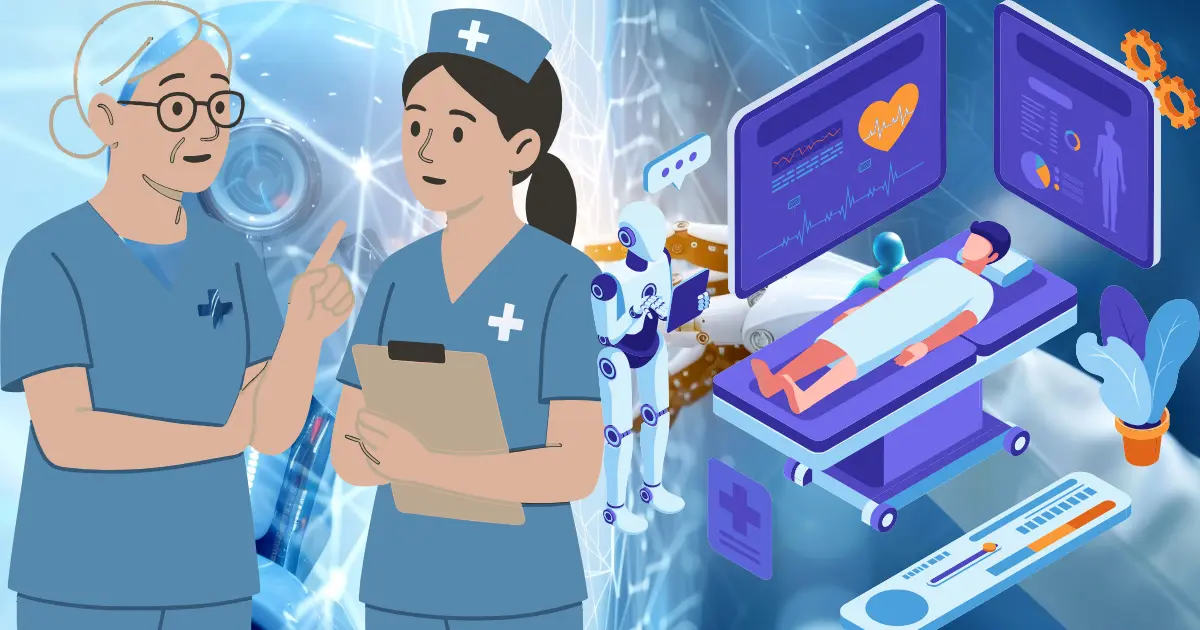
AI is strong with data and routine work. But nursing is more than automated tasks. Nursing is human. It is emotional. It is skilled. This section shows why nurses remain essential in healthcare, even with advanced technology.
Human Empathy and Emotional Support
Nurses give care that machines cannot copy. They look into a patient’s eyes. They listen to fear, pain, or confusion. They offer comfort with a calm voice or a gentle touch. This empathy builds trust between nurses and patients.
For example:
A patient feels scared before surgery. A nurse sits beside them, explains each step, and holds their hand. No robot or algorithm can replace this level of human connection.
Complex Judgment and Skilled Clinical Care
Healthcare is complex. Patients change fast. Nurses evaluate symptoms, notice small changes, and act quickly. Their judgment is adaptive and skilled. AI may assist, but it cannot lead during tense moments.
Ethical and Human Interaction Needs
Many decisions in clinical care need empathy and ethics. Nurses guide families, answer hard questions, and make choices that respect human values. AI can give data. But ethical care needs a human heart.
Tip:
Use AI as support, but trust your training, empathy, and judgment when caring for people.
How AI and Nurses Work Together
AI does many things well, but it cannot replace nurses. Instead, AI assists and augments clinical care. When nurses and AI work together, patient care becomes smarter, safer, and more efficient.
AI Assists, Not Replaces
AI supports nurses in tasks like monitoring, data analysis, and scheduling. It helps nurses focus on high-value work, like patient care and emotional support. Nurses manage AI tools and make final decisions.
The Augmentative Role of Technology
Robots, automated tools, and intelligent software help streamline workflow. They handle repetitive procedures and organize data. Nurses use these tools to reduce stress and improve efficiency.
Learn to use AI dashboards or robots for routine tasks. This frees up time to spend on patient care.
Improving Patient Care Through Teamwork
AI monitors patients continuously. Nurses evaluate, interpret, and act on the data. Together, they deliver care that is reliable, efficient, and safe. This combination of human judgment and AI support ensures better outcomes for patients.
Skills Nurses Need in an AI-Driven Future
As AI becomes common in hospitals, nurses need new skills. Technology changes daily, but human care remains essential. Nurses must balance technical knowledge with empathy and ethical judgment.
Technical and Adaptive Skills
Nurses need to understand AI tools, dashboards, and automated systems. They must interpret alerts, read data reports, and adapt quickly to new technology.
Strong Communication and Empathy
Even with AI, human interaction is critical. Nurses explain treatments, comfort patients, and guide families. Emotional intelligence is more important as machines handle routine tasks.
Ethical Awareness
AI raises ethical questions. Nurses need to protect patient privacy, ensure fairness, and use technology safely. Understanding data use, patient rights, and AI limitations is essential.
Conclusion
AI is changing healthcare. It can analyze data, monitor patients, and automate routine tasks. It improves efficiency, accuracy, and workflow.
But nursing is more than tasks. Nurses bring empathy, judgment, and human connection. These skills cannot be replaced by machines.
The future of healthcare is AI and nurses working together. AI assists, augments, and supports clinical care. Nurses guide, decide, and deliver care with a human touch.
Final thought: AI will not replace nurses. Instead, it will help them work smarter, focus on patients, and provide better care. The heart of nursing will always remain human.
Frequently Asked Questions
Will Nurses Be Replaced by AI?
No. AI can assist nurses and automate routine tasks, but it cannot replace human care. Nurses provide empathy, judgment, and hands-on skills that machines cannot replicate. AI supports nurses, making their work more efficient, but the human heart in nursing remains essential.
Will AI Replace Nurse Practitioners?
No. AI can help nurse practitioners with data analysis, diagnostics, and routine tasks. But it cannot replace their clinical judgment, decision-making, or patient care skills. AI acts as a tool to assist and augment their work, not replace them.
Will AI Replace Nursing Jobs?
No. AI will change some tasks in nursing, but it will not replace jobs. Machines can handle routine or data-heavy work, while nurses focus on patient care, clinical judgment, and human interaction. AI helps nurses work smarter, not take their place.
Will AI Replace Registered Nurses?
No. AI can assist registered nurses with monitoring, data analysis, and routine tasks, but it cannot replace their skills, empathy, and clinical judgment. Registered nurses remain essential for delivering safe, compassionate, and complex patient care.
Which 3 Jobs Will Survive AI?
Jobs that need human empathy, judgment, and creativity are most likely to survive AI. Three examples are:
Nurses and Healthcare Professionals – They provide care, comfort, and clinical decisions that machines cannot replicate.
Teachers and Educators – They guide, motivate, and understand students in ways AI cannot.
Creative Professionals – Artists, writers, designers, and innovators rely on imagination and human insight.
These jobs combine human connection, problem-solving, and creativity, which AI cannot fully replace.
Will Nurses Be in Demand in the Future?
Yes. Nurses will continue to be in high demand. AI can assist with tasks, but it cannot replace the empathy, judgment, and human care that nurses provide. As healthcare grows more complex, skilled nurses will remain essential for patient care, clinical decision-making, and guiding the use of technology.
Will AI Replace Healthcare Workers?
No. AI will assist healthcare workers by handling routine tasks, analyzing data, and improving efficiency. However, human care, judgment, and empathy are essential in healthcare and cannot be replaced. AI supports workers, helping them focus on patients and complex clinical decisions.
Sources
American Nurses Association (ANA)
World Health Organization (WHO)




- Be Respectful
- Stay Relevant
- Stay Positive
- True Feedback
- Encourage Discussion
- Avoid Spamming
- No Fake News
- Don't Copy-Paste
- No Personal Attacks
- Be Respectful
- Stay Relevant
- Stay Positive
- True Feedback
- Encourage Discussion
- Avoid Spamming
- No Fake News
- Don't Copy-Paste
- No Personal Attacks
