What is Machine Learning (ML)? A Comprehensive Guide
Published: 26 Mar 2026
Machine learning has quietly become one of the most transformative forces in modern technology. It powers the recommendations on your streaming platform, detects fraud in your bank transactions, and helps doctors spot diseases earlier than ever before. Yet despite its enormous influence, many people remain unsure of what machine learning actually is or how it works. This guide breaks it all down from the ground up.
Table of Contents
What is Machine Learning: The Basics
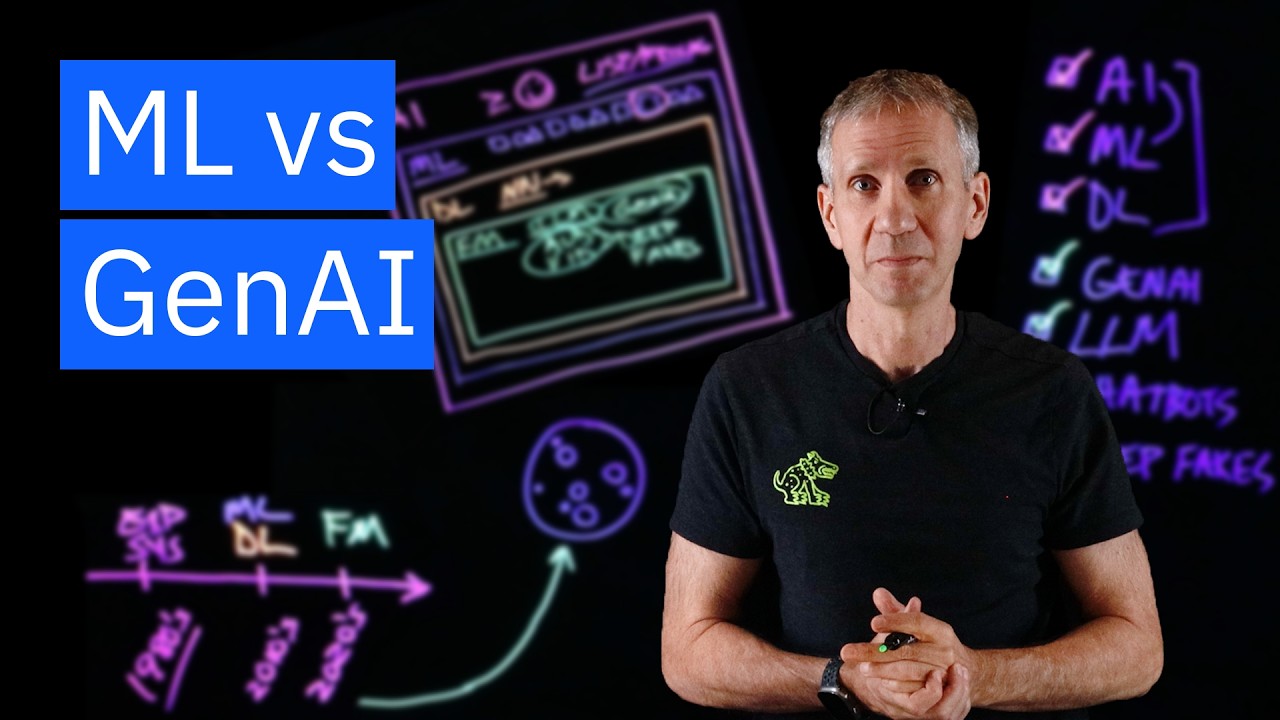
Machine learning is a branch of computer science that enables systems to learn from data and improve their performance over time without requiring explicit programming to do so. Instead of following a fixed set of rules written by a programmer, a machine learning system identifies patterns within data and uses those patterns to make decisions or predictions.
The term was coined by Arthur Samuel in 1959, who described it as the field of study that enables computers to learn without being explicitly programmed. Today, that definition still holds, though the methods, scale, and ambitions of the field have expanded dramatically.
Machine Learning for Beginners
Think of it this way. Teaching a child to recognize a dog does not involve handing them a rulebook that says “four legs, fur, tail.” Instead, you show them hundreds of dogs, they notice recurring features, and eventually, they can spot a dog they have never seen before. Machine learning works similarly. You feed a system large amounts of labeled data, it finds the underlying patterns, and then it applies what it learned to new, unseen inputs.
There are three ingredients at the heart of every machine learning system: data, an algorithm, and a feedback mechanism. Data provides the raw material. The algorithm is the process that extracts patterns from it. The feedback mechanism tells the system how well it is doing and guides improvement.
How Machine Learning Works
At its core, machine learning involves training a model. During training, the algorithm processes the input data and adjusts internal parameters, often called weights, to minimize the difference between its predictions and the correct answers. This process of adjustment is called optimization, and it repeats thousands or even millions of times until the model reaches an acceptable level of accuracy.
Once trained, the model is evaluated on data it has not seen before. If it performs well, it is deployed to make predictions in the real world. If not, the process loops back: more data is gathered, the model is retrained, or a different algorithm is tried, and evaluation happens again.
Machine Learning vs. Related Fields
Machine Learning vs Artificial Intelligence
Artificial intelligence is the broader concept of creating machines that can perform tasks that typically require human intelligence, such as reasoning, understanding language, recognizing objects, and making decisions. Machine learning is one specific approach to achieving AI.
Not all AI is machine learning. Early AI systems relied on hand-coded rules, symbolic logic, and expert systems that did not learn from data at all. Machine learning, by contrast, derives its intelligence from data rather than from human-written instructions. Today, machine learning has become the dominant method for building AI systems, but the two terms are not interchangeable.
Machine Learning and Deep Learning
Deep learning is a subset of machine learning that uses a particular type of algorithm called an artificial neural network with many layers. The word “deep” refers to the number of layers in the network. These layers allow the model to learn hierarchical representations of data, where early layers capture simple features and later layers capture increasingly abstract ones.
Standard machine learning works well across many tasks and requires far less data and computing power than deep learning. Deep learning excels specifically at tasks involving unstructured data such as images, audio, and text, where raw complexity makes traditional approaches insufficient.
Machine Learning vs Deep Learning: A Closer Comparison
The most practical distinction is that traditional machine learning algorithms often require a human expert to identify and select the relevant features from the data before training. Deep learning models learn those features automatically. This makes deep learning more powerful for complex tasks, but also more data hungry and computationally expensive.
For a structured dataset with a few hundred rows and dozens of columns, a decision tree or logistic regression model will often outperform a deep neural network. For a task like recognizing speech or generating realistic images, deep learning is almost always the superior choice.
Types of Machine Learning
The Main Types of Machine Learning
Machine learning is broadly categorized into three learning paradigms based on how the model interacts with training data.
Supervised learning is the most common. The training data consists of input-output pairs, and the model learns to map inputs to outputs. Every example comes with a correct label, and the model adjusts itself to predict those labels as accurately as possible.
Unsupervised learning involves data without labels. The model must find structure on its own, discovering clusters, associations, or compressed representations without any guidance about what the “right” answer should be.
Reinforcement learning frames the problem as an agent interacting with an environment. The agent takes actions, receives rewards or penalties, and learns over time to take actions that maximize its cumulative reward. It is the paradigm behind game-playing systems and robotics.
Five Types of Machine Learning
Beyond the three core paradigms, two additional categories have become increasingly important.
Semi-supervised learning sits between supervised and unsupervised learning. It uses a small amount of labeled data combined with a large amount of unlabeled data. This is useful in real-world settings where labeling data is expensive or time-consuming but raw data is abundant. A medical imaging system might use a few hundred labeled scans alongside thousands of unlabeled ones.
Self-supervised learning has become a powerhouse behind modern language models and vision systems. The model generates its own supervision signal from the raw data by learning to predict part of the input from another part. For example, predicting the next word in a sentence or reconstructing a masked region of an image. This allows training on enormous datasets without any human annotation.
Machine Learning Algorithms
Common Machine Learning Algorithms
Linear regression models the relationship between a continuous output and one or more input variables as a straight line. It is simple, interpretable, and effective when the underlying relationship is approximately linear.
Logistic regression, despite its name, is used for classification rather than regression. It estimates the probability that an input belongs to a particular category.
Decision trees split data into branches based on feature values, producing a tree structure that is easy to visualize and interpret. Random forests extend this idea by combining many decision trees and averaging their predictions, which dramatically improves accuracy and robustness.
Support vector machines find the boundary that best separates two classes while maximizing the margin between them. They are effective in high-dimensional spaces and remain competitive for many tabular data tasks.
K-nearest neighbors classifies a new point by looking at the labels of its closest neighbors in the training data. It is intuitive and requires no training phase, though it can be slow and memory-intensive at scale.
Gradient boosting algorithms build an ensemble of weak learners sequentially, with each new learner correcting the errors of the previous one. Methods like XGBoost and LightGBM have dominated competitive machine learning benchmarks on structured data for years.
Neural Networks
A neural network is a computational model loosely inspired by the structure of biological brains. It consists of layers of nodes (called neurons) connected by weighted edges. Each neuron receives inputs, applies a mathematical transformation, and passes the result to the next layer.
Neural networks are the foundation of deep learning. The simplest form, a feedforward network, passes information in one direction from input to output. More specialized architectures include convolutional neural networks for images, recurrent networks for sequential data, and transformers for language. Transformers in particular have reshaped the landscape of natural language processing and now underpin large language models.
The Machine Learning Process
The End-to-End Process
Building a useful machine learning system involves far more than choosing an algorithm and pressing train. The process typically follows these stages.
Problem formulation comes first. What question are you trying to answer? What does success look like? Poorly defined problems produce models that optimize for the wrong thing.
Data collection and preparation follow. Gathering relevant data, cleaning it, handling missing values, and transforming variables into formats the algorithm can work with often consumes the majority of a project’s time. Garbage in means garbage out, and no algorithm can compensate for fundamentally poor data.
Feature engineering involves selecting, transforming, or creating input variables that help the model learn better. For traditional machine learning, this step is often the most impactful. For deep learning on images or text, much of this happens automatically inside the network.
Model selection means choosing an appropriate algorithm and architecture for the problem. Cross-validation is a technique used here to estimate how well different models will perform on unseen data by splitting the available data into multiple subsets and rotating through them.
Training is where the algorithm processes the data and adjusts its parameters. Hyperparameter tuning, which means adjusting settings like learning rate, tree depth, or the number of layers, happens iteratively alongside training.
Evaluation uses held-out data to measure performance objectively. Metrics depend on the task: accuracy, precision, recall, and F1 score for classification; mean squared error or mean absolute error for regression; and others for specialized tasks.
Deployment moves the trained model into a production environment where it processes real inputs. Monitoring is essential because the real world changes over time, and a model that performed well at launch may degrade as the data it encounters drifts away from what it was trained on.
What is a Machine Learning Model?
A machine learning model is the output of the training process. It is a mathematical function that takes inputs and produces outputs. Once trained, a model encodes the patterns the algorithm discovered in the data, and it applies that knowledge to new examples without repeating the training process. Models can be as simple as a linear equation or as complex as a neural network with hundreds of billions of parameters.
Applications of Machine Learning
A Broad Overview
Machine learning has found applications in virtually every domain where data exists, and decisions must be made.
In healthcare, models assist with disease diagnosis from medical images, predict patient readmission risk, accelerate drug discovery by predicting molecular properties, and personalize treatment plans. In finance, they detect fraudulent transactions in real time, assess credit risk, power algorithmic trading strategies, and automate document processing. In marketing, they segment customers, predict churn, personalize recommendations, and optimize advertising spend. In manufacturing, they predict equipment failures before they occur, detect defects in production lines, and optimize supply chains.
Specific Use Cases
Recommendation systems are among the most pervasive applications. When a streaming service suggests a show you might enjoy or an e-commerce platform shows products similar to ones you have browsed, a machine learning model is at work behind the scenes.
Natural language processing enables machines to understand and generate human language. Spam filters, voice assistants, translation services, and chatbots all rely on it. Computer vision allows machines to interpret images and video, enabling autonomous vehicles, facial recognition, and automated quality inspection in manufacturing.
Predictive maintenance uses sensor data from industrial equipment to forecast failures before they happen, reducing downtime and maintenance costs. Fraud detection systems analyze thousands of transaction features in milliseconds to flag suspicious activity before it causes harm.
A Concrete Example
Consider a spam filter. The training data consists of millions of emails, each labeled as spam or not spam. The model learns which words, phrases, sender characteristics, and structural features appear more often in spam. When a new email arrives, the model scores it against those learned patterns and routes it accordingly. Over time, as new spam techniques emerge, the model is retrained on fresh data to stay effective. This is machine learning in its most practical form: learning from examples to make decisions automatically at scale.
Machine Learning with Python
Why Python?
Python has become the dominant language for machine learning for several interconnected reasons. Its syntax is clean and readable, lowering the barrier for researchers and engineers who come from mathematics or statistics backgrounds rather than software engineering. Its ecosystem of libraries covers the entire machine learning workflow, and its community is enormous, meaning tutorials, documentation, and help are readily available.
The foundational libraries include NumPy for numerical computation, Pandas for data manipulation, and Matplotlib and Seaborn for visualization. Scikit learn provides a unified interface to hundreds of classical machine learning algorithms and preprocessing tools. TensorFlow and PyTorch are the two dominant frameworks for building and training deep learning models. Hugging Face’s Transformers library has made state-of-the-art language models accessible with just a few lines of code.
Getting Started
The most effective way to learn machine learning with Python is to combine structured study with hands-on projects. Start by building comfort with Python itself, then work through NumPy and Pandas. Follow tutorials that walk through complete machine learning projects from data loading to model evaluation. Kaggle offers free datasets, competitions, and a notebook environment where you can run code without any local setup. Courses from platforms such as fast.ai take a top-down approach that gets you training real models quickly before filling in theoretical details.
Machine Learning Projects
Why Projects Matter
Reading about machine learning develops intuition. Building things with it develops skill. Projects force you to confront the messy reality of real data, the frustration of poor model performance, and the satisfaction of finding improvements that actually work.
Good beginner projects include predicting house prices from tabular data, classifying images from a well-known benchmark dataset, building a sentiment classifier on movie reviews, or creating a system that recommends products based on purchase history. As your skills grow, you can tackle more ambitious work: training a model on a domain you care about, deploying a model as a web service, or reproducing results from a research paper. A portfolio of completed projects, especially ones hosted publicly with clear documentation, is one of the most compelling assets for anyone pursuing a career in the field.
Machine Learning Engineer
The Role
A machine learning engineer occupies the space between data science and software engineering. While a data scientist might focus on exploration, experimentation, and model development, the machine learning engineer is responsible for taking those models and making them work reliably in production at scale. This involves building data pipelines, setting up training infrastructure, optimizing models for speed and memory efficiency, deploying models as services, and monitoring them in the real world.
The role demands strong programming skills, particularly in Python, familiarity with cloud platforms such as AWS, Google Cloud, or Azure, knowledge of distributed computing frameworks, and a solid understanding of both machine learning fundamentals and software engineering best practices. Communication skills matter too, since translating between the language of business stakeholders and the technical realities of machine learning systems is a constant part of the job.
Salary
Machine learning engineering is among the most lucrative technical roles in the industry. In the United States, salaries for mid-level machine learning engineers typically fall between $150,000 and $200,000 in total compensation, with senior roles at major technology companies often exceeding $300,000 when equity is included. Salaries vary significantly by geography, industry, company size, and individual experience. Demand has remained strong as organizations across every sector continue to invest in AI capabilities, and the market for skilled practitioners shows no signs of softening.
Conclusion
Machine learning is not a single technology but a sprawling ecosystem of ideas, algorithms, tools, and applications united by a common principle: systems can learn from data rather than from explicit programming. From the simplest linear regression to the most complex transformer architecture, the underlying logic is the same. Feed the system examples, let it find patterns, evaluate how well it generalizes, and iterate.
Understanding machine learning today is not just a career asset. It is increasingly a form of literacy for anyone who wants to understand how the digital world around them works. The field continues to evolve at a remarkable pace, but the foundational concepts in this guide will remain relevant regardless of what new architectures or techniques emerge next.
FAQs
Is machine learning the same as artificial intelligence?
No, they are not the same thing, though the two are closely related. Artificial intelligence is the broader field concerned with building machines capable of performing tasks that typically require human intelligence. Machine learning is one specific method of achieving AI, where systems learn from data rather than following hand-coded rules. Think of AI as the goal and machine learning as one of the most powerful paths toward reaching it. All machine learning is AI, but not all AI is machine learning.
How long does it take to learn machine learning from scratch?
Most people with a basic programming background can grasp the fundamentals of machine learning within three to six months of consistent study. Reaching a level where you can build and deploy production-grade models typically takes one to two years. The timeline depends heavily on your starting point: familiarity with Python, statistics, and linear algebra will compress it significantly. The fastest learners combine structured courses with hands-on projects rather than theory alone.
What kind of data does machine learning need to work?
Machine learning models need large volumes of relevant, clean, and representative data. The type of data depends on the task: labeled examples for supervised learning, raw unlabeled data for unsupervised learning, and reward signals for reinforcement learning. Quality matters more than quantity. A small dataset with accurate labels will outperform a massive one riddled with errors. Data also needs to reflect the real-world conditions the model will face after deployment, the model learns the wrong patterns.
Can machine learning make wrong predictions?
Yes, and it does so regularly. No machine learning model is perfectly accurate. Models can fail when they encounter data that looks different from their training set, when the training data contained biases or errors, when they are too simple to capture the complexity of the problem (underfitting), or when they memorize noise rather than learning genuine patterns (overfitting). This is why evaluation on held out data, ongoing monitoring after deployment, and human oversight remain essential parts of any machine learning system.
Do you need a math degree to work in machine learning?
No, but a working knowledge of certain math topics is genuinely useful. Linear algebra, probability, and calculus underpin how most machine learning algorithms function. However, many practitioners build effective models using high level libraries without deriving equations from scratch. What matters more in practice is the ability to frame problems correctly, work with data fluently, interpret model behavior, and understand when and why a model is failing. Strong math accelerates understanding, but it is not a prerequisite for getting started.





- Be Respectful
- Stay Relevant
- Stay Positive
- True Feedback
- Encourage Discussion
- Avoid Spamming
- No Fake News
- Don't Copy-Paste
- No Personal Attacks
- Be Respectful
- Stay Relevant
- Stay Positive
- True Feedback
- Encourage Discussion
- Avoid Spamming
- No Fake News
- Don't Copy-Paste
- No Personal Attacks
