Internet of Things (IoT): Meaning, Technology, Applications, and Future Trends
Published: 19 Dec 2025
Executive Summary
The Internet of Things (IoT) is a technology framework that connects physical objects to the internet, enabling them to collect data, communicate with systems, and perform automated actions. This guide explains the meaning of IoT, how IoT technology works, and how connected devices are applied across industries through practical IoT applications and real world use cases. It also explores the future trends of IoT, including artificial intelligence, edge computing, advanced connectivity, and evolving security needs. Together, these elements provide a complete understanding of how the Internet of Things functions today and how it is shaping the future of digital infrastructure, business operations, and everyday life.
Table of Contents
Introduction
The Internet of Things (IoT) is transforming how people, devices, and systems interact with the world around them. From smart homes and wearable devices to industrial automation and smart cities, IoT technology enables everyday objects to collect, share, and act on data without human intervention. As connectivity and computing power continue to evolve, the Internet of Things is becoming a foundational part of modern digital infrastructure.
But what is IoT, and why is it considered one of the most important technological developments of our time? At its core, IoT refers to a network of physical devices embedded with sensors, software, and connectivity that allows them to communicate with each other and with cloud-based systems. Understanding the IoT meaning is essential for businesses, developers, and consumers who want to leverage connected technologies effectively.
Today, IoT applications span multiple industries, including healthcare, manufacturing, agriculture, transportation, and consumer electronics. Real-world IoT use cases such as predictive maintenance, remote health monitoring, and smart energy management demonstrate how IoT technology improves efficiency, reduces costs, and enables data-driven decision-making. At the same time, rapid innovation is shaping the future of IoT, with emerging trends like artificial intelligence, edge computing, and 5G accelerating adoption worldwide.
In this guide, you will learn what the Internet of Things is, how IoT technology works, key applications and use cases, and the major trends defining the future of IoT – providing a complete, end-to-end understanding of this connected ecosystem.
IoT Technology: How the Internet of Things Works
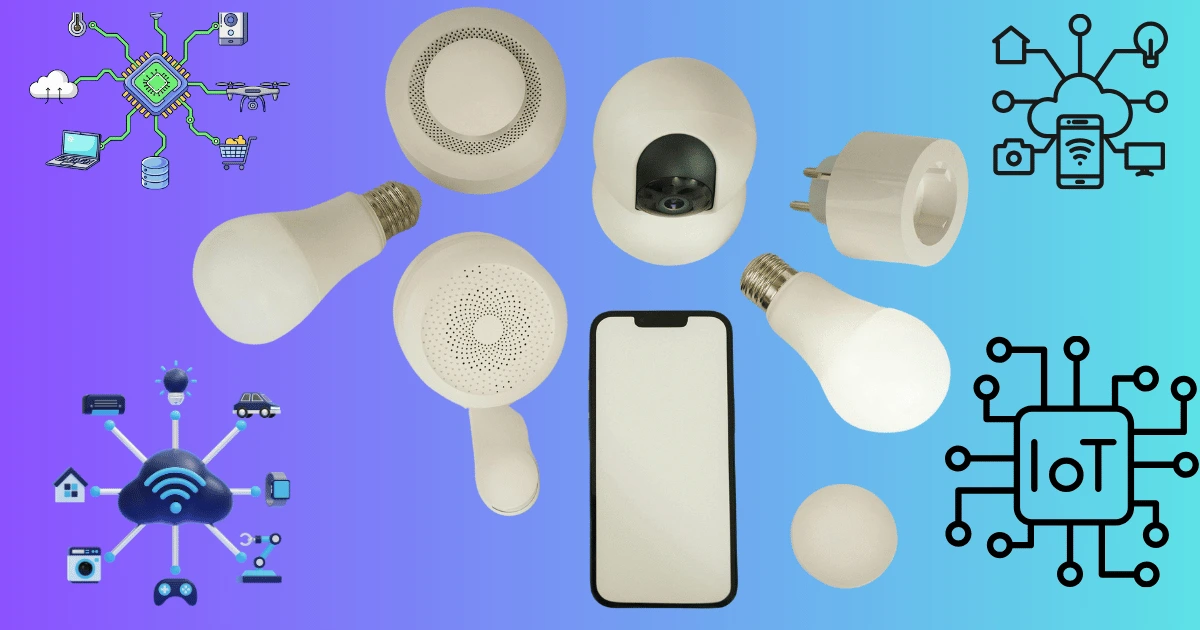
IoT technology is the foundation that enables the Internet of Things to function as a connected system rather than a collection of isolated devices. It combines hardware, software, networking, and data processing to allow physical objects to sense their environment, transmit information, and trigger actions automatically.
At a high level, IoT technology works by collecting data from the physical world, sending that data through communication networks, processing it using computing systems, and then responding based on predefined rules or intelligent algorithms. This process happens continuously and often in real time, enabling automation and informed decision-making.
Core Technologies Behind IoT Systems
IoT systems rely on several interconnected technologies that work together to deliver value.
Sensors and Devices
Sensors are the primary data sources in IoT. They measure physical conditions such as temperature, humidity, motion, location, pressure, light, or biometric signals. These sensors are embedded in devices ranging from smart home products to industrial machinery and medical equipment.
Connectivity and Networking
Once data is collected, it must be transmitted to other systems. IoT devices use various connectivity options depending on range, power consumption, and data requirements. Common communication methods include Wi Fi, Bluetooth, cellular networks, low power wide area networks, and increasingly 5G. Reliable connectivity ensures that data flows continuously between devices and platforms.
Data Processing and Computing Platforms
After transmission, data is processed using cloud computing or edge computing systems. Cloud platforms store large volumes of data, apply analytics, and integrate with applications. Edge computing processes data closer to the device, reducing latency and enabling faster responses for time sensitive IoT use cases.
Applications and User Interfaces
The final layer of IoT technology includes applications that allow users to monitor, control, and analyze IoT systems. Dashboards, mobile apps, and enterprise platforms present data in a readable format and enable configuration, alerts, and automation.
How Data Flows in an IoT Environment
To better understand how IoT technology works, it helps to look at the typical data flow within an IoT system.
First, sensors collect data from the physical environment. Next, the data is transmitted through a network to a processing system. The system analyzes the data and determines whether an action is required. Finally, commands are sent back to devices or applications, triggering automated responses or informing users.
This continuous cycle of data collection, analysis, and action is what differentiates the Internet of Things from traditional internet usage.
Role of Artificial Intelligence in IoT Technology
As IoT systems grow in scale and complexity, artificial intelligence plays an increasingly important role. AI enables IoT platforms to identify patterns, predict outcomes, and make decisions without explicit programming. This combination, often referred to as intelligent IoT, allows systems to improve performance over time and handle large volumes of data efficiently.
By integrating Artificial Intelligence (AI) in IoT technology, organizations can move beyond simple monitoring toward predictive and autonomous systems.
IoT Applications Across Industries
IoT applications show how the Internet of Things moves from theory into real world impact. By connecting devices, collecting data, and enabling automated responses, IoT technology is being applied across multiple industries to improve efficiency, accuracy, and decision making. These applications demonstrate how connected systems solve practical problems at scale.
Rather than serving a single purpose, IoT applications adapt to different environments based on industry needs. The same core technologies sensors, connectivity, and data processing are used in unique ways depending on the context. This flexibility is what makes the Internet of Things a foundational technology rather than a niche solution.
IoT Applications in Smart Homes
One of the most familiar IoT applications can be found in smart homes. Connected devices such as smart thermostats, lighting systems, security cameras, and voice assistants work together to create automated living environments. These systems collect real time data and adjust settings based on user behavior, schedules, or environmental conditions.
Smart home IoT applications improve convenience, energy efficiency, and safety. Users can monitor and control devices remotely through mobile apps, allowing greater awareness and control over home systems.
IoT Applications in Healthcare
In healthcare, IoT applications focus on monitoring, prevention, and improved patient care. Wearable devices track vital signs such as heart rate, activity levels, and sleep patterns. Medical IoT systems enable remote patient monitoring, allowing healthcare providers to collect data without requiring in person visits.
These applications help reduce hospital workloads, support early diagnosis, and improve long term patient outcomes. IoT technology also plays a role in managing medical equipment, ensuring availability, performance, and maintenance.
IoT Applications in Manufacturing and Industry
Industrial IoT applications are widely used in manufacturing, logistics, and large scale operations. Sensors embedded in machines monitor performance, detect anomalies, and predict maintenance needs before failures occur. This approach, often called predictive maintenance, reduces downtime and operational costs.
In smart factories, IoT systems improve production efficiency by tracking workflows, monitoring inventory, and optimizing resource usage. Real time data allows manufacturers to respond quickly to changes in demand or production conditions.
IoT Applications in Agriculture
Agriculture uses IoT applications to improve productivity and sustainability. Sensors placed in fields monitor soil moisture, temperature, and weather conditions. Farmers use this data to optimize irrigation, fertilization, and crop management.
By relying on data rather than assumptions, agricultural IoT applications reduce resource waste and improve crop yields. These systems also support precision farming practices that adapt to local conditions.
IoT Applications in Transportation and Smart Cities
Transportation systems use IoT applications to improve safety, efficiency, and traffic management. Connected vehicles, fleet tracking systems, and smart traffic signals collect and analyze data in real time. This enables route optimization, reduced congestion, and better fuel efficiency.
In smart cities, IoT applications extend to public infrastructure such as street lighting, waste management, parking systems, and environmental monitoring. These connected systems help city planners make informed decisions and improve quality of life for residents.
Why IoT Applications Matter
IoT applications are the bridge between IoT technology and measurable value. They demonstrate how connected devices turn data into insights and actions that improve operations across industries. As adoption increases, new IoT applications continue to emerge, expanding the role of the Internet of Things in everyday life and business environments.
IoT Use Cases in the Real World
While IoT applications describe how the Internet of Things is used across industries, IoT use cases focus on specific, real world scenarios where IoT technology delivers measurable outcomes. These use cases show how connected devices, data collection, and automation work together to solve practical problems and improve performance.
IoT use cases help clarify the value of IoT by demonstrating how abstract concepts translate into everyday operations. They also highlight how the same IoT technology can support different goals depending on context, scale, and user needs.
Consumer IoT Use Cases
Consumer focused IoT use cases are centered around convenience, personalization, and improved daily experiences. Smart home systems automatically adjust lighting, temperature, and security settings based on user behavior and preferences. Wearable devices track physical activity, sleep patterns, and health metrics, allowing users to monitor their wellbeing over time.
These use cases rely on continuous data collection and real time processing to deliver insights and automated actions. As a result, users gain greater control and awareness without needing to manually manage devices.
Business and Enterprise IoT Use Cases
In business environments, IoT use cases focus on efficiency, cost reduction, and operational visibility. Asset tracking systems use connected sensors to monitor the location and condition of equipment across supply chains. This improves inventory management and reduces losses.
Another common use case is predictive maintenance, where sensors monitor machine performance and detect early signs of failure. By addressing issues before breakdowns occur, organizations reduce downtime and extend equipment lifespan.
Industrial IoT Use Cases
Industrial IoT use cases are designed for large scale and mission critical operations. In manufacturing plants, connected machines generate real time performance data that helps optimize production workflows. Quality control systems use sensors and analytics to detect defects early in the production process.
Energy management is another important industrial IoT use case. Sensors monitor energy consumption across facilities, allowing organizations to identify inefficiencies and reduce operational costs while supporting sustainability goals.
Healthcare IoT Use Cases
Healthcare IoT use cases improve patient monitoring and care delivery. Remote monitoring systems track vital signs such as heart rate, blood pressure, and glucose levels. This allows healthcare providers to intervene early and reduce unnecessary hospital visits.
Connected medical devices also help manage equipment usage, availability, and maintenance. These use cases support better resource allocation and improved patient outcomes.
Smart City and Public Sector IoT Use Cases
In smart cities, IoT use cases focus on improving infrastructure and public services. Smart parking systems use sensors to detect available spaces, reducing traffic congestion and emissions. Waste management systems monitor fill levels in bins and optimize collection routes.
Environmental monitoring is another key use case. Sensors track air quality, noise levels, and weather conditions, helping city authorities make data driven decisions that improve quality of life.
Why IoT Use Cases Are Essential
IoT use cases provide concrete evidence of how the Internet of Things delivers value. They connect IoT technology and applications to real outcomes such as efficiency, safety, cost savings, and improved user experiences. As IoT adoption grows, new use cases continue to emerge, expanding the role of connected systems across industries and communities.
Future of IoT and Emerging Trends
The future of IoT is shaped by rapid advancements in connectivity, data processing, and intelligent automation. As more devices become connected and capable of generating data, the Internet of Things is evolving from simple monitoring systems into intelligent, adaptive ecosystems. This shift is expanding how IoT technology is used across industries and everyday life.
The growth of IoT is driven by increasing demand for real time insights, automation, and efficiency. As organizations and governments rely more on data driven decision making, IoT systems are becoming more scalable, secure, and intelligent.
Role of Artificial Intelligence in the Future of IoT
Artificial intelligence plays a central role in the future of IoT. As IoT systems generate massive volumes of data, AI enables platforms to analyze patterns, predict outcomes, and make decisions without constant human input. This combination allows IoT systems to move beyond reactive behavior toward predictive and autonomous operations.
In the future, AI-powered IoT systems will support advanced use cases such as predictive healthcare, automated industrial processes, and intelligent transportation systems. These capabilities will increase efficiency while reducing operational risks.
Edge Computing and Real-Time IoT Processing
Edge computing is another key trend shaping the future of IoT. Instead of sending all data to centralized cloud platforms, edge computing processes data closer to where it is generated. This reduces latency, improves response times, and minimizes bandwidth usage.
As IoT use cases become more time sensitive, such as autonomous vehicles or industrial safety systems, edge computing will play an increasingly important role in supporting real-time decision making.
Impact of 5G on IoT Growth
The expansion of 5G networks is accelerating the future of IoT by enabling faster data transmission, lower latency, and support for a larger number of connected devices. With improved connectivity, IoT systems can operate more reliably at scale.
5G enables advanced IoT applications in areas such as smart cities, connected transportation, and remote healthcare. As network infrastructure improves, IoT adoption is expected to increase across both urban and remote environments.
Security and Privacy in the Future of IoT
As IoT systems grow in size and complexity, security and privacy will remain critical challenges. The future of IoT depends on building secure architectures that protect devices, data, and networks from threats.
Improved encryption, authentication methods, and device management practices will be essential to maintaining trust in IoT ecosystems. Addressing security concerns will play a major role in determining how widely IoT technology is adopted.
Long Term Outlook for the Internet of Things
The long term future of IoT points toward a fully connected environment where devices, systems, and services work together seamlessly. IoT will continue to support automation, efficiency, and innovation across industries such as healthcare, manufacturing, agriculture, transportation, and urban development.
As technology advances, the Internet of Things will shift from being an emerging technology to becoming an invisible but essential layer of digital infrastructure that supports modern society.
Conclusion
The Internet of Things (IoT) represents a fundamental shift in how technology interacts with the physical world. By connecting devices, collecting data, and enabling intelligent automation, IoT technology allows systems to operate more efficiently, respond in real time, and deliver meaningful insights across industries and everyday environments.
Understanding what IoT is and the true IoT meaning helps clarify why connected devices have become essential in areas such as healthcare, manufacturing, agriculture, transportation, and smart cities. Through practical IoT applications and real world IoT use cases, organizations and individuals are using data driven systems to improve productivity, reduce costs, and enhance user experiences.
As innovation continues, the future of IoT will be shaped by advances in artificial intelligence, edge computing, and next generation connectivity. These developments will expand the role of IoT from monitoring and automation toward intelligent, adaptive ecosystems that operate with minimal human intervention.
As IoT adoption grows, the Internet of Things will continue to evolve into a critical layer of digital infrastructure, supporting smarter decisions, connected environments, and more efficient systems across the global economy.
Frequently Asked Questions About the Internet of Things
What is the Internet of Things in simple terms?
The Internet of Things (IoT) is a system where physical objects are connected to the internet so they can collect data, share information, and perform actions automatically. These objects use sensors, software, and connectivity to communicate with other devices and systems without constant human input. Examples include smart home devices, wearable fitness trackers, and connected industrial machines.
How does IoT technology work?
IoT technology works by collecting data from sensors embedded in physical devices and transmitting that data through the internet to processing systems. The data is analyzed using cloud or edge computing platforms, and based on this analysis, actions are triggered automatically or insights are presented to users through applications. This continuous cycle of data collection, processing, and response enables automation and real time decision making.
What are some real-world examples of IoT?
Common real world IoT examples include smart thermostats that adjust temperature automatically, wearable devices that track health metrics, industrial systems that predict equipment failures, and smart city technologies that manage traffic and energy usage. These examples show how IoT is used in homes, businesses, healthcare, manufacturing, and public infrastructure.
What are the main benefits of IoT?
The main benefits of IoT include improved efficiency, automation of repetitive tasks, real time monitoring, and better decision making based on data. IoT systems help reduce operational costs, improve safety, and enhance user experiences by enabling connected devices to respond intelligently to changing conditions.
What are the challenges or risks of IoT?
Key challenges of IoT include data security risks, privacy concerns, device management complexity, and interoperability issues between different systems. Because IoT devices continuously collect and transmit data, strong security measures and proper system design are essential to ensure safe and reliable operation.
What is the future of IoT?
The future of IoT is focused on intelligent and scalable systems powered by artificial intelligence, edge computing, and advanced connectivity such as 5G. IoT is expected to evolve from simple monitoring solutions into autonomous systems that can predict outcomes, adapt to environments, and support smarter cities, industries, and healthcare services.




- Be Respectful
- Stay Relevant
- Stay Positive
- True Feedback
- Encourage Discussion
- Avoid Spamming
- No Fake News
- Don't Copy-Paste
- No Personal Attacks
- Be Respectful
- Stay Relevant
- Stay Positive
- True Feedback
- Encourage Discussion
- Avoid Spamming
- No Fake News
- Don't Copy-Paste
- No Personal Attacks
