Are Cybersecurity Jobs Safe From AI?
Published: 17 Feb 2026
The question “Are cybersecurity jobs safe from AI?” explores the potential impact of Artificial Intelligence (AI) on Cybersecurity Jobs, specifically focusing on job security and the evolving nature of work for cybersecurity professionals. This involves examining how AI and Machine Learning are being integrated into cybersecurity operations, automating tasks like Threat Detection and Vulnerability Management, and the subsequent effects on the Cybersecurity Job Market. Are Cybersecurity Jobs facing a potential displacement due to AI?
This article will address these concerns by exploring the current landscape of AI in cybersecurity, assessing the actual threat AI poses to various cybersecurity roles, and considering whether AI will entirely replace human cybersecurity jobs. The main benefits of understanding this topic include preparing for the future job market, identifying necessary skills, and adapting to the changing demands within the cybersecurity field. This understanding helps Cybersecurity Professionals navigate the evolving landscape, ensuring they remain relevant and competitive.
The main uses of this knowledge are for career planning, skill development, and strategic decision-making in education and training programs. The main components explored include the automation of specific tasks, the emergence of new AI-centric roles, and the continuous need for human expertise in areas requiring judgment and adaptability. Through this exploration, this article aims to provide a realistic perspective on the future of Cybersecurity Jobs in the age of AI, emphasizing evolution and adaptation rather than outright elimination.
Table of Contents
The Current Landscape: AI in Cybersecurity and the Job Market
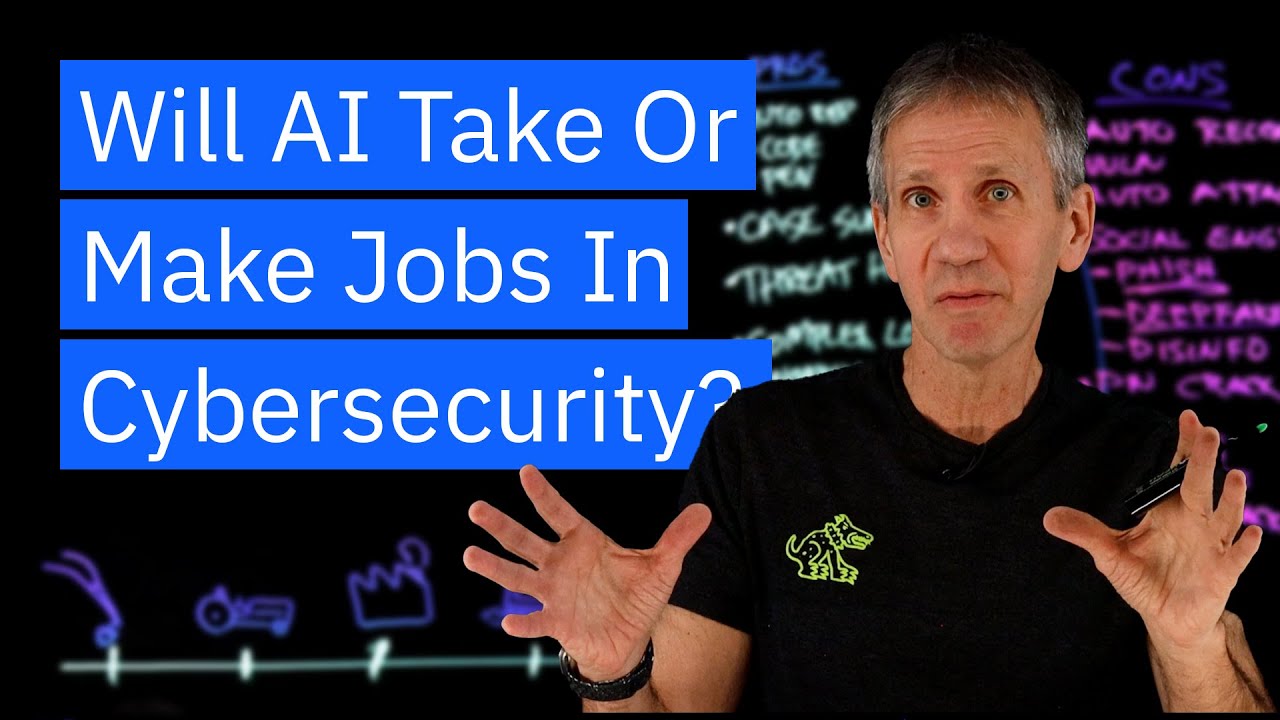
Artificial Intelligence (AI) is rapidly transforming the field of Cybersecurity, influencing both the nature of cyber threats and the methods used to combat them. The integration of AI in cybersecurity is driven by the increasing sophistication and volume of cyberattacks, which often overwhelm traditional security measures.
AI’s Role in Automating Cybersecurity Tasks
AI and Machine Learning (ML) are being deployed to automate various Cybersecurity Tasks, including:
- Threat Detection: AI algorithms can analyze vast amounts of data to identify patterns and anomalies indicative of malicious activity, significantly improving Threat Detection capabilities.
- Incident Response: AI can automate initial Incident Response steps, such as isolating affected systems and gathering forensic data, enabling faster and more efficient responses.
- Vulnerability Management: AI-driven tools can scan networks and systems for vulnerabilities, prioritize them based on risk, and even suggest remediation strategies, streamlining Vulnerability Management processes.
- Data Analysis: AI enhances Data Analysis by sifting through large datasets to uncover hidden threats and trends that human analysts might miss.
Impact of AI on Cybersecurity Jobs: Initial Observations
The introduction of AI into cybersecurity has led to some initial observations regarding its impact on the job market:
- Increased Efficiency: AI-powered tools enhance the efficiency of Cybersecurity Professionals by automating repetitive tasks, allowing them to focus on more complex and strategic activities.
- Skills Gap: The need to manage and interpret AI-driven security systems has created a demand for Cybersecurity Professionals with expertise in AI and Machine Learning.
- Job Displacement Concerns: While AI automates certain tasks, it also raises concerns about potential job displacement for Cybersecurity Professionals whose roles primarily involve those tasks.
How Safe Are Cybersecurity Jobs From AI? Assessing the Threat
The question of how safe Cybersecurity Jobs are from AI depends on the specific role and the extent to which it can be automated. While AI can handle many routine tasks, it’s crucial to understand the realistic perspective of AI capabilities.
Are Cybersecurity Jobs Safe From Automation? A Realistic Perspective
Are Cybersecurity Jobs safe from automation? No, not entirely. Some routine and repetitive tasks within Cybersecurity Jobs are susceptible to Automation. However, the field of cybersecurity is inherently dynamic and requires human intuition and judgment, making complete automation unlikely.
AI Threat to Cybersecurity Jobs: Identifying Vulnerable Roles
Certain Cybersecurity Roles are more vulnerable to AI Automation than others:
- Entry-Level Security Analysts: Tasks such as monitoring Security Information and Event Management (SIEM) systems for known threats can be largely automated.
- Basic Vulnerability Scanners: Running routine scans and generating reports can be automated with AI-driven vulnerability discovery tools.
- Phishing Detection: AI can effectively identify and filter out many Phishing attempts based on known patterns and characteristics.
What Cybersecurity Jobs Are Safe From AI? Exploring Secure Career Paths
While some Cybersecurity Jobs are at risk, others are relatively safe from AI and may even be enhanced by it:
- Security Architects: Designing secure systems and networks requires a deep understanding of complex architectures and business needs, making this role less susceptible to automation.
- Incident Response Managers: Managing complex security incidents and coordinating response efforts requires human judgment and decision-making skills that AI cannot fully replicate.
- Ethical Hackers and Penetration Testers: Identifying novel vulnerabilities and exploiting weaknesses in systems requires creativity and ingenuity that AI currently lacks.
- Cybersecurity Leadership: Roles such as Chief Information Security Officer (CISO) require strategic thinking, risk management, and communication skills that are difficult to automate.
- Compliance Officers: Ensuring adherence to regulatory frameworks such as the NIST Cybersecurity Framework and Data Privacy laws requires human oversight and interpretation.
Will AI Replace Cyber Security Jobs Entirely? A Look at the Future
The notion that AI will entirely replace Cyber Security Jobs is unlikely. Instead, the future points toward a collaboration between humans and AI, with AI augmenting human capabilities and handling routine tasks while Cybersecurity Professionals focus on more complex and strategic activities.
Future of Cybersecurity Jobs with AI: Evolution, Not Elimination
The future of Cybersecurity Jobs involves evolution, not elimination. AI will likely handle many of the mundane and repetitive tasks, freeing up Cybersecurity Professionals to focus on higher-level responsibilities such as:
- Strategic Threat Analysis: Analyzing complex threat landscapes and developing proactive AI countermeasures.
- Incident Response Management: Coordinating and managing responses to sophisticated cyberattacks.
- Developing New Security Strategies: Creating innovative approaches to defend against emerging threats.
AI Replacing Cybersecurity Roles: A Gradual Transition
The transition of AI Replacing Cybersecurity Roles will likely be gradual. As AI technologies continue to evolve, more tasks will be automated, but the need for human expertise will remain. This transition will require Cybersecurity Professionals to adapt and acquire new skills.
The Future of Cyber Security Jobs: Skills and Adaptability
To thrive in the future of Cyber Security Jobs, Cybersecurity Professionals will need to focus on developing skills that complement AI capabilities, such as:
- Critical Thinking: Analyzing complex situations and making sound judgments.
- Problem-Solving: Developing creative solutions to novel security challenges.
- Communication: Effectively communicating security risks and strategies to stakeholders.
- AI and Machine Learning Expertise: Understanding how AI works and how it can be used to enhance security.
- Cloud Security: Securing cloud-based infrastructure and applications.
- Data Privacy: Protecting sensitive data and ensuring compliance with privacy regulations.
AI Cyber Security Jobs: New Opportunities and Skill Requirements
The rise of AI in cybersecurity is not only changing existing roles but also creating new opportunities for Cybersecurity Professionals with AI-specific skills.
Cyber Security Jobs and AI: A Symbiotic Relationship
Cyber Security Jobs and AI are developing a symbiotic relationship, where AI enhances human capabilities and humans oversee and guide AI systems. This collaboration creates new opportunities for Cybersecurity Professionals who can bridge the gap between AI and human expertise.
AI in Cybersecurity Job Market: Emerging Roles and Responsibilities
Emerging roles in the AI in Cybersecurity Job Market include:
- AI Security Engineers: Designing and implementing secure AI systems.
- Machine Learning Security Specialists: Developing and deploying ML models for threat detection and response.
- Adversarial AI Experts: Testing and evaluating AI systems to identify vulnerabilities and weaknesses.
- AI Threat Analysts: Analyzing AI-driven threats and developing strategies to mitigate them.
Cybersecurity Career AI Impact: Adapting to the Changing Landscape
To adapt to the Cybersecurity Career AI Impact, Cybersecurity Professionals should focus on:
- Acquiring AI and ML Skills: Taking courses, attending workshops, and earning certifications in AI and Machine Learning.
- Staying Up-to-Date on Emerging Threats: Continuously learning about the latest AI-driven threats and vulnerabilities.
- Networking with AI Experts: Building relationships with AI professionals to share knowledge and collaborate on projects.
- Developing Soft Skills: Enhancing critical thinking, problem-solving, and communication skills.
Cybersecurity Jobs AI Automation: Benefits and Challenges
Cybersecurity Jobs AI Automation brings both benefits and challenges to the field. Understanding these aspects is crucial for Cybersecurity Professionals and organizations alike.
Advantages of AI Automation in Cybersecurity
The advantages of AI Automation in Cybersecurity include:
- Improved Threat Detection: AI can detect threats more quickly and accurately than humans alone.
- Faster Incident Response: AI can automate initial response steps, reducing the impact of cyberattacks.
- Reduced Workload for Security Teams: AI can handle routine tasks, freeing up Cybersecurity Professionals to focus on more complex activities.
- Enhanced Vulnerability Management: AI can identify and prioritize vulnerabilities more efficiently.
- 24/7 Monitoring: AI systems can continuously monitor networks and systems for threats.
Disadvantages of Cyber Security Jobs: AI-Related Concerns
The disadvantages of Cyber Security Jobs include AI-Related Concerns, such as:
- Potential Job Displacement: Automation may lead to job losses for some Cybersecurity Professionals.
- Skills Gap: The need for AI expertise creates a skills gap in the cybersecurity workforce.
- AI Bias: AI algorithms can be biased, leading to inaccurate or unfair security decisions.
- Adversarial AI: Attackers can use AI to develop more sophisticated and evasive threats.
- Over-Reliance on AI: Organizations may become too reliant on AI, neglecting the importance of human expertise.
- AI’s Security Blindspots: AI systems can have blindspots that attackers can exploit.
Are Cyber Security Jobs Hard and Stressful, Even With AI?
Even with the assistance of AI, Cyber Security Jobs remain challenging and stressful due to the constantly evolving threat landscape and the high stakes involved in protecting critical data and systems.
Are Cybersecurity Jobs Hard? The Constant Evolving Threat Landscape
Are Cybersecurity Jobs hard? Yes, Cybersecurity Jobs are hard due to the constantly evolving threat landscape. Cyberattacks are becoming more sophisticated and frequent, requiring Cybersecurity Professionals to learn and adapt continuously. The complexity of modern IT systems and the increasing reliance on cloud computing also add to the difficulty of the job.
Are Cybersecurity Jobs Stressful? Managing Risk and Responding to Incidents
Are Cybersecurity Jobs stressful? Yes, Cybersecurity Jobs are stressful because of the high stakes involved in Managing Risk and responding to Incidents. A single security breach can have devastating consequences for an organization, including financial losses, reputational damage, and legal liabilities. Cybersecurity Professionals often work under pressure to prevent and mitigate these risks.
Are Cybersecurity Jobs Work From Home? The Flexibility Factor
Do Cybersecurity Jobs work from home? Yes, many Cybersecurity Jobs offer the flexibility to Work From Home. The nature of the work, which often involves monitoring systems and responding to incidents remotely, makes it well-suited for remote work arrangements. However, some roles may require occasional on-site presence for meetings, training, or incident response.
Conclusion: Navigating the Future of Cybersecurity with AI
In conclusion, the integration of AI into cybersecurity is transforming the field, presenting both challenges and opportunities for Cybersecurity Professionals. While AI can automate many routine tasks and enhance threat detection and response capabilities, it is unlikely to entirely replace human expertise. Instead, the future of cybersecurity lies in a symbiotic relationship between humans and AI, where Cybersecurity Professionals focus on higher-level responsibilities that require critical thinking, problem-solving, and communication skills.
To thrive in this evolving landscape, Cybersecurity Professionals must adapt and acquire AI-centric skills, stay up-to-date on emerging threats, and focus on developing soft skills that complement AI capabilities. By embracing AI as a tool to augment their abilities, Cybersecurity Professionals can navigate the future of cybersecurity with confidence and continue to play a vital role in protecting organizations from cyber threats. The AI impact on cybersecurity is significant, but the cybersecurity workforce can adapt by prioritizing AI literacy and focusing on AI-specific skills. The cybersecurity job market will continue to evolve, creating new AI-centric cybersecurity roles and requiring Cybersecurity Professionals to adapt to the changing landscape.
FAQs
Can AI replace cybersecurity jobs in the future?
AI will not fully replace cybersecurity jobs in the future because while it can automate routine tasks like threat detection and vulnerability scanning, it cannot replicate human judgment, strategic thinking, ethical decision-making, or real-time incident response. Cybersecurity roles will evolve rather than disappear, with professionals working alongside AI tools, making adaptability and upskilling the key to long term job security.
How will AI affect cybersecurity?
AI will significantly affect cybersecurity by improving threat detection speeding up incident response and automating routine security tasks such as log analysis vulnerability management and malware detection At the same time attackers may also use AI to launch more sophisticated attacks which increases the need for skilled cybersecurity professionals Overall AI will enhance security capabilities but human expertise will remain essential for strategy decision making and handling complex cyber threats.
What cybersecurity roles are most affected by AI automation?
Cybersecurity roles that focus on repetitive and rule-based tasks, such as log monitoring, vulnerability scanning, and basic threat analysis, are most affected by AI automation, while roles involving strategy, incident response, security architecture, and decision making continue to rely heavily on human expertise.
What skills do cybersecurity professionals need to stay relevant in the age of AI?
Cybersecurity professionals need to develop skills in AI and machine learning fundamentals, automation, cloud security threat intelligence, and critical thinking to effectively work alongside AI-driven tools and adapt to evolving cyber threats.
Will AI create new job opportunities in cybersecurity?
AI is expected to create new cybersecurity job opportunities by increasing demand for roles focused on AI security governance models, risk management, threat hunting, and designing intelligent security systems, rather than reducing overall employment.





- Be Respectful
- Stay Relevant
- Stay Positive
- True Feedback
- Encourage Discussion
- Avoid Spamming
- No Fake News
- Don't Copy-Paste
- No Personal Attacks
- Be Respectful
- Stay Relevant
- Stay Positive
- True Feedback
- Encourage Discussion
- Avoid Spamming
- No Fake News
- Don't Copy-Paste
- No Personal Attacks
