How Math in Cybersecurity Builds Stronger Digital Defenses
Published: 19 Oct 2025
Cybersecurity is all about keeping computers, data, and people safe online. Every time you send a message, make a payment, or log into an account, a little math works behind the scenes.
Math helps experts find patterns, create strong passwords, and build codes that keep hackers out. It gives them tools to understand how attacks happen and how to stop them. Without math, much of the digital security we rely on today would not exist.
When you type your password or use your fingerprint to unlock your phone, math checks that you are really you. When websites protect your payment details, math helps turn your information into secret codes so no one else can read it.
Let’s explore how math shapes cybersecurity and why understanding numbers can help build a safer online world.
Table of Contents
What Is the Role of Math in Cybersecurity?
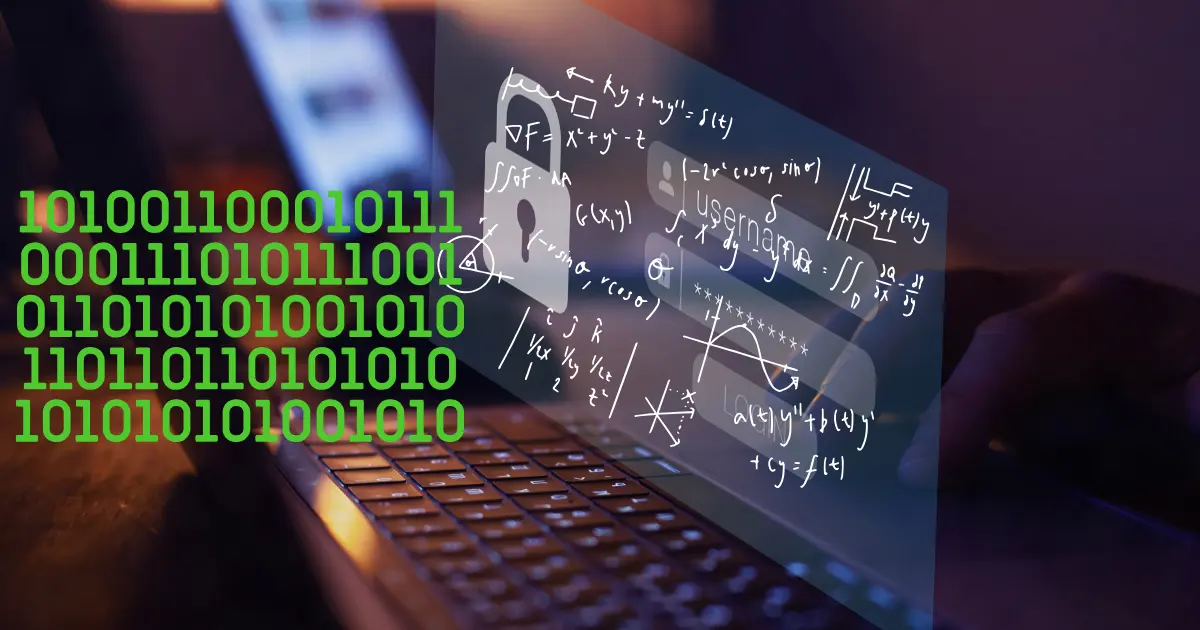
Math is like a quiet helper in cybersecurity. It works in the background to protect data and systems. Cyber experts use math to study patterns, predict risks, and build security systems that stop attacks before they happen.
Finding Patterns in Data
Hackers often leave behind clues — small changes in data or strange activity. Math helps find these patterns. For example, a company may use math to track login attempts. If someone tries to log in too many times, the system quickly blocks them.
Building Strong Codes and Encryption
Encryption means hiding data using numbers. It makes sure only the right people can read it. Every time you see “https” in a website link, math is working to lock your data safely.
If you want to understand how encryption and other defenses protect systems, check out our guide on How Does Cybersecurity Work.
Securing Computer Networks
Math also helps create safe computer networks. Experts use mathematical models to find weak points and fix them before attackers do. These models help design firewalls, detect viruses, and manage digital traffic safely.
Real-Life Examples of Math in Cybersecurity
You don’t have to be a math genius to see how much math helps in real-world cybersecurity work. Here are a few examples that show how numbers make digital safety possible.
Binary Math
Computers use only two numbers — 0 and 1. This is called binary math. It helps devices process information, store data, and run programs. Without binary math, computers wouldn’t know how to follow even simple commands.
Cryptography and Encryption
Cryptography is the art of secret messages. It uses math to turn data into unreadable codes. For example, when you shop online, cryptography helps protect your credit card number.
You can learn more about this in our list of Top Cybersecurity Certifications — many programs teach basic cryptography as part of their training.
Probability and Statistics
Cybersecurity experts often guess how likely an attack is to happen. They use probability and statistics to measure risk. For example, if a network gets too many failed login attempts from one country, the system can flag it as a possible threat.
Discrete Math and Logic
Discrete math is about rules, logic, and problem-solving. It helps programmers write safe code. Logical thinking lets experts test systems for errors before hackers can find them.
If you’re curious about how reasoning and logic connect to cybersecurity, read our post on What Is Predicate Logic in AI.
How Much Math Is Used in Cybersecurity?
Good news you don’t need to be a math expert to work in cybersecurity. Most roles only need basic math, like algebra and logical thinking.
- Entry-level jobs need simple problem-solving and data analysis.
- Mid-level roles use algebra, statistics, and probability.
- Advanced positions like cryptographers use complex math such as number theory.
Math in cybersecurity is mostly about thinking clearly, spotting patterns, and making smart decisions. If you enjoy solving puzzles or finding hidden mistakes, you already have the right mindset.
To see how math levels differ by role, visit our guide on How to Become a Cybersecurity Engineer.
Why Discrete Math Is Important in Cybersecurity
Discrete math focuses on separate, clear values — like yes/no or 0/1. These ideas help computers follow commands safely.
When programmers write code, they use “if-then” rules — for example:
If password is correct → then give access.
This simple logic protects systems from errors and intrusions. Discrete math also helps in encryption, coding, and designing algorithms — the step-by-step rules that computers follow.
You can explore how logic also supports smart computing in our post on What Is Unification in AI.
Should You Major in Cybersecurity or Math?
This is a common question for students and career changers. Both subjects are valuable, but the right choice depends on your interests.
- If you enjoy solving equations and exploring theory, math may suit you.
- If you like applying those ideas to real-world security problems, cybersecurity might be a better fit.
Math gives you the foundation, and cybersecurity turns that knowledge into action. You can even blend both fields — many cybersecurity degrees include core math courses.
If you’re thinking about higher education, check out our detailed guide on Doctorate in Cybersecurity.
How to Build Math Skills for Cybersecurity
You can start small and grow your math skills over time. Here are a few easy ways:
- Practice basic algebra and logical reasoning.
- Play with math-based puzzles or games.
- Learn simple coding languages like Python or JavaScript.
- Take online courses in cryptography or data analysis.
- Join cybersecurity clubs or challenges for practice.
Remember, cybersecurity is about problem-solving, not just math formulas. The more you practice, the more confident you’ll become.
Conclusion
Math is the secret power behind cybersecurity. It helps protect data, guide decisions, and build safer systems for everyone. From simple logic to complex encryption, math gives security experts the tools they need to defend the digital world.
If you love numbers, puzzles, or protecting people online, cybersecurity could be a great fit for you. The world needs more thinkers who use both creativity and logic to keep it safe.
FAQs
What math is used in cybersecurity?
Cybersecurity uses several types of math to keep systems safe. The most common ones are algebra, probability, statistics, discrete math, and number theory.
Algebra helps with understanding formulas used in encryption and algorithms.
Probability and statistics help experts find risks and unusual network activity.
Discrete math supports logic, algorithms, and programming.
Number theory forms the base of encryption, which keeps data private.
Even basic math skills can help you analyze threats, design secure systems, and make smarter decisions in cybersecurity.
How hard is math in cybersecurity?
Math in cybersecurity isn’t very hard for most roles. You’ll mainly use high school-level math like algebra and statistics. These help you calculate risks, read data, and solve logic-based problems.
Only advanced roles like cryptography or security research require deep math such as number theory or linear algebra.
If you can think logically and solve puzzles, you’ll find cybersecurity math clear and manageable.
Can I do cybersecurity if I’m bad at math?
Yes, you can still build a great career in cybersecurity even if you’re not good at math. Many jobs focus more on logic, analysis, and hands-on tools than on complex calculations.
Roles like network security, ethical hacking, and incident response use practical skills more than theory.
Start by learning how systems work, practicing coding basics, and building logical problem-solving habits. With time and experience, your confidence with math will grow naturally.
Is discrete math important in cybersecurity?
Yes, discrete math is very important in cybersecurity. It teaches logic, set theory, and algorithms — all key parts of secure programming and encryption.
Cyber experts use discrete math to design safe systems, spot code errors, and understand how hackers try to break security.
Even if you don’t study it deeply, knowing the basics of logic and algorithms can help you think like a cybersecurity professional.
Is there a lot of math in cybersecurity?
Not really. Most cybersecurity jobs need only basic math, like algebra, logic, and statistics.
You’ll use math when you calculate risks, read data logs, or understand how encryption works.
Only advanced roles, like cryptography or research, need complex math such as number theory or calculus.
So, while math is useful, it’s not something that should stop you from joining the cybersecurity field.
You May Also Like
- Why Cybersecurity Is Important for Business
- Cybersecurity or Data Analytics: Which Career Pays More?
- The Role of Machine Learning in Cybersecurity






- Be Respectful
- Stay Relevant
- Stay Positive
- True Feedback
- Encourage Discussion
- Avoid Spamming
- No Fake News
- Don't Copy-Paste
- No Personal Attacks
- Be Respectful
- Stay Relevant
- Stay Positive
- True Feedback
- Encourage Discussion
- Avoid Spamming
- No Fake News
- Don't Copy-Paste
- No Personal Attacks
