How Does an IoT System Work? A Complete Guide to Sensors, Connectivity, Gateways, and Cloud Architecture
Published: 12 Dec 2025
An IoT system connects devices, sensors, and software. Each device captures data. Networks send this data to the cloud. Cloud services analyze the streams. Applications use the results to trigger actions. Interfaces let users control devices and receive feedback.
IoT systems support automation in homes, factories, hospitals, vehicles, and cities. They depend on stable communication, secure authentication, and scalable data pipelines. Their structure follows clear steps that measure, transmit, process, and apply data. In the next sections, you see how every layer of an IoT system works.
Table of Contents
What defines an IoT system?
An IoT system links physical devices to digital services. Each device gathers data from its environment. Sensors measure temperature, movement, pressure, light, or air quality. Networks carry these readings to cloud platforms. Applications use this information to create actions.
An IoT system includes five core elements:
- Devices: They act as data sources.
- Sensors: They measure physical values.
- Connectivity: It sends data through Wi-Fi, BLE, LoRaWAN, NB-IoT, or 5G.
- Cloud services: They store and process data streams.
- Interfaces: They show results and allow user control.
These elements form a single workflow that collects, moves, and uses data in real time. The next section explains how these elements fit into a structured IoT architecture.
What components form an IoT architecture?
An IoT architecture organizes devices, networks, and software into defined layers. Each layer handles a specific task. Together, these layers move, process, and present data.
The main layers
- Device layer: This layer contains sensors, actuators, and embedded hardware. Devices collect data and perform actions.
- Communication layer: This layer manages protocols, gateways, and data routing. It moves packets between devices and the cloud.
- Data processing layer: This layer runs pipelines that clean, analyze, and store data.
- Application layer: This layer displays dashboards, runs automation rules, and offers APIs.
- Security layer: This layer protects devices and data with authentication, encryption, and threat detection.
These layers work together as a single structure that guides data from the physical world to digital actions. The next section shows how sensors capture the first data points in this process.
What defines an IoT system?
An IoT system links physical devices to digital services. Each device gathers data from its environment. Sensors measure temperature, movement, pressure, light, or air quality. Networks carry these readings to cloud platforms. Applications use this information to create actions.
An IoT system includes five core elements:
- Devices: They act as data sources.
- Sensors: They measure physical values.
- Connectivity: It sends data through Wi-Fi, BLE, LoRaWAN, NB-IoT, or 5G.
- Cloud services: They store and process data streams.
- Interfaces: They show results and allow user control.
These elements form a single workflow that collects, moves, and uses data in real time. The next section explains how these elements fit into a structured IoT architecture.
How do IoT devices transmit data?
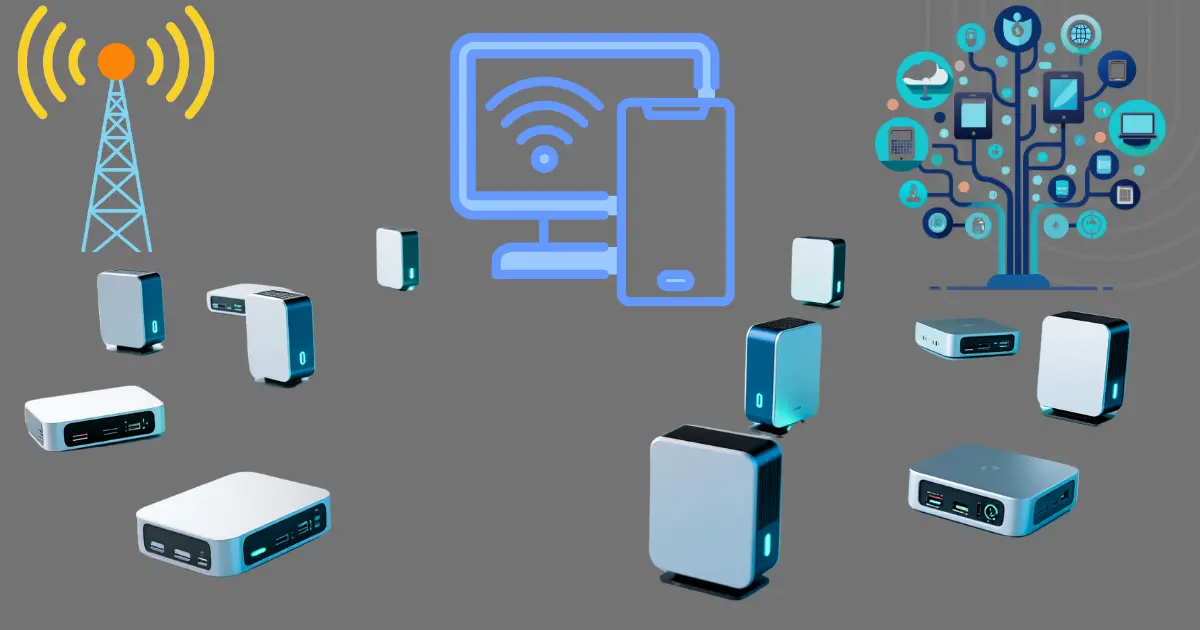
IoT devices send their sensor readings through networks designed for speed, range, or low power use. Each device chooses a protocol that fits its job. Some devices need fast uploads. Others need long battery life. The network defines how the data travels.
Common network protocols
- Wi-Fi: High speed. Good for cameras or smart home hubs.
- Bluetooth Low Energy (BLE): Low power. Ideal for wearables.
- LoRaWAN: Long range. Works well in farms, fields, and remote areas.
- NB-IoT: Narrowband. Built for simple devices that send small updates.
- 5G: Very low latency and high capacity. Used in vehicles and industry.
Devices send data in packets. These packets move from the device to a gateway or directly to the cloud. Some devices talk to each other first and share data before sending it onward. Message queues keep the flow stable when networks are busy.
This step pushes the data out of the device and into the system. Next, you see how a gateway handles and organizes these signals.
How does an IoT gateway process signals?
An IoT gateway receives raw data from devices and puts it into an organized format. It cleans the signals, checks their structure, and prepares them for the cloud. This step reduces noise and keeps the system stable.
What a gateway does
- Filter data: It removes strange or incomplete readings.
- Normalize values: It converts units into one format so apps can read them.
- Encrypt packets: It protects the data before it leaves the local network.
- Forward streams: It sends processed data to cloud platforms.
Some gateways run small analytics tasks on the spot. This is called edge computing. It helps devices react faster, especially in factories, vehicles, or remote sites. A gateway can also balance traffic when many devices send data at the same time.
This stage acts as the bridge between the local environment and the cloud. In the next section, you see how the cloud handles and processes the incoming data.
How does cloud infrastructure handle IoT data?
The cloud receives processed device data and handles large streams at high speed. It organizes the data, stores it safely, and runs analytics that turn raw readings into useful insights. This step drives automation and real-time decisions.
Key cloud tasks
- Data ingestion: The cloud pulls in packets through brokers and secure channels.
- Stream processing: Engines scan incoming data, spot patterns, and detect events within milliseconds.
- Storage: Time-series databases keep fast-changing values. Object storage holds large files.
- Lifecycle rules: Older data moves to cheaper storage to save cost.
- Analytics: The cloud runs rules, triggers alerts, and builds trends for reporting and automation.
Cloud services scale quickly when more devices come online. They manage billions of records and support dashboards, automation flows, and machine learning models.
With the cloud in place, the system can now create actions. In the next section, you see how applications use this processed data to produce real outcomes.
How do IoT applications generate actions?
IoT applications take cloud data and turn it into useful actions. They watch incoming events, check rules, and trigger responses when conditions match. This gives devices real-time behavior without manual effort.
How actions are created
- Trigger rules: The app checks conditions such as temperature, motion, or energy use.
- Automation flows: When a rule matches, the app starts an action. This can switch a device on, send an alert, or adjust a setting.
- Dashboards: Visual panels show live data and help users understand patterns and status changes.
- APIs: External systems send commands through APIs, which let apps control devices from other platforms.
These actions connect data to real results. A pump may start, a light may dim, or a machine may pause for safety. Everything runs based on the rules built into the application.
How does user interaction control IoT systems?
Users control IoT systems through apps, dashboards, and voice assistants. These tools send commands to devices and show live feedback. This keeps the system easy to manage and simple to understand.
How users interact
- Mobile apps: They change settings, view data, and run automations.
- Web dashboards: They display charts, device lists, and alerts for larger setups.
- Voice assistants: They map spoken commands to device actions.
When a user sends a command, the system routes it through the cloud or a local hub. Devices receive updated instructions and adjust their behavior. The loop continues as devices report new data back to the user.
This layer keeps the system human-centered. Next, you see how IoT systems protect devices and data through strong security measures.
How do IoT systems maintain security?
IoT systems protect devices and data with strict security layers. These layers block unauthorized access, secure communication, and watch for unusual activity. Strong security keeps the entire network stable and trustworthy.
Core security actions
- Device authentication: Each device proves its identity before it joins the network.
- Encryption: Data travels through secure, encrypted channels to prevent interception.
- Firmware updates: Devices receive safe, verified updates that fix bugs and close vulnerabilities.
- Threat detection: Monitoring tools scan traffic and spot strange patterns or attacks.
These protections work together to reduce risk and keep both users and systems safe.
Next, you learn how IoT systems grow and handle large numbers of devices.
How does an IoT system scale?
An IoT system grows by adding devices, expanding networks, and increasing cloud capacity. It relies on tools that manage traffic, balance workloads, and keep data flowing smoothly as the system becomes larger.
Key scaling methods
- Device provisioning: New devices join the network with secure credentials and automated setup.
- Load balancing: Brokers and servers spread traffic across multiple nodes to avoid overload.
- Distributed edges: Edge locations handle local processing, cut latency, and reduce cloud pressure.
- Data volume management: Storage systems shard, compress, and organize large datasets to keep performance steady.
These steps help the system stay fast and reliable even when thousands of devices come online.
Next, you see how different industries use IoT technology in daily operations.
What industries use IoT systems?
Many industries use IoT systems to improve safety, reduce costs, and increase efficiency. Each sector relies on connected devices to track, measure, and control key operations.
Common industries
- Smart homes: Devices manage lighting, climate, security, and energy use.
- Healthcare: Wearables and medical sensors monitor patients and send vital data to clinicians.
- Manufacturing (IIoT): Machines report performance, predict failures, and support automation.
- Smart cities: Sensors measure traffic, air quality, waste levels, and energy demand.
- Logistics: Trackers follow packages, vehicles, and temperature-controlled goods.
Each industry uses IoT for different goals, but all depend on accurate data and stable communication.
Next, you learn which problems can affect IoT system performance.
What challenges affect IoT system performance?
IoT systems face several challenges that can limit reliability and speed. These issues impact device behavior, network quality, and data accuracy.
Key performance challenges
- Interoperability: Devices from different brands may struggle to communicate due to protocol gaps.
- Power consumption: Battery devices drain quickly when they sample or transmit too often.
- Latency: Long distances and weak networks slow data transfers.
- Reliability: Interference, packet loss, and unstable connections break data flows.
- Environmental factors: Heat, moisture, dust, and vibration damage sensors or reduce accuracy.
These factors shape how well an IoT system performs in real conditions.
Next, you see which trends guide the future of IoT operations.
What future trends shape IoT system operations?
New trends push IoT systems toward faster, smarter, and more independent operation. These trends improve data handling, reduce delays, and support larger networks with less manual work.
Key trends
- AI integration: AI models detect anomalies, predict failures, and optimize device behavior.
- Edge intelligence: Local processors analyze data on-site, which cuts cloud traffic and lowers latency.
- Digital twins: Virtual system models mirror real assets and simulate performance before changes go live.
- Autonomous systems: Devices make decisions without user input and adjust themselves in real time.
These trends shape the next generation of connected systems and create smarter, more responsive IoT networks.
Final Thoughts: How Does an IoT System Work?
IoT systems connect devices, networks, and cloud services to create fast, data-driven actions. Each layer collects, moves, processes, and applies information with a clear role. This structure helps homes, factories, hospitals, and cities work more efficiently.
As IoT networks grow, they depend on strong security, reliable communication, and scalable data pipelines. New trends such as AI, edge computing, and digital twins push these systems toward smarter and more autonomous operation.
IoT technology continues to expand, and businesses that use it effectively can improve performance, reduce costs, and increase safety across their operations.
FAQs: How Does an IoT System Work?
What is the main purpose of an IoT system?
An IoT system connects devices, collects data, and creates automated actions. It helps users manage environments, improve efficiency, and make faster decisions with real-time information.
How do IoT devices communicate?
IoT devices send data through Wi-Fi, BLE, LoRaWAN, NB-IoT, cellular networks, or wired links. The chosen protocol depends on range, speed, and power needs. Each device uses packets to transfer readings to gateways or the cloud.
What does an IoT gateway do?
An IoT gateway receives device data, filters noise, encrypts packets, and forwards clean data to the cloud. It can also run edge analytics to reduce latency and support faster decisions.
Why is cloud computing important in IoT?
The cloud processes large data streams, stores sensor history, and runs analytics that drive automation. It scales easily and supports billions of device events without slowing the system.
How do IoT systems stay secure?
IoT systems use device authentication, encrypted communication, safe firmware updates, and traffic monitoring. These layers block unauthorized access and protect device data from threats.
How does IoT automation work?
IoT automation uses rules that trigger actions when certain conditions appear. A system may switch a device on, send an alert, or adjust a setting based on real-time sensor data.
Why is edge computing used in IoT?
Edge computing processes data near the device, which reduces latency, lowers cloud costs, and keeps systems responsive during slow or unstable network conditions.





- Be Respectful
- Stay Relevant
- Stay Positive
- True Feedback
- Encourage Discussion
- Avoid Spamming
- No Fake News
- Don't Copy-Paste
- No Personal Attacks
- Be Respectful
- Stay Relevant
- Stay Positive
- True Feedback
- Encourage Discussion
- Avoid Spamming
- No Fake News
- Don't Copy-Paste
- No Personal Attacks
