Cybersecurity Frameworks: A Comprehensive Guide
Published: 22 Jan 2026
Cybersecurity frameworks are structured guidelines that help organizations manage, reduce, and communicate cybersecurity risk. These frameworks define best practices, processes, and controls for protecting systems, networks, and data from cyber threats. Cybersecurity frameworks are essential for building a consistent security strategy, improving risk management, and aligning security efforts with business goals.
The primary benefits of cybersecurity frameworks include improved security posture, standardized risk management, regulatory alignment, and clearer communication between technical and non-technical stakeholders. Organizations use cybersecurity frameworks across industries to protect digital assets, support compliance, and strengthen overall information security programs.
Cybersecurity frameworks typically include core functions such as identifying assets, protecting systems, detecting threats, responding to incidents, and recovering from attacks. These structured components allow organizations to assess current security maturity and plan improvements systematically.
Table of Contents
What are cybersecurity frameworks?
Cybersecurity frameworks are formalized sets of security principles, policies, and controls designed to guide organizations in managing cybersecurity risks. They provide a common language for discussing security requirements and help ensure consistent implementation of security practices across systems and teams.
Cybersecurity frameworks support risk-based decision-making by helping organizations identify critical assets, assess threats, and prioritize security investments. These frameworks are widely used in enterprise environments, cloud infrastructures, and regulated industries where structured security governance is required.
Why cybersecurity frameworks matter
Cybersecurity frameworks matter because they reduce uncertainty in security planning and execution. A framework-driven approach helps organizations understand what to protect, how to protect it, and how to measure effectiveness. This structured approach improves resilience against cyberattacks and supports long-term security sustainability.
Framework adoption also strengthens alignment with cybersecurity principles, ensuring that security controls follow least privilege, defense-in-depth, and risk-based access strategies.
Core components of cybersecurity frameworks
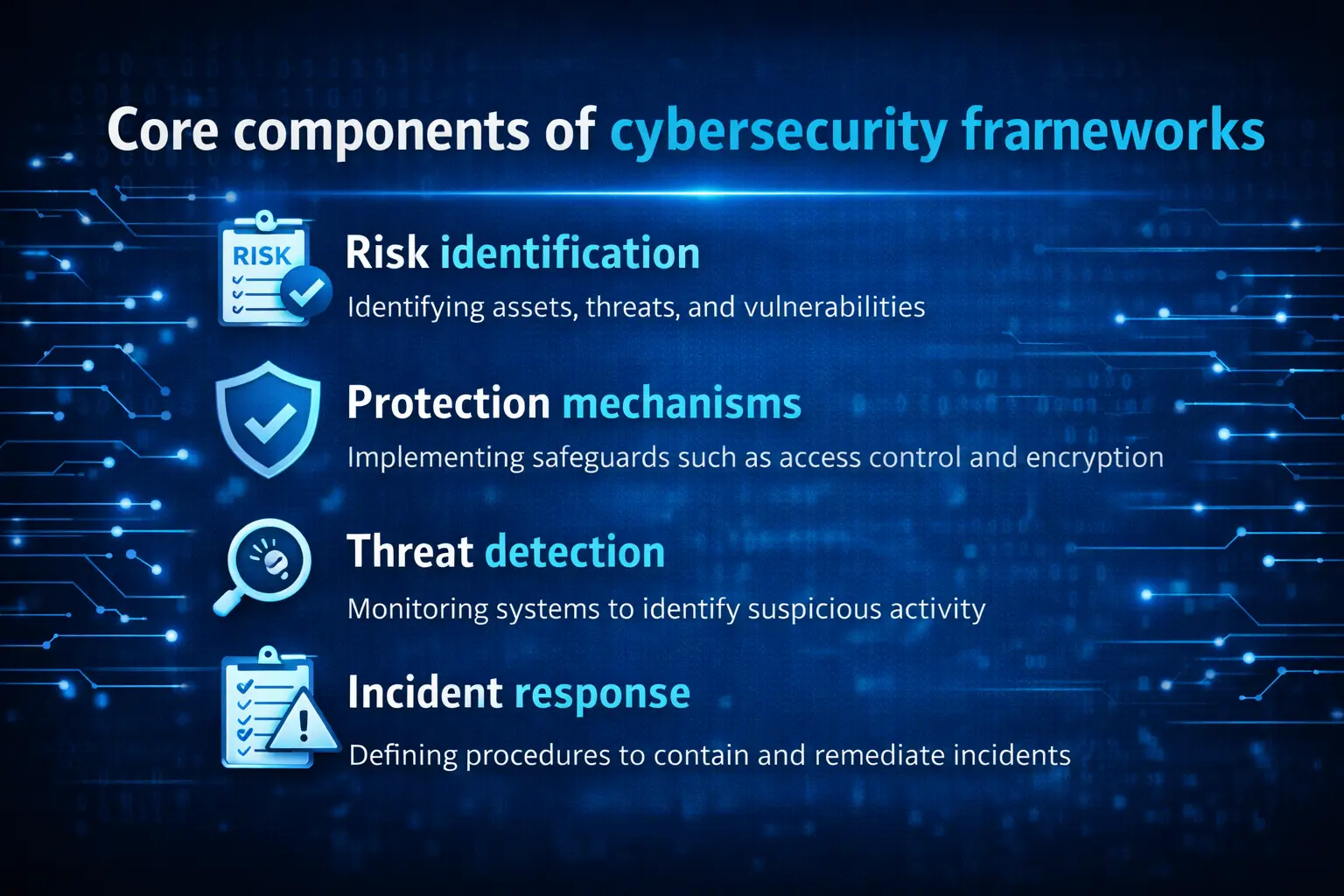
Cybersecurity frameworks share several common components that define how security programs are built and maintained. These components include:
- Risk identification: Identifying assets, threats, and vulnerabilities.
- Protection mechanisms: Implementing safeguards such as access control, encryption, and secure configurations.
- Threat detection: Monitoring systems to identify suspicious activity.
- Incident response: Defining procedures to contain and remediate security incidents.
- Recovery planning: Restoring systems and improving controls after incidents.
These components ensure that cybersecurity frameworks address both preventive and reactive security needs.
Popular cybersecurity frameworks
There are several widely adopted cybersecurity frameworks used across industries. Each framework serves different organizational needs and regulatory environments.
NIST Cybersecurity Framework
The NIST Cybersecurity Framework provides a flexible, risk-based approach to managing cybersecurity risk. It is organized around five core functions: Identify, Protect, Detect, Respond, and Recover. The framework is commonly used by enterprises, government agencies, and critical infrastructure organizations.
ISO/IEC 27001
ISO/IEC 27001 is an international standard focused on information security management systems (ISMS). It emphasizes formal risk assessment, documented controls, and continuous improvement. ISO 27001 is widely used by organizations seeking certification and global compliance recognition.
CIS Critical Security Controls
The CIS Critical Security Controls offer a prioritized set of technical security actions designed to reduce common cyber risks. These controls focus on practical implementation and are often used by organizations seeking clear, actionable security guidance.
Cybersecurity frameworks and application security
Cybersecurity frameworks play a critical role in application security by defining how applications should be designed, tested, and maintained securely. Framework-aligned security programs ensure that secure coding practices, access control enforcement, and vulnerability testing are integrated into the software development lifecycle.
This structured approach supports secure web and API development and aligns closely with modern application security strategies.
Cybersecurity frameworks and access control
Access control is a foundational element within all cybersecurity frameworks. Frameworks define how authentication, authorization, and privilege management should be implemented to protect sensitive resources. Strong access control reduces the risk of unauthorized access and limits the impact of compromised credentials.
Organizations often combine cybersecurity frameworks with structured access control models to protect systems from insider threats and external attacks. This integration supports consistent enforcement of security policies across users, applications, and environments.
Choosing the right cybersecurity framework
Choosing the right cybersecurity framework depends on organizational size, industry requirements, regulatory obligations, and risk tolerance. Some organizations adopt a single framework, while others combine multiple frameworks to address different security needs.
Small and medium-sized businesses often prioritize practical frameworks with clear implementation guidance, while large enterprises may adopt comprehensive frameworks that support governance, risk management, and compliance at scale.
Conclusion
Cybersecurity frameworks provide a structured and effective way to manage cybersecurity risk in an increasingly complex threat landscape. By adopting a recognized framework, organizations can strengthen security governance, improve resilience, and align security practices with business objectives.
Understanding cybersecurity frameworks, their components, and their role in application security and access control helps organizations build sustainable security programs. When implemented correctly, cybersecurity frameworks improve protection, support compliance, and enhance long-term digital trust.
FAQs
What Are the Regulatory Frameworks for Cybersecurity?
Regulatory cybersecurity frameworks are structured guidelines created by governments and standards bodies to help organizations manage cyber risk and meet legal requirements. Common examples include the NIST Cybersecurity Framework, ISO 27001, HIPAA Security Rule for healthcare, PCI DSS for payment systems, and GDPR security requirements for data protection. These frameworks ensure organizations follow consistent security practices while complying with regulations.
What Are the 5 NIST Cybersecurity Framework Functions?
The NIST Cybersecurity Framework is built around five core functions that describe the full lifecycle of cybersecurity risk management. These functions are Identify, Protect, Detect, Respond, and Recover. Together, they help organizations understand risks, implement safeguards, identify incidents early, respond effectively, and restore operations after a cyber event.
What Is a Framework for Cybersecurity?
A cybersecurity framework is a structured approach for managing and reducing cyber risk. It provides guidance on policies, controls, processes, and responsibilities needed to protect systems and data. Rather than prescribing specific tools, a framework helps organizations design a security program that fits their size, industry, and threat environment
Which Is Better, ISO 27001 or NIST?
ISO 27001 and NIST serve different purposes, so neither is universally better. ISO 27001 is a certifiable international standard focused on information security management systems, making it ideal for organizations needing formal compliance. NIST is a flexible framework widely used for risk management and operational security, especially in the United States. Many organizations use NIST for strategy and ISO 27001 for certification.
How Do You Implement the NIST Cybersecurity Framework?
Implementing the NIST Cybersecurity Framework starts with assessing current security practices and identifying risks. Organizations then map controls to the five NIST functions, prioritize gaps, and implement improvements. Regular monitoring, testing, and updates ensure the framework evolves with changing threats and business needs.






- Be Respectful
- Stay Relevant
- Stay Positive
- True Feedback
- Encourage Discussion
- Avoid Spamming
- No Fake News
- Don't Copy-Paste
- No Personal Attacks
- Be Respectful
- Stay Relevant
- Stay Positive
- True Feedback
- Encourage Discussion
- Avoid Spamming
- No Fake News
- Don't Copy-Paste
- No Personal Attacks
