Cybersecurity Threats: Types, Examples, and How to Stay Protected
Published: 28 Jan 2026
Cybersecurity threats are a rising concern for organizations of all sizes, targeting sensitive data, critical systems, and even employees. A cybersecurity threat is any event or action with the potential to harm an organization through its information systems, leading to unauthorized access, data breaches, or service disruptions. Understanding these threats, their potential impact, and how to defend against them is crucial in today’s digital landscape.
Effectively managing cybersecurity threats delivers several benefits. It reduces financial exposure from data breaches, protects valuable assets like customer data and intellectual property, ensures operational stability by keeping critical systems online, and builds stakeholder confidence by demonstrating a commitment to data protection.
Cybersecurity threats manifest in various forms, stemming from threat actors with malicious intent, engaging in malicious activity within a target environment. These threats can include malware and ransomware attacks, phishing and social engineering schemes, insider threats, supply-chain vulnerabilities, and emerging threats like those targeting Internet of Things (IoT) devices and cloud environments.
This article explores the diverse landscape of cybersecurity threats, providing examples and actionable strategies for protection, including the implementation of ISO 27001, an internationally recognized standard for Information Security Management Systems (ISMS). We’ll delve into how ISO 27001 helps organizations identify, assess, and mitigate these risks, build a robust security posture, and maintain stakeholder trust.
Table of Contents
What are Cybersecurity Threats?
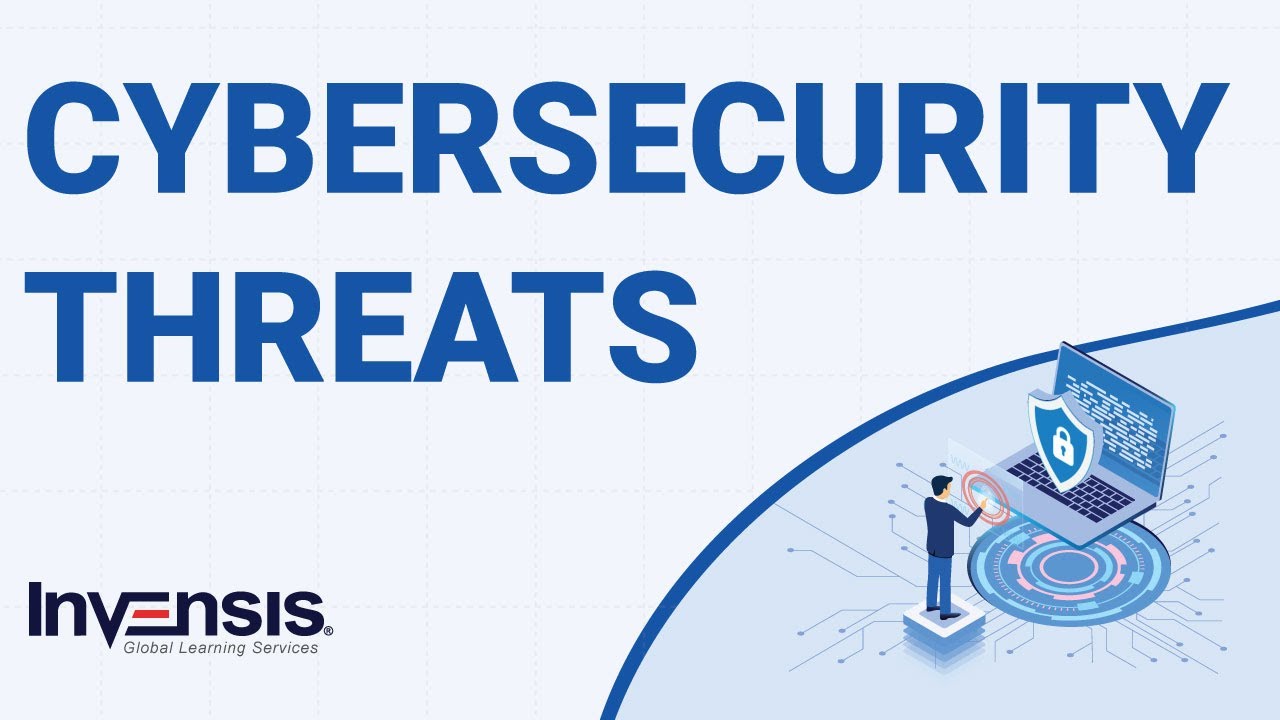
Cybersecurity threats are situations or events that have the potential to harm an organization through its information systems. These threats aim to compromise digital systems, leading to unauthorized access, data destruction, information disclosure, system modification, or service disruption.
A cybersecurity threat is composed of three key elements:
- Threat actors: These are the individuals, groups, or even nation-states with malicious intent who seek to exploit vulnerabilities within your systems.
- Malicious activity: These are the actions taken by threat actors to compromise security, disrupting the availability, integrity, or confidentiality of data.
- Target environment: This refers to the digital spaces where attackers operate, conducting their malicious activities within your organization’s IT systems, Cloud infrastructure, or digital assets.
How do cybersecurity threats impact businesses?
Modern businesses heavily rely on digital systems, making every organization a potential target for cyber threats. The real question isn’t if you’ll face cyber threats, but whether you’re prepared for the financial, operational, and reputational damage they can inflict.
What happens when attacks succeed
Cyber incidents can have a significant financial impact on businesses. IBM research indicated the average data breach cost reached $4.4 million in 2024. The financial repercussions extend far beyond initial costs, encompassing:
- Direct fines and regulatory penalties (potentially up to 4% of global turnover under GDPR)
- Expenses related to forensic investigations
- Mandatory credit monitoring services for affected customers
- Increased cyber insurance premiums
Furthermore, breaches can disrupt business operations for extended periods. IBM discovered that recovery typically takes more than 100 days, with 65% of organizations still struggling to fully restore operations to normal.
How ISO 27001 helps you manage these risks
An Information Security Management System (ISMS) aligned with ISO 27001 provides a structured framework for managing these risks. This internationally recognized standard assists in building security protocols tailored to your organization’s specific needs, size, and business structure.
ISO 27001 implementation offers multiple layers of protection:
- Risk assessment processes that systematically identify cyber threats and vulnerabilities.
- A comprehensive approach encompassing people, processes, and technology, not solely IT systems.
- Continuous adaptation to emerging security risks.
- Protection for all information types, whether digital, paper-based, or cloud-stored.
Certification also enhances stakeholder confidence. Organizations with ISO 27001 certification demonstrate their commitment to strong security practices, strengthening customer relationships and competitive positioning. The standard provides a central framework that safeguards the confidentiality, integrity, and availability of information through effective risk management.
Strengthen your information security posture
From building an ISMS to implementing robust risk management and providing comprehensive employee training, DataGuard helps you secure what matters most.
Common Sources of Cyber Threats
Understanding the sources of cyber threats is crucial for developing effective defenses. Cyber threats can originate from various sources, including:
- External attackers: These are individuals or groups outside the organization who attempt to gain unauthorized access to systems and data.
- Internal actors: Employees or former employees with malicious intent or who unintentionally cause security breaches.
- Third-party vendors: Suppliers or partners who have access to an organization’s systems and data, potentially introducing vulnerabilities.
- Nation-state actors: Governments or government-sponsored groups that engage in cyber espionage or attacks for political or economic gain.
Types of Cybersecurity Threats
Cybersecurity threats come in many forms, each posing unique risks to organizations.
Malware and ransomware
Malware, or malicious software, is designed to damage systems or steal information.
Malware Attacks
Malware attacks involve the use of various types of malicious software, including viruses, worms, Trojans, and spyware. These attacks can result in data theft, system damage, or denial of service.
Ransomware stands out as particularly devastating. It encrypts your data and demands payment for the decryption key. IBM research indicates the average cost of an extortion or ransomware incident is around the $5 million mark.
Phishing and social engineering
These attacks target people rather than technology. Phishing uses fake messages to trick recipients into sharing sensitive information or downloading malware.
Social Engineering Attacks
social engineering attacks manipulate individuals into divulging confidential information or performing actions that compromise security. These attacks can take various forms, including phishing emails, phone calls, or in-person interactions.
Attackers have refined their approach with specialized variants:
- Spear phishing targets specific individuals.
- Whaling goes after executives.
- Smishing uses text messages.
- Vishing operates through voice calls.
Criminals often exploit current events or crises to make their messages seem legitimate. And then there’s the AI factor: as tools become more sophisticated, attackers can convincingly impersonate someone’s voice or even likeness.
Insider threats
Your biggest security risk might already be inside your organization. The Cybersecurity and Infrastructure Security Agency defines an insider threat as “the potential for an insider to use their authorized access to harm an organization.”
These threats split into two categories: unintentional mistakes and deliberate sabotage. While external attacks grab headlines, insider breaches can be just as costly—averaging $4.99 million per incident.
Supply-chain and third-party risks
Attackers know your suppliers might have weaker security than you do. Third-party risks emerge when vendors introduce vulnerabilities into your systems.
Supply Chain Attacks
Supply chain attacks target vulnerabilities in an organization’s supply chain, compromising third-party vendors or suppliers to gain access to sensitive data or systems.
The numbers tell the story: in 2025, IBM reported that vendor and supply-chain compromise was the 2nd most common attack vector, and a supply-chain compromise took the longest to resolve at 267 days on average.
Emerging threats
New technologies create new vulnerabilities. The internet of things connects billions of devices worldwide and each one is a potential entry point for attackers. Cloud misconfiguration has become equally dangerous. Gartner research shows misconfiguration causes 80% of data breaches, with projections that 99% of cloud security failures through 2025 will result from human error. These mistakes often happen because teams don’t fully understand their cloud environments or miss critical steps during setup.
Man-in-the-Middle Attack
A Man-in-the-Middle (MitM) attack intercepts communication between two parties, allowing the attacker to eavesdrop on or manipulate the data being transmitted.
Denial-of-Service Attack
A Denial-of-Service (DoS) attack floods a system with traffic, making it unavailable to legitimate users. A Distributed Denial-of-Service (DDoS) attack uses multiple compromised systems to launch the attack.
Injection Attacks
Injection attacks, such as SQL injection, occur when malicious code is inserted into an application, allowing attackers to access or manipulate data in the underlying database.
How does ISO 27001 address these cyber security threats?
ISO 27001 provides a systematic approach to managing information security risks, but most organizations misunderstand what this actually means for threat management. Rather than being just another compliance checkbox, this standard creates a complete system for protecting your critical information assets.
What ISO 27001 brings to threat management
ISO 27001 stands as the globally recognized standard for information security management systems, with over 70,000 certified organizations across 150 countries. This framework helps businesses become “risk-aware” and proactively spot security weaknesses. The standard integrates people, policies, and technology into a unified approach. The core value of ISO 27001 lies in preserving information confidentiality, integrity, and availability through structured risk management. This becomes particularly valuable when dealing with cyber threats that evolve faster than traditional security review cycles can address.
Risk assessment drives threat identification and response
ISO 27001’s risk assessment process forms the foundation of effective threat management. Clause 6.1.2 requires you to establish consistent criteria for evaluating security risks. This creates a systematic approach that includes:
- Asset identification leads to understanding what attackers might target.
- Threat analysis reveals how those attacks might happen.
- Vulnerability assessment shows where your defenses have gaps.
- Impact evaluation determines which risks need immediate attention.
Once you complete the assessment, ISO 27001 offers four treatment options: modify the risk through controls, share it via insurance or outsourcing, avoid it entirely, or retain it with clear justification. This systematic approach helps you focus resources on the threats that matter most to your business.
Threat intelligence as an early warning system
The 2022 revision of ISO 27001’s Annex A introduced Control 5.7: Threat Intelligence, reflecting how organizations need to stay ahead of evolving threats. This control requires collecting, analyzing, and acting on threat intelligence.
The standard recognizes three levels of threat intelligence:
- Strategic intelligence provides high-level information about changing threat landscapes.
- Tactical intelligence details attack methodologies and tools.
- Operational intelligence includes specific attack information and technical indicators.
This intelligence directly influences your risk assessments, supply-chain security checks, and vulnerability management priorities. Instead of making security decisions based on theoretical models, you can respond to actual attack patterns targeting organizations like yours.
How can you protect yourself from cybersecurity threats?
You need a systematic approach. The right strategies help you manage information security risks while building defenses that actually work.
Build an ISMS with ISO 27001’s Plan-Do-Check-Act approach
An Information Security Management System (ISMS) based on ISO 27001 gives you a proven framework for protecting critical information assets. The Plan-Do-Check-Act cycle creates continuous improvement that keeps pace with evolving threats:
- Plan: Set objectives, assess risks, create policies and procedures.
- Do: Implement controls and security measures.
- Check: Monitor effectiveness through metrics and audits.
- Act: Improve based on what you learn.
This approach ensures your security measures adapt as threats change. ISO 27001 certification also shows stakeholders you take information security seriously.
Conduct risk assessments that identify what matters most
ISO 27001 requires a consistent methodology that produces reliable, comparable results. Your process should include:
- Identifying valuable information assets.
- Recognizing threats to those assets.
- Assessing exploitable vulnerabilities.
- Evaluating likelihood and potential impact.
Once risks are clear, you have four treatment options: modify them through controls, share them via insurance or outsourcing, avoid them entirely, or accept them with proper justification.
Implement ISO 27001 Annex A controls where they fit your risks
ISO 27001:2022 provides 93 security controls across four categories: Organizational, People, Physical, and Technological. These controls address various threats through:
- Access management following least privilege principles.
- Cryptography for sensitive data protection.
- Security monitoring and incident response.
- Business continuity planning.
Not every control applies to every organization. Base your implementation on risk assessment results and document your choices in your Statement of Applicability.
Set up threat intelligence to stay ahead of attackers
Control 5.7 in ISO 27001:2022 enables proactive security through threat intelligence gathering and analysis. This requires you to:
- Define clear objectives for intelligence collection.
- Identify and validate internal and external sources.
- Collect and analyze relevant threat information.
- Share findings with stakeholders in accessible formats.
Threat intelligence works at three levels: strategic information about threat landscapes, tactical details on attack methods and tools, and operational data including technical indicators. Use this intelligence to inform risk assessments, control decisions, and incident response plans.
Train employees to recognize and respond to threats
According to IBM, more than one-fourth of 2025 breaches were caused by human error. This means employee training is essential. ISO 27001 emphasizes ensuring staff understand your information security policy, their security responsibilities, and the consequences of security failures.
Deploy technical controls that prevent common attacks
Technical controls provide practical system protection. Essential measures include:
- Patch management: Regular system updates to address vulnerabilities.
- Multi-factor authentication: Strong access controls for critical systems.
- Monitoring and logging: Activity tracking to detect unusual behavior.
- network security: Firewalls and filtering to create security boundaries.
- Malware protection: Tools to prevent malicious software execution.
Monitor, review, and improve continuously
ISO 27001 emphasizes continual improvement through regular internal audits, management reviews, performance metrics, and learning from incidents and near-misses. Organizations using Continuous Threat Exposure Management are three times less likely to experience a breach than those using outdated approaches. This process helps you adapt to evolving threats while maximizing your security investment value.
Where do companies go wrong with threat management?
Advanced security tools don’t guarantee protection. Many organizations invest heavily in technology while making fundamental errors that undermine their entire security posture.
Tools without process equals security gaps
Security technology alone won’t protect you. A survey of chief information security Officers found that 70% believe their existing tools can’t effectively detect security breaches. This creates dangerous blind spots that attackers exploit. Automated systems work fast but miss context. Human expertise remains essential for interpreting the nuances that tools can’t understand. Security practitioners must provide the judgment and experience that AI-powered solutions simply cannot replicate.
Poor ISMS scope undermines everything
Scoping errors rank among the most common ISO 27001 implementation failures. Organizations either scope too narrowly, leaving critical systems unprotected, or too broadly, creating unmanageable projects. Both approaches sabotage certification efforts and create security vulnerabilities. Another frequent mistake is treating the ISMS as a one-time project instead of an ongoing management system. This creates “compliance theater” where security looks impressive on paper but fails to protect the organization when attacks hit. Proper scoping requires considering all relevant characteristics: processes, technology, departments, physical locations, people, services, and third parties. Any exclusions need clear justification so stakeholders (especially external auditors) understand your reasoning.
Third-party risks get overlooked
Assuming your partners maintain the same cybersecurity standards is dangerous and attackers know this weakness. ISO 27001:2022 Annex A Control 5.19 directly addresses this challenge by requiring organizations to manage the information security risks connected with suppliers’ products or services. Effective supplier management means identifying which supplier types affect information security, understanding how to vet them properly, and monitoring their compliance based on risk levels.
Controls go stale without monitoring
Security controls fail in multiple ways, often without warning signs. For example, outdated software creates critical vulnerabilities, with patching delays strongly linked to cyber incidents. Control failures occur when cybersecurity measures are flawed, either not working properly or missing coverage areas. Security teams often assume controls “just work,” but gaps give attackers easy paths forward. ISO 27001 requires continual improvement through regular internal audits, management reviews, performance metrics, and incident learning.
How should you measure your threat readiness and prove compliance?
Security without measurement is just hope. You need clear metrics to understand your cyber security posture, spot weaknesses, and show stakeholders you’re managing threats effectively.
Track the metrics that matter: incidents, response times, training, risk coverage
Your security program needs measurable outcomes. These core metrics tell the real story:
Incident tracking reveals how well your defenses work. Count high-severity cyber incidents by type—malware, data breaches, system compromises, and origin, internal mistakes, third-party failures, external attacks. This data shows where you’re most vulnerable. Response speed matters as much as prevention. Mean Time to Detect (MTTD) shows how long threats go unnoticed. Mean Time to Respond (MTTR) measures how quickly you act once you spot a problem. Mean Time to Contain (MTTC) tracks how fast you stop incidents from spreading. Shorter times mean stronger defenses. Employee readiness determines your human firewall strength. Track training completion rates and phishing simulation results.
ISO 27001 certification creates audit-ready evidence
ISO 27001 certification gives you independent proof that your security management follows international best practices. The certification process creates documentation that auditors and regulators accept as credible evidence.
Essential documentation includes:
- ISMS scope defining what your security management covers.
- Statement of Applicability linking your risk assessment to chosen controls.
- Information security policy outlining your approach.
- Risk assessment documentation showing how you identify and evaluate threats.
- Risk treatment plans detailing how you address each risk.
Certification audits verify this evidence through qualified external auditors. Modern compliance platforms can automate much of this documentation, turning static paperwork into dynamic proof of ongoing security management.
Use metrics to build stakeholder confidence
Security metrics translate technical risks into business language that executives understand. This bridge helps security teams communicate effectively with leadership and demonstrates the value of security investments. Regular reporting builds trust with customers, partners, and regulators. Metrics prove your security investments work, which is crucial as boards focus more on cyber risk management. Security leaders who present clear, actionable metrics help executives make better governance decisions. They help you prove your ability to protect revenue, reputation, and customer data.
Conclusion
Cybersecurity threats are an ever-present danger to organizations of all sizes. Effectively defending against these threats requires a comprehensive understanding of the types of attacks, the potential impact on your business, and the steps you can take to mitigate risk. ISO 27001 offers a structured, risk-based framework for identifying and managing evolving security threats like ransomware, social engineering, and insider threats. By implementing strong controls, continuously monitoring your systems, providing regular training to employees, and leveraging threat intelligence, you can reduce the impact of breaches and build stakeholder trust. Taking a systematic approach to cyber threats is essential for protecting your organization’s data, systems, and reputation in today’s increasingly complex digital landscape.
Frequently Asked Questions
What is ISO 27001 and how does it relate to cyber threats?
ISO 27001 is the internationally recognized standard for Information Security Management Systems (ISMS). It provides organizations with a systematic framework to identify, analyze, and address information security risks. The standard helps businesses establish security protocols tailored to their specific needs, size, and structure, enabling them to respond effectively to evolving cyber threats.
What types of threats does ISO 27001 help address?
ISO 27001 addresses threats including malicious code, unauthorized access, theft, fraud, and social engineering. The standard’s risk assessment process helps identify threats specific to your organization’s context. The 2022 version includes Control 5.7 for threat intelligence, which helps manage strategic, tactical, and operational threat information.
How often should I assess threats under ISO 27001?
Threats evolve rapidly, so ISO 27001 recommends performing a complete risk assessment at least annually or whenever significant changes occur in your business environment. Many organizations also conduct additional assessments during supplier onboarding and change management processes.
What happens if I don’t manage threats properly?
Poor threat management leads to serious consequences. Data breaches can cost millions, plus regulatory fines, operational disruption, reputational damage, and potential lawsuits. Companies violating regulations like GDPR face penalties up to 4% of global turnover.



- Be Respectful
- Stay Relevant
- Stay Positive
- True Feedback
- Encourage Discussion
- Avoid Spamming
- No Fake News
- Don't Copy-Paste
- No Personal Attacks
- Be Respectful
- Stay Relevant
- Stay Positive
- True Feedback
- Encourage Discussion
- Avoid Spamming
- No Fake News
- Don't Copy-Paste
- No Personal Attacks
