Access Control: Models and Methods
Published: 20 Jan 2026
Access control models are frameworks that dictate how resources are protected and who or what has access to them. They ensure that only authorized users or systems can access specific data or perform certain actions, safeguarding sensitive information and maintaining system integrity. These models are crucial for application security, protecting APIs, and preventing business logic attacks. Effective access control is a cornerstone of information security, helping organizations comply with regulations and protect against data breaches.
The main benefits of access control models include enhanced security, reduced risk of unauthorized access, improved compliance, and streamlined access management. They are used in a wide range of applications, from securing web and API access to managing user privileges in operating systems and databases. Understanding these models helps application security professionals implement robust security measures to protect their systems.
The main components of access control models involve defining subjects (users or systems), objects (resources being protected), and access rights (permissions to access those resources). Different models, such as Discretionary Access Control (DAC), Mandatory Access Control (MAC), Role-Based Access Control (RBAC), and Attribute-Based Access Control (ABAC), offer varying degrees of control and flexibility.
Table of Contents
What are access control security models?
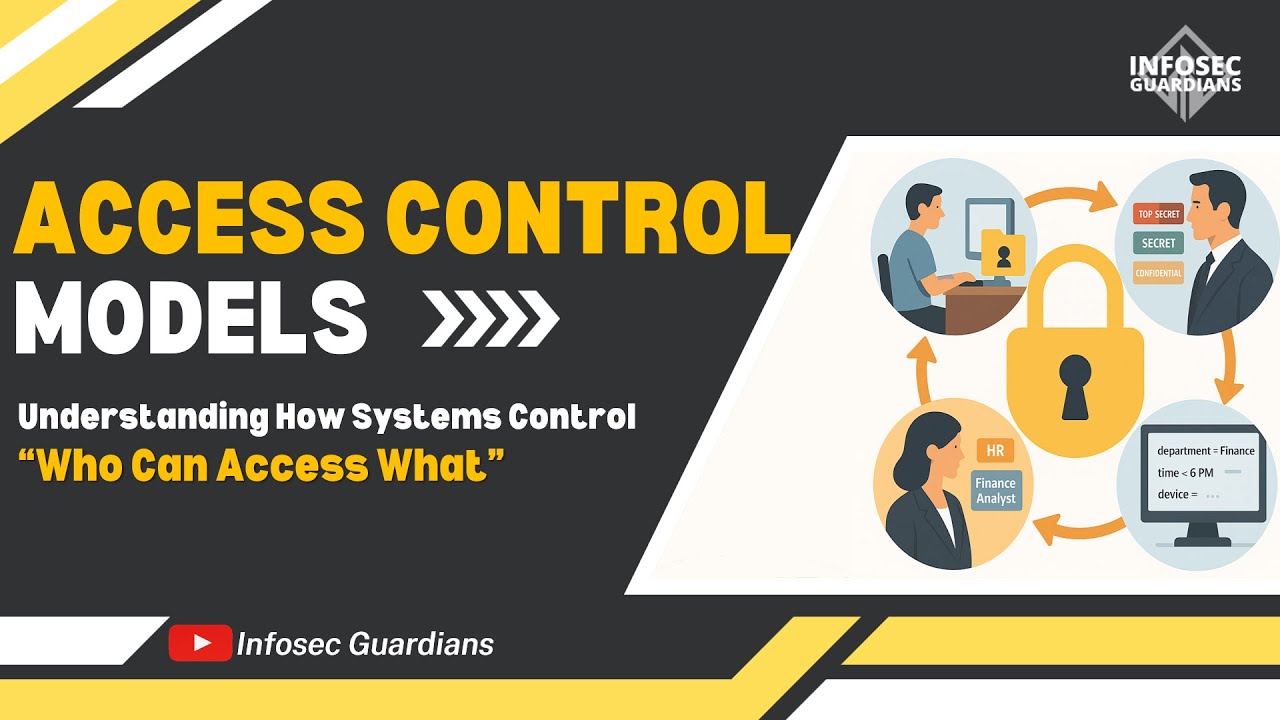
Access control security models are the blueprints for how an organization manages access to its resources. They define the rules, policies, and mechanisms used to determine whether a user or system is granted access to specific data or functionalities. These models are fundamental to maintaining data confidentiality, integrity, and availability. Properly implemented access control mitigates risks associated with unauthorized access, data breaches, and insider threats.
Types of access control
Access control spans various methods and models, broadly categorized into logical and physical access control. Logical access control deals with electronic access to data and systems, while physical access control focuses on securing physical spaces and assets.
Access control and access control models
Access control is the overarching practice of restricting access to resources. Access control models are the specific frameworks or blueprints that define how access control is implemented. These models provide a structured approach to managing permissions and ensuring that only authorized entities can access sensitive information or perform critical actions.
Let’s look at each of these and what they entail
Understanding the different types of access control methods is crucial for building a comprehensive security posture. Both logical and physical access controls play vital roles in protecting an organization’s assets.
Logical access control methods
Logical access control methods rely on software and protocols to manage access to computer systems, networks, and data. Common methods include:
- Passwords: A fundamental method requiring users to authenticate with a unique username and password combination.
- Multi-Factor Authentication (MFA): Adds an extra layer of security by requiring users to provide multiple forms of verification, such as a password and a one-time code from a mobile app.
- Biometrics: Uses unique biological traits, such as fingerprints or facial recognition, to authenticate users.
- Access Control Lists (ACLs): Define permissions for users or groups on specific resources, such as files or directories.
- Role-Based Access Control (RBAC): Assigns permissions based on a user’s role within the organization.
Types of physical access control
Physical access control methods focus on securing physical locations and preventing unauthorized entry. Examples include:
- Locks and Keys: Traditional mechanical locks that require physical keys for access.
- Access Cards and Key Fobs: Electronic cards or fobs that grant access when swiped or held near a reader.
- Biometric Scanners: Use fingerprint, facial, or iris recognition to grant access to authorized personnel.
- Security Guards: Human security personnel who monitor access points and verify identities.
- Surveillance Systems: Cameras and monitoring equipment that deter unauthorized access and provide evidence in case of security breaches.
Access Control Security Models
Access control security models offer structured approaches to managing access rights and permissions. The most common models are Discretionary Access Control (DAC), Mandatory Access Control (MAC), Role-Based Access Control (RBAC), and Attribute-Based Access Control (ABAC). Each model has its strengths and weaknesses, making them suitable for different scenarios.
Discretionary Access Control (DAC)
Discretionary Access Control (DAC) allows resource owners to control who has access to their resources. Users can grant or revoke access permissions to other users or groups at their discretion. DAC is often used in personal computers and file systems where users have full control over their data.
Benefits of DAC:
- Flexibility: Resource owners have complete control over access permissions.
- Ease of Implementation: DAC is relatively simple to implement and manage.
- User Empowerment: Empowers users to manage access to their own resources.
Use Cases for DAC:
- Personal Computers: Users can control access to their files and folders.
- File Sharing: Users can share files with specific individuals or groups.
- Small Businesses: Suitable for environments where users need flexibility in managing access to their data.
Mandatory Access Control (MAC)
Mandatory Access Control (MAC) enforces access control based on predefined security policies. Access is determined by comparing the security labels of subjects (users or processes) and objects (resources). MAC is often used in high-security environments where data confidentiality is paramount.
Role-Based Access Control (RBAC)
Role-Based Access Control (RBAC) assigns permissions based on a user’s role within an organization. Users are assigned to specific roles, and each role is granted a set of permissions. RBAC simplifies access management by grouping permissions based on job functions.
Benefits of RBAC:
- Simplified Administration: Easier to manage permissions by assigning roles to users.
- Scalability: Scales well as the organization grows and roles evolve.
- Compliance: Supports compliance with regulatory requirements by ensuring users have appropriate access based on their roles.
Use Cases for RBAC:
- Enterprise Applications: Managing user access in large-scale applications.
- Healthcare Systems: Protecting patient data by assigning roles to medical staff.
- Financial Institutions: Controlling access to financial data based on job functions.
Attribute-Based Access Control (ABAC)
Attribute-Based Access Control (ABAC) grants access based on attributes of the subject, object, and environment. Attributes can include user roles, resource types, time of day, and location. ABAC offers fine-grained control and dynamic access decisions based on contextual factors.
Benefits of ABAC:
- Fine-Grained Control: Provides granular control over access permissions based on attributes.
- Dynamic Access Decisions: Access decisions can be made in real-time based on contextual factors.
- Flexibility: Adapts to changing business requirements and complex access scenarios.
Use Cases for ABAC:
- Cloud Computing: Managing access to cloud resources based on user attributes and environmental conditions.
- Data Sharing: Controlling access to sensitive data based on data classification and user roles.
- API Security: Securing APIs by enforcing access policies based on request attributes.
Programmatic access control
Programmatic access control involves implementing access control logic directly within application code. This allows developers to define and enforce access policies at a granular level, ensuring that only authorized users or systems can access specific functionalities or data. Programmatic access control is crucial for securing Applications and APIs, and preventing business logic attacks.
Choosing the Right Model
Selecting the appropriate access control model depends on the specific requirements of the organization and the sensitivity of the data being protected. DAC offers flexibility and user empowerment, while MAC provides strong security guarantees. RBAC simplifies administration and scalability, and ABAC offers fine-grained control and dynamic access decisions.
Find access control vulnerabilities using Burp Suite
Burp Suite is a powerful web application security testing tool that can be used to identify access control vulnerabilities. By intercepting and manipulating web requests, security professionals can test whether an application properly enforces access policies. For example, Burp Suite can be used to determine if a user can access resources they are not authorized to view or modify. Using Burp Suite as part of a DAST process can help identify and remediate access control issues before they are exploited by attackers.
Conclusion
Access control models are essential for safeguarding data and systems from unauthorized access. Understanding the different types of models, such as DAC, MAC, RBAC, and ABAC, is crucial for implementing effective security measures. Programmatic access control allows developers to enforce access policies directly within application code. Tools like Burp Suite can help identify and remediate access control vulnerabilities, ensuring that applications and APIs are protected against business logic attacks and other security threats. By implementing robust access control, organizations can enhance their security posture, comply with regulations, and protect against data breaches in 2026 and beyond.
FAQs
What is an access control model in cybersecurity?
An access control model defines how permissions are assigned, enforced, and evaluated to control who can access resources in a system. It provides a structured way to protect data, applications, and systems from unauthorized access.
What are the major types of access control models?
The major access control models include Discretionary Access Control (DAC), Mandatory Access Control (MAC), Role Based Access Control (RBAC), and Attribute Based Access Control (ABAC). Each model applies different rules to manage permissions based on ownership, roles, labels, or attributes.
Which access control model was popularized by military usage?
Mandatory Access Control (MAC) was popularized by military and government environments. It enforces strict access rules using security labels and classifications, making it suitable for systems that require high confidentiality.
Which access control model is the most restrictive?
Mandatory Access Control (MAC) is considered the most restrictive access control model. Users cannot change permissions, and access decisions are enforced centrally based on predefined security policies.
Why are access control models important in cybersecurity?
Access control models are essential because they prevent unauthorized access, reduce insider threats, support compliance requirements, and ensure sensitive data is accessed only by approved users under defined conditions.






- Be Respectful
- Stay Relevant
- Stay Positive
- True Feedback
- Encourage Discussion
- Avoid Spamming
- No Fake News
- Don't Copy-Paste
- No Personal Attacks
- Be Respectful
- Stay Relevant
- Stay Positive
- True Feedback
- Encourage Discussion
- Avoid Spamming
- No Fake News
- Don't Copy-Paste
- No Personal Attacks
