Types of Cybersecurity Explained: Network, Cloud, Endpoint, and More
Published: 7 Jan 2026
Cybersecurity is not a single tool or technology. It is a comprehensive defense strategy designed to protect computer systems, networks, applications, and data from digital attacks aimed at stealing information, disrupting operations, or causing financial and reputational damage. As the digital landscape continues to evolve, organizations face increasingly sophisticated adversaries who exploit vulnerabilities across multiple layers of technology infrastructure.
To address these risks, modern cybersecurity relies on multiple defensive layers working together. This approach, often described as defense in depth, ensures that if one security control fails, additional protections remain in place to reduce the likelihood of a successful breach. Different types of cybersecurity focus on securing specific areas such as networks, endpoints, cloud environments, applications, identities, and connected devices.
Understanding the various types of cybersecurity is essential for building a strong security posture, protecting sensitive information integrity, and meeting regulatory and compliance requirements. In this guide, we break down the core types of cybersecurity, explain what each one protects, and show how they work together to form a resilient and effective security strategy.
Table of Contents
What Are the Different Types of Cybersecurity?
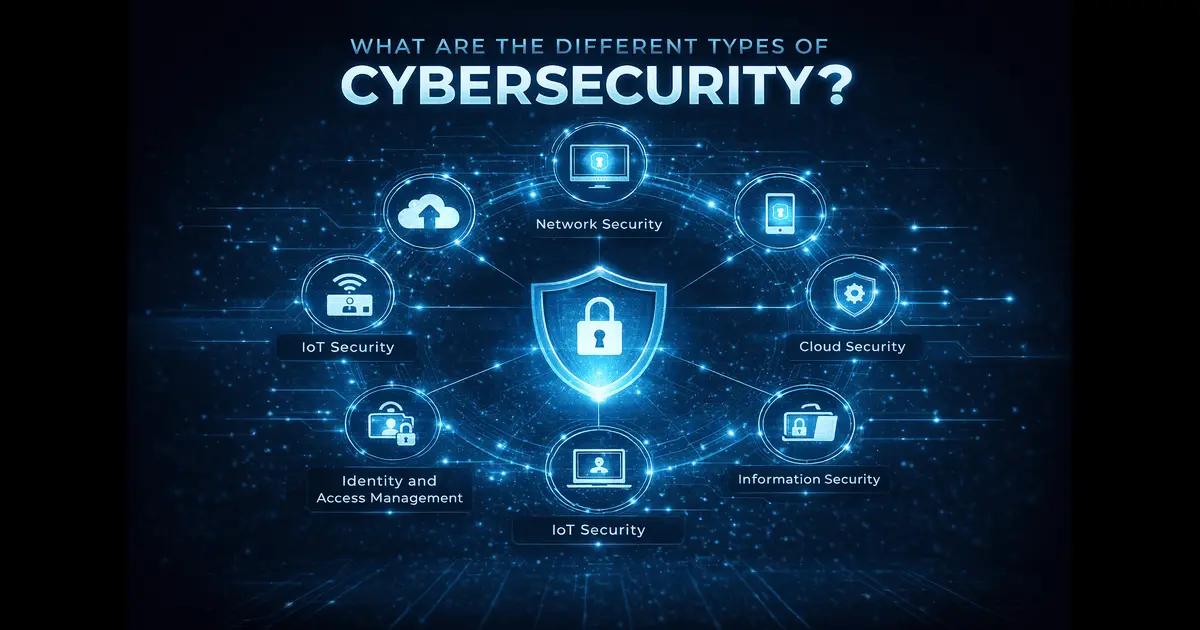
Cybersecurity is not a single technology or tool. It is a comprehensive defense strategy built on multiple defensive layers that work together to protect digital assets across modern technology environments. As the digital landscape presents increasingly sophisticated adversaries, organizations must apply different types of security controls to defend computer systems, networks, applications, and data from unauthorized access and cyber threats.
Each type of cybersecurity focuses on a specific part of the technology infrastructure. Some protect computer networks and data in transit, while others secure endpoints, cloud computing environments, applications, or user identities. Together, these security layers support defense in depth, ensuring that if one control fails, additional protections remain in place to reduce the risk of data breaches, ransomware attacks, and system compromise.
Understanding the various types of cybersecurity helps organizations improve their overall security posture, protect sensitive information integrity, and comply with regulatory requirements. It also allows businesses to design a cybersecurity strategy that matches their operational needs, remote access requirements, and risk management objectives.
In the sections below, we will explore the core types of cybersecurity, explain what each one protects, and show how they contribute to a resilient and effective security architecture.
Network Security
Network security focuses on protecting computer networks and the data that moves across them from unauthorized access, misuse, or disruption. It is one of the foundational types of cybersecurity because networks act as the primary pathway through which users, devices, and applications communicate. Without proper network security controls, attackers can exploit weak points to intercept data, spread malware, or launch ransomware attacks.
At its core, network security supports the principles explained in what cybersecurity is and how it works by creating controlled boundaries between trusted and untrusted traffic. These boundaries help organizations prevent external threats from breaching internal systems while also monitoring for suspicious activity within the network itself.
What Network Security Protects
Network security is designed to protect several critical components of an organization’s technology infrastructure. This includes wired and wireless networks, internal servers, internet gateways, and remote access connections used by employees and partners. By securing these components, network security helps maintain data confidentiality, system integrity, and service availability.
Effective network security also plays an important role in protecting sensitive information as it travels between systems. This is especially important for organizations that support remote workforces, cloud integrations, or distributed environments where data frequently moves across public and private networks.
Common Network Security Controls
Organizations rely on multiple security controls to protect their networks from cyber threats. Firewalls are used to filter traffic and enforce security rules at the network perimeter. Intrusion detection and prevention systems monitor network activity to identify malicious behavior and respond to potential attacks in real time.
Virtual private networks are commonly used to create secure remote connections, allowing users to access internal systems without exposing sensitive data to interception. Network segmentation further strengthens security by limiting how far an attacker can move within a network if a breach occurs.
Examples of Network Security Threats
Network security threats often target weaknesses in communication channels or exposed services. These threats include unauthorized access attempts, malware delivery through network traffic, and ransomware attacks that spread laterally across connected systems. Phishing campaigns may also act as an entry point, leading to compromised credentials that attackers use to gain network access before deploying additional attacks.
Understanding these threats helps organizations design stronger defenses and reinforces why network security is a critical layer within a broader cybersecurity strategy.
Endpoint Security
Endpoint security focuses on protecting individual devices that connect to a network, such as laptops, desktops, mobile phones, and tablets. These devices are often the first point of contact between users and digital systems, which makes them a common target for cyber attacks. As remote and hybrid work environments become more common, endpoint security has become a critical layer in modern cybersecurity strategies.
Unlike network security, which protects traffic and infrastructure, endpoint security concentrates on the device itself. It helps prevent malware infections, unauthorized access, and data loss that can occur when a single compromised device is used to enter broader systems. Endpoint protection directly supports the broader concepts discussed in what cybersecurity is and how it works by reducing the risk of human error and device level vulnerabilities.
What Is an Endpoint?
An endpoint is any device that communicates with a network or cloud environment. This includes employee laptops, personal smartphones used for work, point of sale systems, and even specialized devices used in operational environments. Each endpoint represents a potential entry point for attackers, especially when devices are not properly secured or regularly updated.
Because endpoints interact directly with users, they are frequently exposed to threats such as phishing emails, malicious downloads, and unsafe websites. Protecting endpoints helps ensure that compromised user behavior does not lead to larger security incidents.
How Endpoint Security Works
Endpoint security works by continuously monitoring device activity and enforcing security policies at the device level. Anti malware protection, device encryption, and application control are commonly used to detect and block malicious behavior before it can spread. Many endpoint security solutions also provide real time alerts and automated responses to reduce the impact of active threats.
In advanced environments, endpoint security is often integrated with centralized monitoring systems and incident response workflows. This integration helps security teams identify patterns across multiple devices and respond more quickly to coordinated attacks.
Endpoint Security vs Network Security
While network security focuses on protecting traffic and communication channels, endpoint security is designed to protect the devices themselves. A strong cybersecurity strategy requires both layers to work together. Even the most secure network can be compromised if an infected endpoint is allowed to connect without proper controls.
By combining endpoint security with network level defenses, organizations can strengthen their overall security posture and reduce the likelihood that a single compromised device leads to a widespread breach.
Cloud Security
Cloud security focuses on protecting data, applications, and services that operate within cloud computing environments. As organizations increasingly rely on cloud platforms to store information and run business critical workloads, securing these environments has become a core part of modern cybersecurity. Cloud security addresses risks that arise from shared infrastructure, remote access, and misconfigured services.
Unlike traditional on premises systems, cloud environments require a different security approach. Responsibility for security is shared between the cloud service provider and the organization using the service. Understanding this shared responsibility model is essential for maintaining strong protection and aligns closely with the principles explained in what cybersecurity is and how it works.
What Cloud Security Covers
Cloud security protects cloud based data, applications, virtual machines, and storage services from unauthorized access and exposure. It ensures that sensitive information remains protected while being stored or processed in the cloud. This includes securing application programming interfaces, managing user access, and enforcing encryption for data at rest and in transit.
Cloud security also supports compliance requirements by helping organizations monitor access, control data movement, and maintain visibility across distributed environments. Without proper controls, misconfigurations can expose cloud resources to attackers and lead to data breaches.
Shared Responsibility Model
The shared responsibility model defines how security responsibilities are divided between the cloud provider and the organization. Cloud providers are typically responsible for securing the underlying infrastructure, while organizations are responsible for securing their data, user access, and application configurations.
Failure to understand this division of responsibility is one of the most common causes of cloud security incidents. Proper configuration, access management, and continuous monitoring are essential for maintaining a strong cloud security posture.
Common Cloud Security Risks
Common cloud security risks include misconfigured storage services, excessive user permissions, and unsecured application interfaces. Attackers often exploit these weaknesses to gain access to sensitive data or deploy malicious activity within cloud environments. As cloud adoption grows, addressing these risks becomes critical to maintaining trust and operational stability
Application Security
Application security focuses on protecting software applications from vulnerabilities that attackers can exploit to gain unauthorized access or manipulate data. Because applications often interact directly with users and handle sensitive information, weaknesses in application design or code can lead to serious security incidents.
Application security plays a critical role in protecting systems explained in what cybersecurity is and how it works, as insecure applications can bypass network and endpoint defenses entirely. Even a well protected network can be compromised if an application contains exploitable flaws.
Why Application Security Is Important
Applications are frequent targets for cyber attacks because they often expose interfaces to the internet. Attackers commonly exploit weaknesses such as poor input validation, broken authentication, and insecure session management to compromise applications and access backend systems.
Modern organizations rely on custom applications and web based services to support daily operations. Without proper application security practices, these systems can become entry points for data breaches, ransomware attacks, and service disruptions.
Common Application Security Practices
Application security encompasses secure coding practices, regular testing, and continuous monitoring throughout the software development lifecycle. Techniques such as code reviews, vulnerability scanning, and penetration testing help identify weaknesses before attackers can exploit them.
Web application firewalls are often used to protect applications from common attack patterns by filtering malicious traffic. Combined with timely patching and updates, these practices help reduce exposure to known vulnerabilities and strengthen overall security.
Information Security
Information security focuses on protecting data itself, regardless of where it is stored, processed, or transmitted. Its primary goal is to ensure that sensitive information remains accurate, accessible only to authorized users, and protected from unauthorized disclosure or modification. Information security is a core component of cybersecurity because data is often the primary target of cyber attacks.
While network, endpoint, and application security protect systems and infrastructure, information security concentrates on safeguarding the value contained within those systems. It reinforces the principles described in what cybersecurity is and how it works by ensuring that data protection remains consistent across all environments, including on premises systems, cloud platforms, and connected devices.
What Information Security Protects
Information security protects a wide range of data types, including personal data, financial records, intellectual property, and operational information. This applies to data stored in databases, shared across networks, or accessed through applications. Protecting this information helps organizations prevent data breaches, financial loss, and reputational damage.
Strong information security controls also support privacy obligations and regulatory compliance. By managing how data is accessed and handled, organizations can reduce the risk of accidental exposure and unauthorized use.
The CIA Triad in Information Security
A foundational concept in information security is the CIA triad, which defines three core objectives. Confidentiality ensures that information is accessible only to authorized individuals. Integrity ensures that data remains accurate and has not been altered without authorization. Availability ensures that information and systems are accessible when needed.
These principles guide how information security controls are designed and implemented. Encryption, access control, and monitoring all play a role in supporting the CIA triad and maintaining trust in digital systems.
Identity and Access Management
Identity and access management focuses on controlling who can access systems, applications, and data within an organization. It ensures that only authorized users are granted access to specific resources, reducing the risk of unauthorized activity and credential based attacks. As organizations adopt cloud services and remote work models, identity security has become a central pillar of modern cybersecurity.
Identity and access management supports the concepts explained in what cybersecurity is and how it works by enforcing security at the user level. Even if networks and devices are protected, weak identity controls can allow attackers to bypass defenses using stolen or compromised credentials.
Why Identity Security Matters
User identities are a common target for attackers because they provide direct access to systems and data. Phishing attacks, credential theft, and weak passwords can all lead to unauthorized access if identity controls are not properly enforced. Once attackers gain access to a legitimate account, they can move through systems without triggering traditional security alarms.
Strong identity security helps organizations reduce these risks by verifying user identities and limiting access based on defined roles and responsibilities. This approach minimizes the impact of compromised credentials and supports a stronger overall security posture.
Common Identity and Access Controls
Identity and access management relies on several key controls to protect systems and data. Authentication verifies the identity of a user before access is granted. Authorization determines what resources that user is allowed to access once authenticated. Access control policies define and enforce these permissions across systems and applications.
Additional measures such as multi factor authentication and role based access control further strengthen identity security. Together, these controls help organizations protect sensitive information, support compliance requirements, and reduce the likelihood of insider threats or external attacks.
IoT and Operational Technology Security
IoT and operational technology security focuses on protecting connected devices and industrial systems that interact with the physical world. These systems include smart sensors, industrial control systems, medical devices, and other technologies used in manufacturing, energy, transportation, and critical infrastructure. As connectivity increases, these environments have become attractive targets for cyber attacks.
Unlike traditional IT systems, IoT and operational technology environments often rely on specialized hardware and legacy systems that were not originally designed with security in mind. Securing these systems extends the principles explained in what cybersecurity is and how it works into environments where cyber incidents can cause physical damage, safety risks, and operational disruption.
Why IoT and Operational Technology Security Is Different
IoT and operational technology systems differ from standard IT systems in both design and purpose. Many devices operate continuously, have limited processing power, and cannot be easily patched or updated. This makes them harder to secure using conventional security tools and increases their exposure to vulnerabilities.
In addition, these systems often control physical processes such as manufacturing equipment or utility services. A successful cyber attack can therefore impact not only data, but also human safety, service availability, and economic stability.
Common IoT and Operational Technology Security Challenges
Common challenges include weak device authentication, lack of encryption, and inconsistent update mechanisms. Attackers may exploit unsecured devices to gain network access, disrupt operations, or launch larger attacks such as distributed denial of service campaigns. Visibility is also a major issue, as organizations may not have a complete inventory of connected devices operating within their environments.
Addressing these challenges requires tailored security controls, continuous monitoring, and strict access management to protect both digital and physical assets.
How These Types of Cybersecurity Work Together
Each type of cybersecurity addresses a specific area of risk, but none of them operate effectively in isolation. Modern cyber threats often exploit multiple weaknesses across systems, devices, applications, and user identities. Because of this, organizations must apply a layered approach where different security controls support and reinforce one another.
Network security helps control traffic flow and limit exposure to external threats, while endpoint security reduces the risk posed by compromised devices. Application security protects the software layer that users interact with, and information security ensures that sensitive data remains protected regardless of where it resides. Identity and access management ties these layers together by enforcing who can access systems and data in the first place.
This coordinated approach reflects the core principles explained in what cybersecurity is and how it works. By implementing multiple defensive layers, organizations reduce single points of failure and strengthen their overall security posture. If one control is bypassed, additional protections remain in place to detect, limit, and respond to malicious activity.
When these types of cybersecurity are aligned and properly managed, they form a resilient defense strategy that can adapt to evolving threats while supporting business operations, compliance requirements, and long term risk management goals.
Choosing the Right Types of Cybersecurity
Choosing the right types of cybersecurity depends on an organization’s technology environment, risk exposure, and operational requirements. Not every system faces the same threats, and applying the same controls everywhere can be ineffective or unnecessarily complex. A well designed cybersecurity strategy focuses on aligning security controls with real world risks.
Understanding the principles explained in what cybersecurity is and how it works helps organizations evaluate where protection is most needed. Factors such as industry, data sensitivity, regulatory obligations, and workforce structure all influence which types of cybersecurity should be prioritized.
Factors That Influence Cybersecurity Needs
Several factors play a key role in determining cybersecurity requirements. Organizations that rely heavily on remote work and cloud services may prioritize endpoint security, cloud security, and identity and access management. Businesses that operate custom software platforms must place greater emphasis on application security to reduce the risk of exploitable vulnerabilities.
Industry specific risks also matter. Healthcare, finance, and critical infrastructure organizations often face stricter compliance requirements and higher impact threats. In these environments, strong information security controls and continuous monitoring are essential for protecting sensitive data and maintaining operational continuity.
Building a Balanced Cybersecurity Strategy
An effective cybersecurity strategy balances multiple types of security rather than relying on a single solution. Network, endpoint, application, and identity controls should work together to reduce gaps in protection. This layered approach helps organizations respond more effectively to evolving threats while maintaining flexibility as technology environments change.
By regularly assessing risks and adjusting security controls, organizations can improve resilience and ensure that cybersecurity investments support both security and business objectives.
Conclusion
Cybersecurity is built on multiple layers of protection, each designed to address specific risks across modern digital environments. Network security, endpoint security, cloud security, application security, information security, identity and access management, and IoT security all play distinct but interconnected roles. Together, these types of cybersecurity help protect systems, data, and users from a constantly evolving threat landscape.
Understanding the different types of cybersecurity makes it easier to design a defense strategy that aligns with real world risks and operational needs. Rather than relying on a single solution, organizations benefit most from a balanced approach where security controls reinforce one another and reduce single points of failure.
As cyber threats continue to grow in scale and sophistication, building awareness of how these security layers work together becomes essential. By applying the principles discussed throughout this guide and grounding decisions in what cybersecurity is and how it works, organizations and individuals can strengthen their security posture and better protect digital assets in an increasingly connected world.
FAQs About Types of Cybersecurity
What are the different types of cybersecurity?
The different types of cybersecurity include network security, endpoint security, cloud security, application security, information security, identity and access management, and IoT security. Each type focuses on protecting a specific part of digital systems and works together to create a layered defense.
What are the 5 types of cybersecurity?
The five commonly referenced types of cybersecurity are network security, endpoint security, cloud security, application security, and information security. These cover the core areas where organizations must apply protection to reduce cyber risks.
What are the 7 types of cybersecurity?
The seven types of cybersecurity typically include network security, endpoint security, cloud security, application security, information security, identity and access management, and IoT or operational technology security. Together, they form a comprehensive approach to protecting systems, users, and data.
What are the 3 major types of cybersecurity?
The three major types of cybersecurity are network security, endpoint security, and application security. These protect the core infrastructure, user devices, and software applications that support most digital environments.






- Be Respectful
- Stay Relevant
- Stay Positive
- True Feedback
- Encourage Discussion
- Avoid Spamming
- No Fake News
- Don't Copy-Paste
- No Personal Attacks
- Be Respectful
- Stay Relevant
- Stay Positive
- True Feedback
- Encourage Discussion
- Avoid Spamming
- No Fake News
- Don't Copy-Paste
- No Personal Attacks
