12 Types of IoT Sensors and What They’re Used For
Published: 20 Mar 2026
IoT sensor types and uses cover the full range of hardware components that detect changes in the physical world and feed data into connected systems. Each sensor type measures a specific variable, whether temperature, pressure, motion, light, or gas, and converts that measurement into a digital signal that travels across a network to software platforms where it becomes actionable. The main benefit of understanding IoT sensor types is that it helps engineers, product teams, and business decision-makers select the right sensor for each application, avoid costly mismatches, and build IoT systems that perform reliably at scale. IoT sensors power smart homes, industrial automation, precision agriculture, healthcare monitoring, environmental compliance reporting, and autonomous vehicle navigation. The 12 sensor types covered in this article include temperature sensors, pressure sensors, proximity sensors, light sensors, accelerometers, gyroscope sensors, humidity sensors, gas sensors, image sensors, level sensors, flow sensors, and infrared (IR) sensors.
Table of Contents
What are IoT Sensors and Why are They Important?
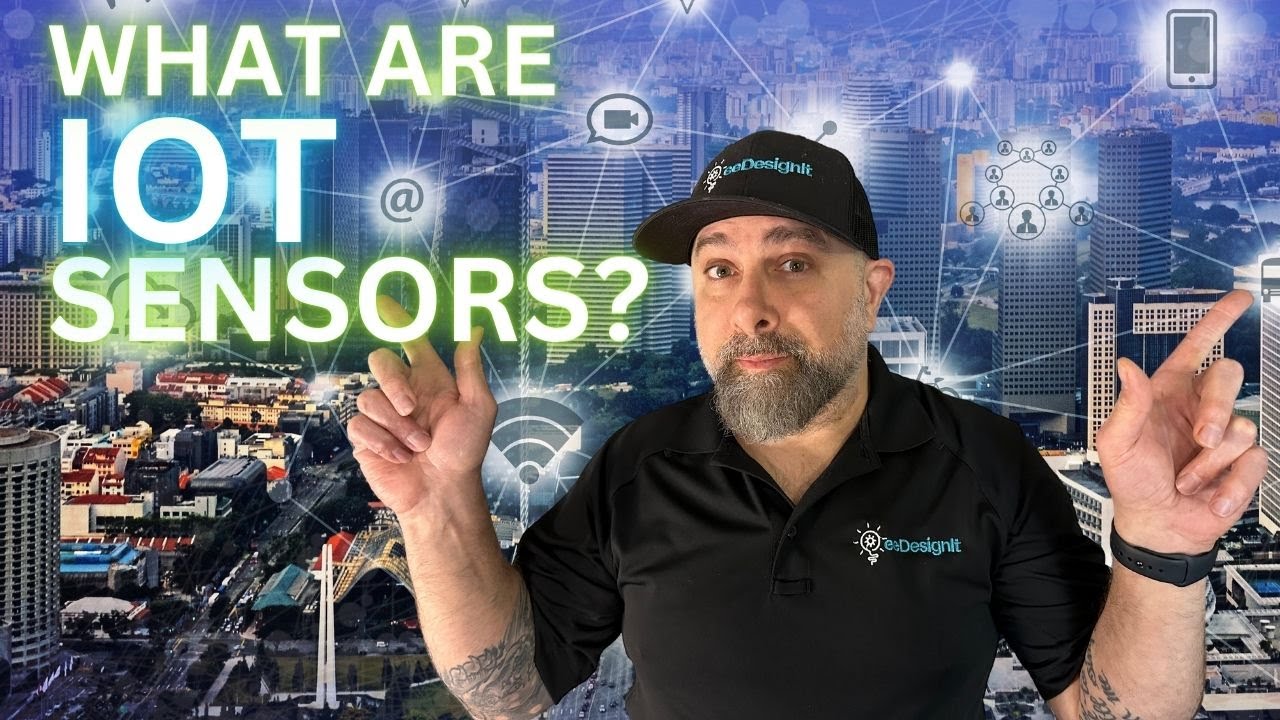
IoT sensors are hardware components embedded in connected devices that detect changes in an environment, measure physical or chemical variables, and transmit the resulting data across a network to cloud platforms or edge systems for processing. IoT sensors form the bridge between the physical and digital worlds. Without sensors, an Internet of Things (IoT) system has no input. It cannot see temperature rise, detect motion, measure pressure drop, or identify a gas leak. Sensors are what give IoT systems the ability to respond to real conditions in real time.
IoT sensors are important for 3 core reasons. First, sensors enable predictive maintenance by detecting early signs of equipment wear or failure before a breakdown occurs. Second, sensors support automation by triggering actions based on measured conditions, such as turning on cooling systems when the temperature exceeds a set threshold. Third, sensors generate the data streams that feed machine learning models, analytics dashboards, and business intelligence tools that drive data-driven decisions across industries.
A single IoT deployment may use dozens of sensor types simultaneously. A smart factory floor uses temperature sensors on motors, pressure sensors on hydraulic lines, proximity sensors on conveyor belts, and gas sensors near chemical storage, all feeding data into a central platform in real time. Understanding each sensor type, how it works, and where it applies is the foundation of effective IoT system design.
Temperature Sensors: Monitoring Heat and Cold
Temperature sensors measure the amount of heat present in an environment or object and convert that measurement into a digital or analog signal. Temperature sensors are among the most widely deployed IoT sensor types across manufacturing, healthcare, agriculture, food logistics, and smart building management.
Temperature sensors work by detecting changes in a physical property that correlates with temperature, such as electrical resistance, voltage output, or infrared emission. When temperature changes, the sensor registers the shift and outputs a corresponding signal that IoT gateways and cloud platforms log, analyze, and act on.
Types of Temperature Sensors in IoT
There are 3 primary types of temperature sensors used in IoT deployments.
Thermistors are resistors whose electrical resistance changes significantly with temperature. Negative temperature coefficient (NTC) thermistors decrease in resistance as temperature increases. Thermistors are highly sensitive and accurate within a narrow range, typically between minus 50 degrees Celsius (minus 58 degrees Fahrenheit) and 150 degrees Celsius (302 degrees Fahrenheit), making them well-suited for precise indoor monitoring applications.
Thermocouples generate a small voltage proportional to the temperature difference between two dissimilar metal junctions. Thermocouples cover wide temperature ranges, from minus 200 degrees Celsius (minus 328 degrees Fahrenheit) to over 1,300 degrees Celsius (2,372 degrees Fahrenheit), and are commonly used in industrial furnaces, engine monitoring, and metal processing environments.
Resistor temperature detectors (RTD) measure temperature by correlating resistance with temperature using materials like platinum, nickel, or copper. RTDs deliver high accuracy and repeatability across a range of minus 200 degrees Celsius (minus 328 degrees Fahrenheit) to 600 degrees Celsius (1,112 degrees Fahrenheit) and are standard in pharmaceutical manufacturing, laboratory equipment, and precision HVAC systems.
IoT Sensors Examples: Temperature Monitoring Applications
Temperature sensors operate across 4 major application areas in IoT systems.
Smart homes use temperature sensors in connected thermostats that measure indoor temperature and trigger heating or cooling adjustments automatically based on occupancy schedules and weather data. Cold chain logistics companies use temperature sensors inside refrigerated trucks and storage units to monitor perishable goods tracking throughout transit, generating alerts if temperature exceeds safe limits. Industrial facilities use temperature sensors on motors, bearings, and electrical panels to feed predictive maintenance algorithms that schedule service before failures occur. Precision agriculture deployments use soil temperature sensors to support precision irrigation scheduling and crop management, feeding data to platforms that adjust irrigation and planting decisions based on real-time field conditions.
Pressure Sensors: Measuring Force
Pressure sensors detect changes in the pressure of a gas or liquid and generate a signal that represents the measured pressure value. Pressure sensors trigger alerts when readings fall outside safe operating ranges, making them a core component of industrial safety and process control systems.
Pressure sensors function by deforming a sensing element, such as a diaphragm or membrane, under applied pressure. The deformation changes an electrical property, typically resistance, capacitance, or voltage output, which the sensor converts into a readable signal.
Different Types of IoT Sensors: Pressure Sensors
There are 2 main pressure sensor types used in IoT applications.
Piezoresistive pressure sensors use a silicon diaphragm with embedded resistors that change resistance under pressure. The BMP180 is a widely used piezoresistive digital pressure sensor found in smartphones, GPS navigation devices, and weather monitoring hardware. Piezoresistive sensors are accurate, cost-effective, and well-suited for consumer electronics and environmental monitoring.
Capacitive pressure sensors measure pressure by detecting changes in capacitance between two plates separated by a diaphragm. Capacitive sensors offer high sensitivity at low pressure ranges and are common in medical equipment, HVAC systems, and barometric measurement applications.
IoT Sensors List: Pressure Sensor Use Cases
Pressure sensors are deployed across 4 primary IoT use cases.
Tire pressure monitoring systems (TPMS) use pressure sensors inside vehicle tires to monitor inflation levels continuously and alert drivers when pressure drops to unsafe levels, reducing blowout risk and improving fuel efficiency. Water distribution networks use pressure sensors throughout pipeline infrastructure to detect pressure drops that indicate leaks, enabling remote pipeline corrosion monitoring and faster repair response. Industrial process control systems use pressure sensors to maintain precise operating conditions in reactors, boilers, and hydraulic equipment, supporting predictive equipment failure detection. Weather forecasting stations use barometric pressure sensors to track atmospheric pressure changes that indicate incoming weather patterns, feeding data into meteorological models used by utilities, airports, and agriculture operations.
Proximity Sensors: Detecting Presence
Proximity sensors detect the presence or absence of an object near the sensor without requiring physical contact. Proximity sensors emit radiation, typically infrared, ultrasonic waves, or an electromagnetic field, and measure the return signal to determine whether an object is present and how far away it is.
Proximity sensors serve a wide range of IoT applications where knowing whether an object, person, or vehicle is present at a specific location drives an automated response.
Types of Sensors Used in IoT Devices: Proximity Sensors
There are 5 proximity sensor types commonly used in IoT devices.
Infrared proximity sensors emit infrared light and detect the reflection returned by nearby objects. Photoelectric sensors use a beam of light to detect object presence by measuring whether the beam is interrupted. Magnetic proximity sensors detect ferrous metal objects using magnetic field changes and are common in door and window position detection. Capacitive proximity sensors detect both metallic and non-metallic objects by measuring changes in capacitance as an object approaches. Inductive proximity sensors detect metallic objects only, using changes in an electromagnetic field, and are standard in industrial manufacturing lines. Ultrasonic proximity sensors emit high-frequency sound waves and measure the time the echo takes to return, calculating distance with high accuracy regardless of object color or surface finish.
IoT Sensors Examples: Proximity Sensor Applications
Proximity sensors power 4 major IoT application categories.
Automated lighting systems in commercial buildings use proximity sensors to detect occupancy and switch lights on or off based on whether a person is present in a zone, reducing energy consumption. Smart parking systems in urban areas use proximity sensors embedded in parking spaces to detect vehicle presence in real time, feeding availability data to parking apps and smart city platforms. Industrial assembly lines use proximity sensors to count parts, detect misaligned components, and confirm correct positioning before each assembly step. Retail stores use proximity sensors to monitor customer flow through aisles, analyze in-store behavior patterns, and optimize product placement based on traffic data.
Light Sensors: Detecting Light Intensity
Light sensors detect changes in light intensity and convert light energy into electrical signals that IoT systems use to trigger responses or log environmental data. Light sensors are also called photodetectors and are embedded in devices ranging from smartphones and outdoor lighting systems to security cameras and agricultural monitoring platforms.
Light sensors measure variables including intensity, duration, and variation in light levels across visible, ultraviolet, and infrared spectrums depending on the sensor type selected.
Types of Sensors in IoT with Examples: Light Sensors
There are 2 primary light sensor types used in IoT applications.
Photodiodes generate a current proportional to the intensity of light hitting the sensor surface. Photodiodes respond quickly to light changes, making them suitable for high-speed optical communication, barcode scanners, and light intensity logging in environmental monitoring stations. Photoresistors, also called light-dependent resistors (LDR), change electrical resistance in response to light intensity. As light increases, resistance decreases. Photoresistors are low-cost, simple components used in street lighting control, consumer electronics, and basic ambient light detection applications.
IoT Sensors List: Light Sensor Use Cases
Light sensors serve 3 primary IoT application areas.
Smart lighting systems in streets, offices, and homes use light sensors to adjust brightness automatically based on ambient light levels, reducing energy consumption by switching off lights during daylight hours and dimming them when natural light is sufficient. Security systems pair light sensors with motion sensors to detect intrusions at night and trigger alerts or activate cameras when low-light conditions coincide with detected movement. Agricultural and environmental monitoring platforms use light sensors to track photosynthetically active radiation (PAR) levels that directly affect crop growth rates, enabling agricultural yield optimization through data-driven light management.
Accelerometers: Measuring Acceleration
Accelerometers measure the rate of change in velocity, including movement, tilt, shock, vibration, and orientation of an object. Accelerometers detect acceleration forces along one, two, or three axes and output data that IoT systems use for activity tracking, safety monitoring, and structural health assessment.
Accelerometers are embedded in smartphones, wearables, vehicles, industrial equipment, and infrastructure sensors across a wide range of IoT applications.
Types of Sensors Used in IoT Applications: Accelerometers
Microelectromechanical systems (MEMS) accelerometers are the dominant type used in IoT devices. MEMS accelerometers use a microscopic mass suspended on tiny spring-like structures etched into a silicon chip. When the device accelerates, the mass deflects, changing capacitance or resistance in a measurable way. MEMS accelerometers are small, low-power, and low-cost, making them practical for mass deployment in consumer devices and industrial sensors alike.
Capacitive accelerometers measure acceleration by detecting changes in capacitance between fixed and movable electrodes. Hall-effect accelerometers use a magnetic field and Hall-effect sensor to measure acceleration indirectly and are used in applications where robust performance in harsh environments matters.
IoT Sensors Examples: Accelerometer Applications
Accelerometers support 4 main IoT application areas.
Wearable fitness trackers and smartwatches use accelerometers to count steps, detect sleep patterns, identify physical activity types, and track patient adherence monitoring in rehabilitation programs. Vehicle stability control systems in automobiles and trucks use accelerometers to detect sudden acceleration changes, tire slip, and rollover risk, triggering safety systems in real time. Structural integrity assessment programs use accelerometers mounted on bridges, buildings, and towers to measure vibration patterns continuously, detecting changes that indicate structural fatigue or damage risk. Industrial robotic automation systems use accelerometers to monitor robot arm movement accuracy, detect unexpected vibrations that signal mechanical wear, and trigger maintenance alerts before failures occur.
Gyroscope Sensors: Measuring Angular Velocity
Gyroscope sensors measure angular velocity, which is the rate of rotation around one or more axes. Gyroscope sensors output data that describes how fast and in which direction a device is rotating, making them essential for navigation, orientation control, and motion-based applications.
Gyroscopes work in combination with accelerometers in most IoT devices to deliver complete six-degree-of-freedom motion tracking, covering both linear acceleration and rotational movement.
Different Types of Sensors Used in IoT Network: Gyroscope Sensors
There are 3 gyroscope sensor types used in IoT networks.
Optical gyroscopes use the interference of light beams traveling in opposite directions around a loop to measure rotation rate with very high precision. Optical gyroscopes are used in aircraft navigation systems and high-accuracy positioning equipment. Rotary gyroscopes use a spinning mass to maintain orientation based on conservation of angular momentum. Rotary gyroscopes are used in marine navigation and aerospace applications. Vibrating structure gyroscopes use a vibrating element that shifts its vibration pattern in response to rotation. MEMS vibrating structure gyroscopes are the most common type in consumer IoT devices due to their small size, low power consumption, and cost.
IoT Sensors Examples: Gyroscope Sensor Applications
Gyroscope sensors are active across 3 primary IoT application domains.
Drones use gyroscope sensors to maintain stable flight by detecting unwanted rotation and feeding correction data to flight controllers that adjust motor speeds in real time to maintain orientation. Robotics systems use gyroscope sensors for balance and directional control in mobile robots, automated guided vehicles (AGV), and industrial robotic automation platforms that require precise movement along defined paths. Virtual reality (VR) and augmented reality (AR) headsets use gyroscope sensors to track head rotation and update the displayed scene in real time, delivering accurate spatial orientation data that prevents motion sickness and maintains immersion.
Humidity Sensors: Measuring Moisture
Humidity sensors measure the amount of water vapor present in the air and output a value expressed as relative humidity (RH) percentage. Humidity sensors operate alongside temperature sensors in most IoT environmental monitoring deployments because temperature and humidity together determine comfort, condensation risk, and process conditions across industrial and consumer applications.
Humidity sensors are used wherever moisture levels affect product quality, human comfort, biological growth conditions, or equipment performance.
Types of Sensors in IoT with Images: Humidity Sensors
There are 2 main humidity sensor types used in IoT systems.
Capacitive humidity sensors measure relative humidity by detecting changes in the dielectric constant of a hygroscopic polymer film that absorbs or releases water vapor. Capacitive sensors are accurate across a wide humidity range, typically 0% to 100% RH, with low hysteresis and fast response times. Capacitive humidity sensors are the most common type in IoT HVAC systems, weather stations, and industrial monitoring platforms. Resistive humidity sensors measure humidity by detecting changes in the electrical resistance of a hygroscopic material. Resistive sensors are lower cost than capacitive sensors but have a narrower operating range and higher sensitivity to temperature variation.
IoT Sensors List: Humidity Sensor Applications
Humidity sensors serve 3 major IoT application categories.
HVAC systems in commercial buildings use humidity sensors to maintain indoor air quality and thermal comfort by adjusting ventilation, heating, and cooling in response to measured humidity levels. Smart agriculture platforms use humidity sensors in greenhouses and field deployments to monitor soil moisture and air humidity, feeding data into precision irrigation scheduling systems that reduce water consumption while maintaining optimal growing conditions. Weather monitoring stations and smart city environmental platforms use humidity sensors to track microclimate humidity patterns, support air quality microclimates analysis, and feed data into forecasting models used by energy providers, transportation authorities, and public health agencies.
Gas Sensors: Detecting Gases
Gas sensors detect the presence and concentration of specific gases in the surrounding air and output a signal that IoT systems use to trigger alerts, activate ventilation systems, or log air quality data. Gas sensors protect workers in industrial environments, monitor indoor and outdoor air quality, and detect hazardous gas leaks in residential and commercial settings.
Gas sensors are selective, meaning each sensor is designed to detect one or a small group of target gases, such as carbon monoxide (CO), carbon dioxide (CO2), methane (CH4), or volatile organic compounds (VOC).
Types of Sensors for IoT: Gas Sensors
There are 3 primary gas sensor technologies used in IoT deployments.
Electrochemical gas sensors generate a current proportional to the concentration of a target gas through an electrochemical reaction at a sensing electrode. Electrochemical sensors are highly selective and sensitive to specific gases, making them the standard choice for carbon monoxide detectors, oxygen monitoring in confined spaces, and toxic gas detection in industrial safety systems. Semiconductor gas sensors use a metal oxide material, typically tin dioxide (SnO2), whose electrical resistance changes in the presence of target gases. Semiconductor sensors detect a broad range of gases including hydrogen, ammonia, methane, and VOCs. Photo-ionization detection (PID) sensors use ultraviolet light to ionize gas molecules and measure the resulting current, enabling detection of VOCs at very low concentrations measured in parts per billion (ppb).
IoT Sensors Examples: Gas Sensor Applications
Gas sensors are deployed across 4 IoT application areas.
Air quality monitoring networks in smart cities use gas sensors to measure concentrations of nitrogen dioxide (NO2), ozone (O3), carbon monoxide (CO), and particulate matter across urban districts, generating real-time air quality index data for public health reporting and environmental compliance reporting. Industrial facilities use gas sensors to detect leaks of toxic or flammable gases in chemical processing plants, oil refineries, and mining operations, triggering emergency ventilation and evacuation alerts when concentrations exceed safe thresholds. Carbon dioxide detectors in offices, schools, and commercial buildings use CO2 gas sensors to monitor indoor air quality and control ventilation rates, improving occupant alertness and reducing energy waste from unnecessary ventilation. Agricultural IoT platforms use gas sensors to monitor soil gas composition and greenhouse gas emissions, supporting environmental compliance reporting and carbon credit programs.
Image Sensors: Capturing Visual Information
Image sensors convert optical images into electronic signals that IoT systems store, transmit, and analyze to extract visual information about an environment or process. Image sensors are at the core of surveillance systems, autonomous vehicles, medical imaging equipment, quality control cameras, and smart city traffic management platforms.
Image sensors capture data that other sensor types cannot: spatial information, color, shape, texture, and movement patterns that computer vision algorithms process to generate actionable insights.
Types of Sensing in IoT: Image Sensors
There are 2 primary image sensor technologies used in IoT systems.
Charge-coupled device (CCD) sensors convert light into electrical charge across the entire image sensor and read the charge out sequentially to produce a high-quality image. CCD sensors deliver excellent image uniformity and low noise, making them the preferred choice for medical imaging equipment, scientific cameras, and high-accuracy industrial inspection systems. Complementary metal-oxide semiconductor (CMOS) sensors process each pixel independently using integrated circuitry on the sensor chip. CMOS sensors consume less power, cost less to manufacture, and integrate more easily with digital processing systems than CCD sensors, making CMOS the dominant image sensor type in smartphones, security cameras, automotive cameras, and consumer IoT devices.
IoT Sensors Examples: Image Sensor Applications
Image sensors serve 4 major IoT application areas.
Surveillance systems in commercial buildings, transportation hubs, and critical asset surveillance deployments use image sensors with computer vision software to detect unauthorized access, identify individuals, and generate real-time security alerts. Autonomous vehicles use multiple CMOS image sensors to monitor the road environment continuously, detecting lane markings, traffic signals, pedestrians, and other vehicles as part of the autonomous vehicle navigation system that drives steering and braking decisions. Industrial quality control systems use image sensors mounted on production lines to inspect products for defects, dimensional errors, and labeling accuracy at speeds that exceed human visual inspection capability. Healthcare applications use image sensors in endoscopes, surgical cameras, dermatology diagnostic tools, and remote patient monitoring systems to capture clinical visual data that supports diagnosis and treatment planning.
Level Sensors: Measuring Fluid Levels
Level sensors detect the level of liquids, powders, or granular materials inside a container or across an open body and output a signal representing the current fill level. Level sensors are used in industrial tanks, water treatment facilities, fuel storage systems, and agricultural reservoirs wherever fluid or material levels must be monitored continuously without manual inspection.
Level sensors prevent overflow, detect low-level conditions that could damage pumps, and support automated filling or emptying processes across industrial and municipal operations.
Different Types of Sensors Used in IoT Projects: Level Sensors
There are 3 primary level sensor types used in IoT projects.
Ultrasonic level sensors emit high-frequency sound pulses and measure the time the echo takes to return from the surface of the material being measured. Ultrasonic sensors are non-contact, work with liquids and solids, and are not affected by the color or conductivity of the material, making them widely used in industrial tank level monitoring and waste management applications. Radar level sensors use microwave radar pulses instead of sound and measure the time of flight to the material surface. Radar sensors perform accurately in high-temperature, high-pressure, and vapor-filled environments where ultrasonic sensors lose accuracy, making them standard in chemical processing, oil and gas storage, and pharmaceutical manufacturing. Float level sensors use a buoyant float that rises and falls with the liquid level, triggering a switch or transmitting a continuous position signal. Float sensors are simple, low-cost, and reliable for clean liquid applications including water tanks, sump pumps, and residential water management systems.
IoT Sensors List: Level Sensor Applications
Level sensors are deployed across 4 IoT application areas.
Tank level monitoring systems in oil and gas terminals, chemical plants, and water utilities use level sensors to track inventory, automate filling operations, and generate low-level or overflow alerts in real time. Flood detection networks in rivers, drainage systems, and coastal areas use ultrasonic and radar level sensors to monitor water levels continuously, feeding data to early warning systems that alert emergency services when levels reach critical thresholds. Waste management operations use level sensors in dumpsters, recycling containers, and underground waste collection bins to monitor fill levels and optimize collection routes, reducing fuel consumption and improving operational efficiency. Agricultural irrigation reservoirs use level sensors to monitor water storage levels and automate pump activation and shutoff, supporting precision irrigation scheduling and preventing pump dry-run damage.
Flow Sensors: Measuring Fluid Flow
Flow sensors measure the volumetric or mass flow rate of a liquid or gas passing through a pipe or channel and output a signal representing the flow rate in real time. Flow sensors detect abnormal flow conditions that indicate leaks, blockages, or process deviations, making them a core component of water management, chemical processing, and energy management IoT systems.
Flow sensors work using several physical principles including differential pressure, electromagnetic induction, ultrasonic transit time, and mechanical turbine rotation, with the best choice depending on the fluid type, flow range, and accuracy requirements of the application.
Explain Types of IoT Sensors: Flow Sensors
Electromagnetic flow sensors generate a magnetic field across the pipe and measure the voltage induced by the conductive fluid flowing through it. The induced voltage is directly proportional to flow velocity. Electromagnetic sensors work only with conductive liquids and have no moving parts, making them highly reliable for water, slurry, and chemical flow measurement in municipal and industrial systems. Ultrasonic flow sensors use pairs of ultrasonic transducers mounted on opposite sides of a pipe to measure the difference in transit time between sound pulses traveling with and against the flow direction. Ultrasonic sensors are non-invasive, clamp-on designs work without cutting into the pipe, and they handle clean and dirty liquids as well as gases. Turbine flow sensors use a rotating turbine inside the flow path whose rotation speed corresponds to flow velocity. Turbine sensors are accurate and cost-effective for clean liquids and gases across a wide flow range.
IoT Sensors Examples: Flow Sensor Applications
Flow sensors are active across 4 IoT application categories.
Water management systems in municipalities use flow sensors throughout distribution networks to detect leaks, measure consumption by district, and monitor supply flow from treatment plants to reservoirs and end users. Chemical processing plants use flow sensors to control the precise mixing ratios of reagents in continuous production processes where incorrect flow rates affect product quality or create safety hazards. HVAC systems in large commercial buildings use flow sensors to measure chilled water and hot water flow rates through heating and cooling circuits, enabling real-time energy consumption monitoring and system efficiency optimization. Smart metering deployments for residential and commercial customers use flow sensors to measure water and natural gas consumption at the point of use, feeding data to utility billing platforms and enabling smart grid optimization through demand-side management programs.
Infrared (IR) Sensors: Detecting Infrared Radiation
Infrared (IR) sensors detect infrared radiation emitted or reflected by objects in their field of view and convert the detected radiation into an electrical signal that IoT systems use for temperature measurement, motion detection, proximity sensing, and thermal imaging. Infrared radiation is electromagnetic energy with wavelengths between 700 nanometers (nm) and 1 millimeter (mm), sitting just beyond visible red light in the electromagnetic spectrum.
IR sensors operate in two modes. Passive IR sensors detect infrared radiation naturally emitted by objects, such as the heat signature of a human body. Active IR sensors emit infrared radiation and measure the amount reflected back from objects in range.
Various Types of IoT Sensors: IR Sensors
There are 2 primary IR sensor types used in IoT systems.
Passive infrared (PIR) sensors detect changes in the infrared radiation field around the sensor caused by the movement of warm objects, such as people or animals, through the sensor’s detection zone. PIR sensors are low-power, low-cost, and reliable, making them the standard sensor type for motion detection in security systems, automatic lighting controls, and occupancy-based energy management. Active infrared sensors emit a beam of IR light and detect whether the beam is interrupted or reflected. Active IR sensors are used in obstacle detection systems, object counting applications, proximity measurement, and industrial automation where reliable, non-contact detection of objects regardless of temperature is required.
IoT Sensors Examples: IR Sensor Applications
IR sensors are deployed across 4 major IoT application areas.
Remote controls for consumer electronics use active IR sensors to transmit command signals from handheld remotes to televisions, air conditioners, and audio equipment, with the receiving device’s IR detector converting the signal pulses into control commands. Motion detectors in security systems use PIR sensors to detect human presence by registering the heat signature and movement of a body passing through the detection zone, triggering alarms, recording video, or activating lighting. Thermal imaging cameras used in industrial predictive maintenance use IR sensor arrays to create temperature maps of electrical panels, motors, and pipelines, identifying hot spots that indicate insulation failure, overloaded circuits, or bearing wear before failure occurs. Medical applications use IR sensors to measure body temperature without contact, monitor blood flow through photoplethysmography (PPG), and detect vein patterns for biometric identification in access control and patient monitoring systems.
Conclusion: The Future of IoT Sensors
IoT sensor types and uses span 12 distinct categories, each measuring a specific physical or chemical variable and feeding the data into IoT systems that automate responses, generate insights, and support decision-making across industries. Temperature sensors, pressure sensors, proximity sensors, light sensors, accelerometers, gyroscope sensors, humidity sensors, gas sensors, image sensors, level sensors, flow sensors, and infrared sensors together form the sensing layer that makes the Internet of Things function.
The trajectory of IoT sensor technology points toward 3 areas of significant advancement. Sensor miniaturization continues to reduce the physical size and power consumption of sensing elements, enabling deployment in wearables, implantables, and space-constrained industrial equipment where previous sensor generations could not fit. Edge AI integration is bringing machine learning inference directly onto sensor nodes, allowing sensors to classify events, detect anomalies, and generate decisions locally without sending raw data to the cloud, reducing latency and bandwidth consumption. Multi-sensor fusion is combining data from multiple sensor types into unified perception systems, as seen in autonomous vehicle navigation where camera, radar, ultrasonic, and lidar sensor data merge into a single environmental model.
The IoT sensor market continues to grow as deployments expand across smart cities, precision agriculture, industrial automation, connected healthcare, cold chain integrity management, and supply chain provenance tracking. Every new IoT application adds demand for sensors that are smaller, more accurate, more power-efficient, and more capable of operating in harsh environments. Selecting the right sensor type for each application, understanding its measurement range, accuracy, power requirements, and integration demands, remains the foundation of every successful IoT deployment.





- Be Respectful
- Stay Relevant
- Stay Positive
- True Feedback
- Encourage Discussion
- Avoid Spamming
- No Fake News
- Don't Copy-Paste
- No Personal Attacks
- Be Respectful
- Stay Relevant
- Stay Positive
- True Feedback
- Encourage Discussion
- Avoid Spamming
- No Fake News
- Don't Copy-Paste
- No Personal Attacks
